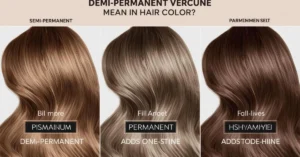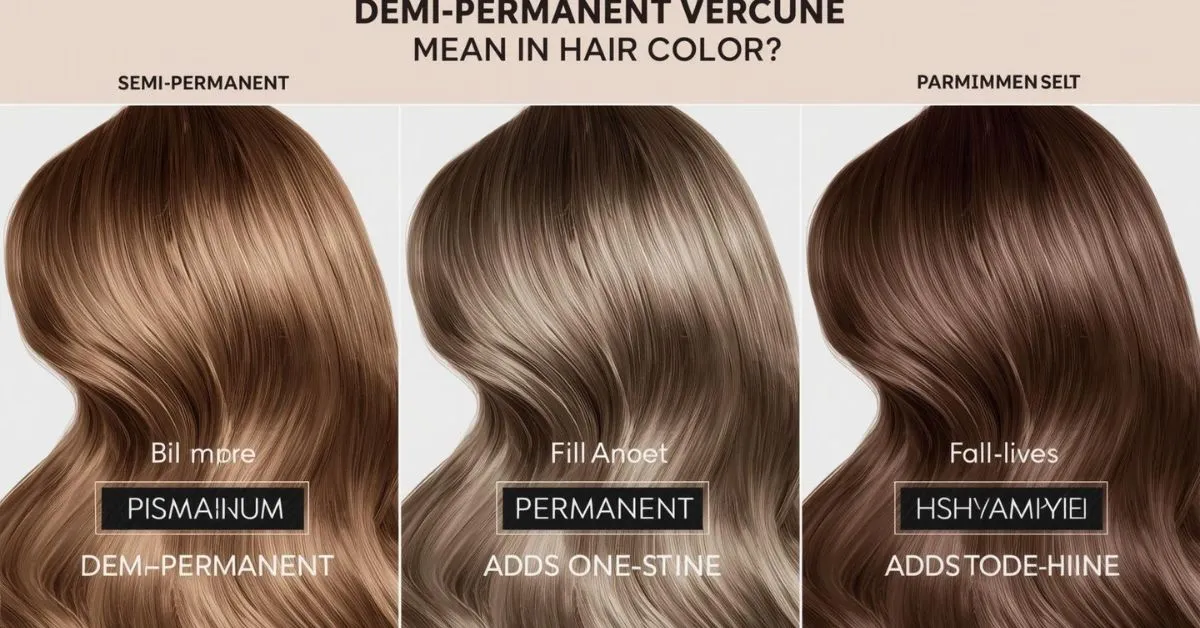
Demi-permanent usually means a type of hair color that lasts longer than semi-permanent color but fades over time instead of staying permanently. It is commonly used to add tone, shine, richness, and soft gray blending without the stronger commitment of permanent dye.
If you have seen “demi-permanent” on a salon menu, hair gloss, toner, or color box, the simple answer is this: it is the middle ground between semi-permanent and permanent hair color. It gives a more polished, longer-lasting result than semi-permanent color, but it is still not meant to act like full permanent dye.
Many people search this term because they want to know one of four things fast:
What does it actually mean?
How long does it last?
Can it lighten hair?
Is it better than semi-permanent or permanent color?
This guide answers all of that clearly.
Demi-Permanent at a Glance
| Feature | Demi-Permanent Hair Color |
|---|---|
| What it means | A longer-lasting temporary hair color that fades gradually |
| Best for | Glossing, toning, refreshing color, going darker, soft gray blending |
| Usually lasts | About 24 to 28 washes |
| Uses developer? | Yes, usually a low-volume developer |
| Can it lighten hair? | Usually not in a meaningful way |
| Commitment level | Medium |
| Common salon uses | Toners, glosses, root shadows, color refreshes |
This is the core idea readers need first: demi-permanent is temporary, but not short-lived in the same way semi-permanent color is. It usually lasts longer, wears more evenly, and is often chosen when someone wants a softer, more refined result.
What Demi-Permanent Means in Simple Words
In plain English, demi-permanent means a hair color that gives you noticeable color change without full long-term commitment. It is often used when someone wants to:
- refresh faded color
- tone blonde or highlighted hair
- add shine
- go a little darker
- soften early grays
- test a new shade without choosing permanent dye right away
That is why stylists often recommend demi-permanent color for people who want hair that looks fresher, richer, or more polished, but do not want a hard permanent line of grow-out.
Demi-Permanent vs Semi-Permanent vs Permanent
This is where most of the confusion happens.
Demi-permanent vs semi-permanent
Semi-permanent color is usually the shortest-term option. It generally coats the hair more lightly and fades faster. Demi-permanent color lasts longer, uses developer, and tends to give a more salon-finished result.
eSalon describes demi as lasting about 24 to 28 shampoos, while semi can last only a handful of washes depending on the formula. Wella also separates demi from semi by longevity, subtle blending ability, and developer use.
Demi-permanent vs permanent
Permanent color is made for stronger, longer-lasting change. It is the better fit when someone wants clearer lift, more complete gray coverage, or a shade that will not simply fade away over a few weeks.
Demi-permanent is the lower-commitment option and is generally positioned for toning, glossing, darkening, and softer blending rather than major lightening.
Quick comparison table
| Type | Best for | Usually lasts | Developer | Lightening ability |
|---|---|---|---|---|
| Semi-permanent | Short-term tone or color play | Fewer washes | Usually no | No |
| Demi-permanent | Gloss, tone, refresh, soft gray blending | About 24 to 28 washes | Yes, low-volume | Usually no |
| Permanent | Bigger change, stronger gray coverage, lift | Longest-lasting | Yes | Yes, depending on formula |
That table reflects the current broad consensus across major beauty education pages.
How Demi-Permanent Hair Color Works
Demi-permanent hair color usually uses a low-volume developer and is often described as ammonia-free or lower-impact than permanent color, though formulas vary by brand.
The main point is that it is designed to deposit tone and color more gently than permanent dye. eSalon explains that demi-permanent color gets under the outer cuticle area but does not behave like permanent color inside the strand in the same way.
In practical terms, that means demi-permanent color is often used to:
- refine tone after lightening
- reduce brassiness
- make faded hair look richer
- create a glossy finish
- add a root shadow
- blend first grays more softly
That is also why many glosses and salon toners fall into the demi-permanent category.
Who Should Choose Demi-Permanent Hair Color?
Demi-permanent is usually a smart choice for people who want a visible improvement without a heavy commitment.
It is a good fit for:
1. People refreshing faded hair color
If your color looks dull, flat, or washed out, demi-permanent can restore richness and shine without requiring a full permanent recolor.
2. People toning blonde, highlighted, or pre-lightened hair
Demi-permanent formulas are commonly used in glosses and toners to help refine warmth and brassiness.
3. People trying a darker shade first
If you want to test a deeper brunette, richer red, or softer brown before committing, demi-permanent is often the safer starting point.
4. People with early gray who want softer blending
Demi-permanent color is often recommended when the goal is to make gray less obvious rather than create the most opaque coverage possible.
First-time color users
Because it fades over time, demi-permanent can feel less risky than permanent dye.
When Demi-Permanent Is Not the Right Choice
This is one of the most important distinctions many articles skip.
Demi-permanent may not be the right choice if you want:
- a noticeably lighter hair color
- maximum gray coverage
- the longest-lasting result
- a high-lift transformation
- a very dramatic shade change that needs strong permanence
If your goal is obvious lightening, demi-permanent is usually the wrong category. If your goal is more complete gray coverage with longer-lasting root maintenance, permanent color is usually the stronger fit.
How Long Does Demi-Permanent Hair Color Last?
Most current beauty education sources place demi-permanent hair color at around 24 to 28 washes, which is often about a month to a month and a half depending on wash frequency and routine. Wella and L’Oréal both use this general range, and Wella’s gray-blending content suggests refreshing the color roughly every 6 to 7 weeks as it fades.
What affects how fast it fades?
Demi-permanent color does not fade the same on every head of hair. Fade speed can change based on:
- how often you shampoo
- whether you use clarifying products
- how porous your hair is
- whether your hair is pre-lightened
- heat styling and sun exposure
- the shade family and formula itself
Porous or previously lightened hair may grab tone more strongly at first and then fade differently than healthy virgin hair. That is one reason salon glosses and toners are often customized.
Can Demi-Permanent Lighten Hair?
Usually, no.
This is one of the biggest misconceptions around the term. Even though demi-permanent color usually uses developer, that does not mean it works like permanent color for lift.
Its real job is usually deposit, tone refinement, shine, darkening, and blending. It is not generally the right choice when someone wants clearly lighter hair.
A useful way to remember it is this:
- Semi-permanent: shortest-term color
- Demi-permanent: longer-lasting tone and shine
- Permanent: stronger long-term change, including lift when formula allows
Does Demi-Permanent Cover Gray Hair?
Demi-permanent color is usually best understood as a gray-blending option, not the top choice for the most opaque gray coverage.
That does not mean it cannot help with gray. It often can. Wella specifically highlights demi-permanent color for blending first grays and notes that some professional formulas can offer substantial gray coverage, but the overall category is still commonly positioned as softer and more natural-looking than traditional permanent gray coverage.
So the better expectation is:
- demi-permanent can soften, blur, and blend gray
- permanent color is usually better for maximum, long-lasting coverage
That softer finish is also part of why demi-permanent is attractive to people who do not want a harsh line of regrowth.
Will Demi-Permanent Leave a Hard Root Line?
Usually, it grows out more softly than permanent color.
Because demi-permanent fades over time, it often creates a less severe line between colored hair and new growth. That makes it appealing for root shadows, subtle blending, and lower-maintenance color routines.
Wella explicitly highlights demi-permanent for natural-looking root touch-up effects, and eSalon positions demi as a temporary option with smoother wear than more committed color.
That does not mean regrowth disappears. It means the contrast is often less sharp and easier to live with.
Is Demi-Permanent Less Damaging Than Permanent Color?
In general, yes.
Demi-permanent color is commonly positioned as gentler than permanent dye because it is focused more on depositing and refining color than on creating stronger lift.
Wella describes demi as a gentle formula, and eSalon describes it as ammonia-free. That said, it still processes the hair more than the shortest-term surface color options, so it is not exactly the same as the gentlest temporary tint.
A careful way to frame it is:
- less aggressive than permanent color
- usually more polished and longer-lasting than semi-permanent
- still a real color service, so formula and hair condition matter
Real-Life Examples
Example 1: A toner after highlights
Someone gets highlights, but the blonde looks too warm. A stylist uses a demi-permanent toner to cool the brassiness and add shine.
Example 2: Refreshing dull brunette hair
A brunette’s mids and ends start looking flat between appointments. A demi-permanent gloss makes the color look richer and healthier again.
Example 3: Soft blending for early grays
Someone has scattered silver strands and wants a more natural finish without a heavy permanent routine. Demi-permanent can make those grays less noticeable.
Example 4: Trying darker hair without full commitment
Someone wants to test a deeper brown or richer copper before making a permanent change. Demi-permanent is often the lower-risk way to do that.
Common Mistakes People Make
Thinking demi-permanent and semi-permanent are the same
They are not. Demi-permanent usually lasts longer, uses developer, and gives a more refined, salon-like result.
Assuming demi-permanent can lighten hair
Usually it cannot create the kind of lift people expect from permanent color or lightener.
Expecting full gray coverage from every formula
Some demi-permanent formulas blend gray very well, but the category is generally known more for soft blending than full opaque coverage.
Thinking temporary means it disappears instantly
Demi-permanent fades, but it often lasts for weeks, not just a few shampoos.
What Most Articles Miss About Demi-Permanent Hair Color
Most articles explain demi-permanent as simply “between semi and permanent,” but that is only part of the picture.
What they often miss is that demi-permanent is really about refinement. It is one of the most useful categories for people who want better tone, better shine, softer gray blending, or a richer-looking color without taking the full permanent route. That is why professional education pages keep linking demi-permanent with glosses, toners, root shadows, and natural-looking gray blending instead of just calling it a weaker permanent dye.
Another nuance many pages skip is that fade behavior depends heavily on the hair underneath. Pre-lightened or porous hair can take on demi-permanent tone differently and may fade in a less predictable way than healthy virgin hair. That matters when someone is using demi-permanent color on blonde, highlighted, or previously processed hair.
The most practical takeaway is this: demi-permanent is not the best option for every color goal, but it is one of the best options for softer, shinier, lower-commitment results.
FAQs
Is demi-permanent the same as semi-permanent?
No. Demi-permanent usually lasts longer, uses developer, and wears more like a salon color service, while semi-permanent usually fades faster and is more surface-level.
How long does demi-permanent hair color last?
Usually about 24 to 28 washes, though the exact fade time depends on your formula, hair type, and routine.
Can demi-permanent lighten dark hair?
Usually not in a meaningful way. Demi-permanent is generally used to deposit or refine tone, not to create obvious lift.
Is demi-permanent good for toning blonde hair?
Yes. Demi-permanent toners and glosses are commonly used to reduce brassiness and refine the final shade after lightening.
Does demi-permanent cover stubborn gray?
It can help blend gray, and some formulas are stronger than others, but permanent color is usually the better choice for the most complete coverage.
Is demi-permanent basically a gloss?
Not always, but many glosses and toning services use demi-permanent color because it adds shine and tone without full permanence.
Final Takeaway
If you are asking what demi-permanent means, the clearest answer is this: it is a low-commitment hair color that lasts longer than semi-permanent color, fades more softly than permanent dye, and is especially useful for shine, tone correction, color refresh, and gentle gray blending.
That is why demi-permanent remains one of the most practical choices for people who want their hair color to look polished, but not permanent.
Click Below To Read About:
What Does POS Mean in Slang? Texting Meaning, /pos, Uses
What Does Ope Mean? Slang, Text Use, and Midwest Meaning
What Does Eligible Mean? Definition, Usage, and Real Examples
Hi, I’m Clara Lexis from Meanvia.com. I break down words and expressions so they’re easy to understand and enjoyable to learn. My mission is simple: make language approachable and fun, one word at a time.