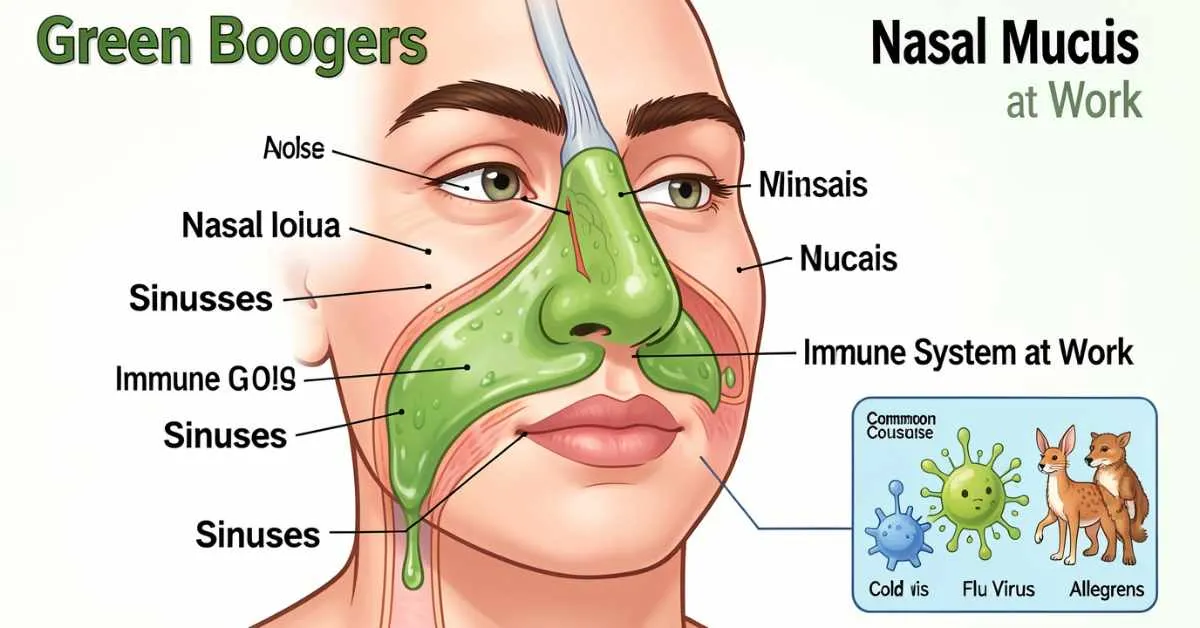
Seeing green boogers can be alarming. Many people worry when they notice their nasal mucus has turned green.
But in most cases, it is not a sign of something serious. Green mucus is often a natural response from your body’s immune system fighting off germs in your nasal passages or sinuses.
Understanding the meaning of green boogers helps you know when home care is enough and when it’s time to see a doctor.
This article covers the causes, symptoms, home remedies, medical treatments, prevention, and differences between adults and children, all explained in simple words.
What Does Green Boogers Mean?
Green boogers meaning is simple: your immune system is active. When white blood cells fight germs, they release enzymes. These enzymes mix with your nasal mucus and turn it green.
Green mucus does not always mean a bacterial infection. Thick mucus may result from post-nasal drip, nasal congestion, or dehydration. Even environmental factors like smoke, pollution, or dry air can make mucus green.
Quick facts about green boogers:
- Green boogers indicate your immune system is working.
- Green mucus can appear without illness due to pollution, dry air, or smoke.
- Green mucus usually indicates stronger immune activity compared to yellow mucus.
Causes of Green Boogers
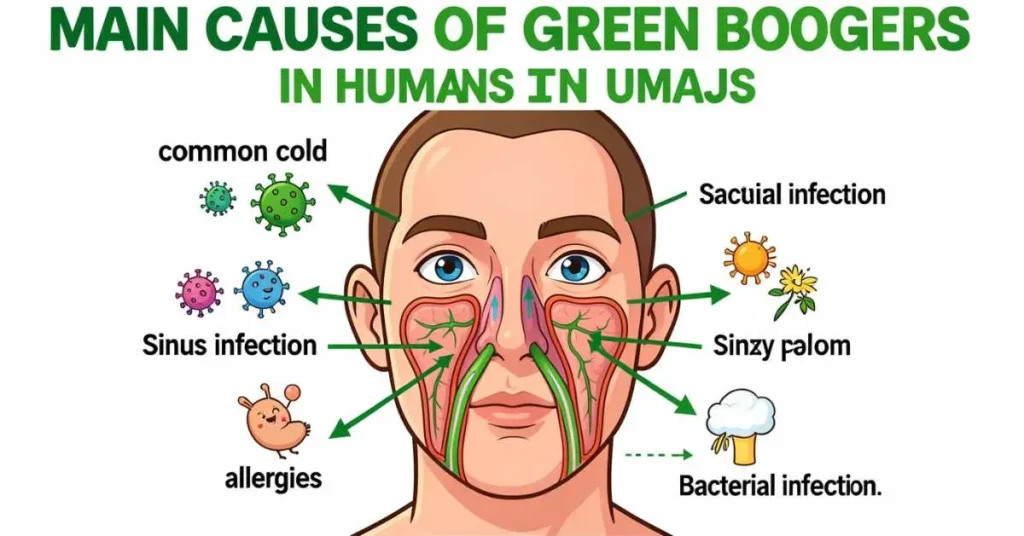
Green boogers can result from several factors. Let’s explore the most common causes.
1. Common Cold (Viral Infection)
The common cold is a viral infection that affects your upper respiratory tract. Symptoms include runny or stuffy nose, sneezing, and mild fever.
During a cold, your white blood cells fight the virus. This causes mucus to thicken and turn green. Green boogers during a cold are normal and usually improve within a few days.
2. Sinus Infection (Sinusitis)
Sinusitis occurs when your sinuses become inflamed or infected. Common symptoms include:
- Thick green mucus
- Facial pressure
- Headache
- Nasal congestion
Bacterial sinus infections may require antibiotics, while viral infections often resolve on their own.
3. Flu (Influenza)
The flu can cause thick green phlegm, fever, body aches, and fatigue. Like the common cold, green mucus indicates your body is fighting the virus.
4. Allergies
Allergic reactions can cause inflammation in nasal passages, sometimes producing green mucus. Secondary infections can also make mucus thick and green.
5. Environmental Factors
Smoke, pollution, dry air, and low humidity can irritate the nose and produce green mucus, even without any illness. People living in urban areas or working in smoky environments may notice green boogers more often.
Symptoms Often Seen With Green Boogers
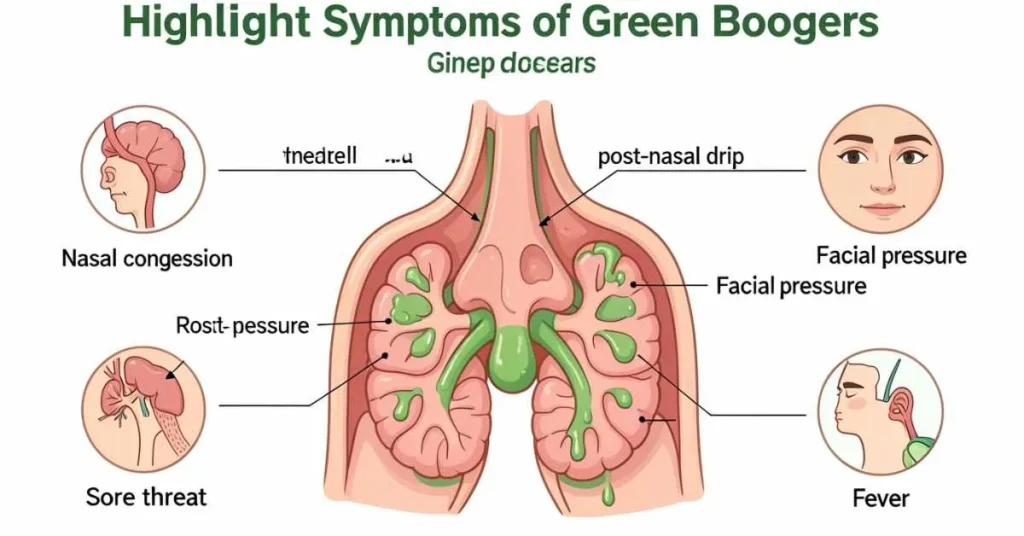
Green mucus may be accompanied by other symptoms. Common signs include:
- Nasal congestion or stuffy nose
- Post-nasal drip
- Facial pressure
- Headache
- Sore throat
- Mild fever
- Fatigue
If these symptoms are mild, home remedies are usually enough. But persistent or severe symptoms may require medical treatment.
When Green Boogers Are Normal
Green boogers are often normal in certain situations:
- Morning mucus: Overnight accumulation is common.
- Recovery from cold or flu: Green mucus may persist even as you feel better.
- After irritation: Allergies, dry air, or environmental irritants can produce thick mucus.
When to Worry About Green Boogers
See a doctor if you notice:
- Green mucus lasting more than 10 days
- Severe facial pressure or headache
- High fever
- Foul-smelling mucus
- Blood in mucus
- Worsening symptoms instead of improvement
These signs may indicate bacterial infection or sinusitis. Prompt treatment is important to prevent complications.
green boogers
Green boogers are dried or thickened mucus that has a greenish color. This can happen when mucus stays in the nose for a while and mixes with natural substances from the immune system. Green mucus does not always mean you have a bacterial infection. Colds, allergies, dry air, and other common causes can change mucus color. The color alone cannot tell you exactly what is happening. If green mucus continues for a long time or comes with severe pain, high fever, or trouble breathing, it may be worth getting medical advice.
Context and how people use it:
People often use “green boogers” when describing unusual-colored mucus found inside the nose.
The phrase is commonly searched when someone wants to understand whether green nasal mucus is normal.
Example 1: “I noticed green boogers this morning and wondered what caused them.”
Example 2: “My child has green boogers after having a cold.”
green boogers meaning
The green boogers meaning usually refers to green-colored nasal mucus that may develop when mucus becomes thicker and contains immune-system cells and other debris. Many people assume green mucus automatically means an infection, but that is not necessarily true. A common cold can also cause mucus to become yellow or green as it progresses. Allergies, irritation, dehydration, and dry indoor air may also affect nasal mucus. The meaning depends on the person’s other symptoms, how long the mucus has been present, and whether their condition is improving or getting worse.
Context and how people use it:
This phrase is often used when someone wants a simple explanation for green mucus in the nose.
People commonly search it to decide whether the color is normal or something they should watch.
Example 1: “What is the green boogers meaning after a cold?”
Example 2: “I searched the green boogers meaning because my mucus changed color.”
Why are boogers green
Boogers can look green because nasal mucus may contain immune cells, proteins, trapped particles, and other material from the nose. During a cold or another type of nasal irritation, the immune system sends cells to the affected area. These cells can contribute to a change in mucus color. As mucus becomes thicker or dries inside the nose, the color can appear more noticeable. Green boogers can occur during ordinary viral illnesses and do not automatically prove that antibiotics or treatment for a bacterial infection is needed.
Context and how people use it:
People ask “why are boogers green” when they notice a color change in their normal nasal mucus.
It is usually used as a straightforward question about nasal health and mucus color.
Example 1: “Why are boogers green when I have a cold?”
Example 2: “She asked why her boogers were green after several days of congestion.”
Green boogers mean
Green boogers can mean that mucus has become thicker and contains immune-system material, trapped particles, or other debris. They are often noticed during or after a cold, but green mucus alone does not identify the exact cause. Your nose naturally produces mucus to trap dust, germs, and other particles. When mucus remains in the nasal passages, its appearance can change. Other symptoms provide more useful clues. For example, persistent symptoms, significant facial pain, fever, or worsening congestion may deserve medical attention rather than relying on mucus color alone.
Context and how people use it:
People use “green boogers mean” when asking what green nasal mucus could indicate.
The phrase commonly appears in searches about colds, congestion, allergies, and general nasal health.
Example 1: “What do green boogers mean after being sick?”
Example 2: “I want to know what green boogers mean before worrying about them.”
Boogers green
“Boogers green” is a short search phrase people use when they notice that dried or thick nasal mucus has turned green. Green mucus can appear when the body’s immune response is active, especially during a respiratory illness. However, the color itself does not tell you whether the cause is viral, bacterial, allergic, or related to irritation. Mucus can also look different depending on how long it has been in the nose. If green nasal discharge is accompanied by serious or persistent symptoms, a healthcare professional can help determine the likely cause.
Context and how people use it:
This short phrase is commonly used as a search query about unusually colored nasal mucus.
People may type it when they want a quick explanation of why their boogers look green.
Example 1: “Boogers green after a cold—is that normal?”
Example 2: “My toddler has boogers green in the morning.”
Boogers are green
When someone says “boogers are green,” they are usually describing a noticeable change in the color of their nasal mucus. Green mucus can happen as the body responds to irritation or an illness, and it may become darker as mucus thickens or dries. It does not automatically mean a bacterial infection. The overall pattern matters more than the color alone. Consider other symptoms, such as congestion, cough, fever, facial pressure, or how long the problem has lasted. If symptoms are severe, persistent, or getting worse, professional medical guidance is a sensible choice.
Context and how people use it:
“Boogers are green” is an everyday way to describe green-colored mucus from the nose.
People commonly use this phrase when discussing a cold or asking whether their symptoms are concerning.
Example 1: “My boogers are green, but I feel better than yesterday.”
Example 2: “He told his parent that his boogers are green.”
Booger green
“Booger green” is an informal phrase describing a booger or nasal discharge that has a green color. A green appearance can result from changes in mucus during a cold or other nasal irritation. Mucus contains substances that help protect the nose, and immune activity can also change its color and thickness. Because several different situations can produce green mucus, the color should not be treated as a diagnosis by itself. Paying attention to other symptoms and how long they continue gives a better picture of what may be happening.
Context and how people use it:
People use “booger green” as a casual description of green-colored nasal mucus.
It may appear in everyday conversations or searches where someone wants to understand an unusual booger color.
Example 1: “Why does my booger look green today?”
Example 2: “The tissue had a small amount of booger green mucus on it.”
Bright green boogers
Bright green boogers can look more noticeable than ordinary clear or white mucus. The color may be related to immune activity, thicker mucus, trapped particles, or a respiratory illness. Bright green mucus does not automatically mean that a bacterial infection is present. The appearance can also vary depending on lighting, hydration, and how long the mucus has remained in the nose. Instead of judging the cause by color alone, consider the full set of symptoms. If you have severe facial pain, difficulty breathing, a persistent high fever, or symptoms that keep worsening, seek medical advice.
Context and how people use it:
“Bright green boogers” describes nasal mucus with a particularly vivid green appearance.
People often use the phrase when the color looks unusual and they want to know whether it is concerning.
Example 1: “I noticed bright green boogers after several days of congestion.”
Example 2: “Are bright green boogers normal during a cold?”
What do green boogers mean
Green boogers usually mean that nasal mucus has changed in color and consistency, often because it has mixed with immune-system material, trapped particles, or other substances. This can happen during a common cold and does not automatically indicate a bacterial infection. The color of mucus is only one small part of the overall picture. How long symptoms last and whether they improve or worsen can be more useful clues. If green mucus occurs with severe symptoms, lasts unusually long, or causes concern, a healthcare professional can help identify the likely cause.
Context and how people use it:
People ask “what do green boogers mean” when they want to understand the possible reason for green nasal mucus.
It is commonly searched during colds, congestion, sinus problems, or other situations involving nasal discharge.
Example 1: “What do green boogers mean when you have a stuffy nose?”
Example 2: “I wondered what do green boogers mean after my cold started improving.”
Green boogers in nose
Green boogers in the nose are usually pieces of thickened or dried mucus that have developed a greenish color. The nose produces mucus to keep its tissues moist and trap unwanted particles. During a cold or nasal irritation, mucus can become thicker and change color as immune cells and other material collect in it. Green mucus by itself is not enough to diagnose an infection. If the green discharge continues alongside worsening congestion, strong facial pressure, significant fever, or breathing problems, it is better to speak with a healthcare professional.
Context and how people use it:
“Green boogers in nose” is commonly used to describe green mucus noticed inside the nasal passages.
People search this phrase when they want to understand why their nose contains green or unusually colored mucus.
Example 1: “Why do I have green boogers in my nose every morning?”
Example 2: “My child has green boogers in the nose during a cold.”
Green Boogers in Children vs Adults
Children
- Children have a developing immune system, so green mucus is more common.
- Monitor fever and facial pressure carefully.
- Most cases resolve with hydration and rest, but persistent symptoms may require medical evaluation.
Adults
- Adults often develop green mucus due to allergies, pollution, or sinus infections.
- Seek medical care if symptoms worsen or persist.
Both children and adults need attention if green mucus is accompanied by severe symptoms.
Home Remedies for Green Boogers
Most cases of green mucus can be managed at home. Simple home remedies help your body clear mucus and feel better faster:
- Hydration: Drink plenty of water to thin mucus.
- Steam inhalation: Steam loosens thick mucus and clears nasal passages.
- Saline nasal spray: Helps wash away mucus and allergens.
- Humidifier: Maintains optimal humidity to prevent dryness.
- Rest: Supports your immune system.
- Avoid irritants: Limit exposure to smoke, pollution, and poor air quality.
These remedies are safe and effective for mild cases.
Medical Treatments for Green Boogers
Sometimes medical treatment is necessary, especially for bacterial infections or severe symptoms:
- Decongestants: Reduce nasal congestion and improve airflow.
- Pain relievers: Help with facial pressure and headaches.
- Antibiotics: Only prescribed if a bacterial infection is confirmed.
- Prescription nasal sprays: Reduce sinus inflammation.
- Diagnostic tests: Used to check for sinusitis or persistent infection.
Always consult a doctor before using antibiotics or prescription medications.
Prevention of Green Boogers
Preventing green mucus is easier than you think. Simple steps can reduce frequency and severity:
- Drink plenty of water to keep mucus thin.
- Improve air quality at home; use humidifiers in dry environments.
- Avoid smoking and polluted areas.
- Practice good hygiene to prevent infections.
- Manage allergies effectively to reduce inflammation.
- Support your immune system with healthy food, sleep, and stress management.
Difference Between Green and Yellow Mucus
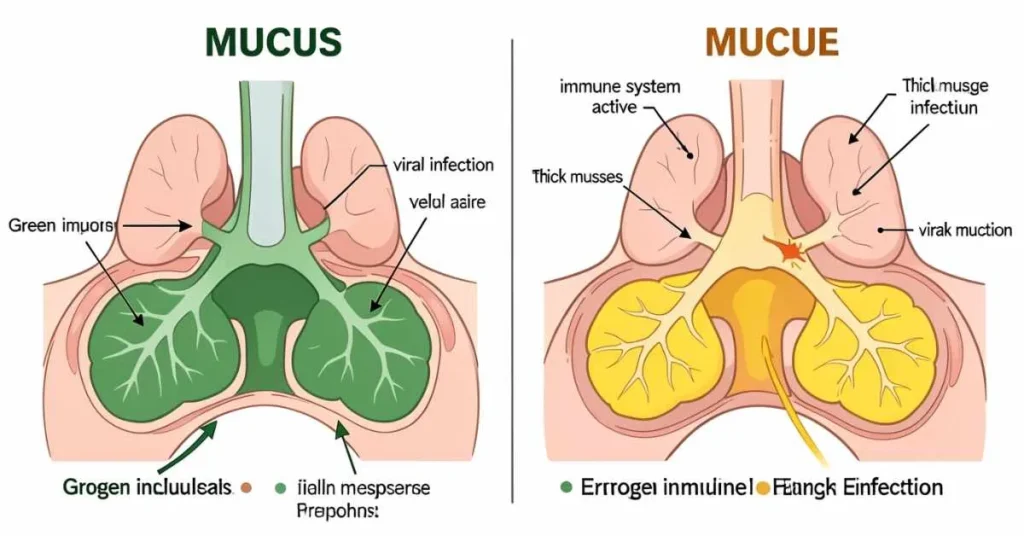
Many people confuse green and yellow mucus. Here’s the difference:
- Yellow mucus: Early sign of infection, often mild.
- Green mucus: Indicates stronger immune activity.
- Brown/black mucus: May indicate smoking, pollution, or irritation.
Understanding mucus color helps decide when to use home remedies or see a doctor.
Quick Facts About Green Boogers
- Green boogers indicate your immune system is fighting germs.
- Green mucus without sickness can appear due to environmental irritants.
- Thick mucus may be caused by dehydration or post-nasal drip.
- Persistent green mucus for over 10 days may signal bacterial infection.
FAQs
Q: Green boogers but not sick
A: Green boogers can happen without feeling sick due to dryness, allergies, irritation, or trapped particles in the nose.
Q: Green snot
A: Green snot often contains immune cells and does not always mean you have a bacterial infection.
Q: Does green mucus mean you are getting better
A: Green mucus can appear during recovery, but its color alone cannot confirm that you are getting better.
Q: Green boogers meaning baby
A: Green boogers in a baby can result from normal mucus changes, nasal irritation, congestion, or an infection.
Q: How to get rid of green snot
A: Saline nasal drops, gentle nose blowing, fluids, and a humidifier can help clear green snot.
Q: Constant green snot for months
A: Constant green snot for months should be discussed with a healthcare professional to identify the underlying cause.
Q: Yellow green snot
A: Yellow-green snot commonly occurs when mucus becomes thicker and contains immune cells, especially during congestion.
Q: Green boogers meaning toddler
A: Green boogers in toddlers can come from congestion, dry air, allergies, irritation, or a respiratory infection
Conclusion
Green boogers are usually harmless. They indicate your immune system is working to fight infection or irritation in nasal passages and sinuses. Most cases resolve with home remedies, hydration, and proper care.
However, if green mucus persists, worsens, or is accompanied by fever or facial pressure, consult a doctor. Drinking water, keeping the air clean, staying away from smoke, and managing allergies. It can help stop green boogers and keep your nose and lungs healthy.
Click Here To Read About: What Does TBT Mean? Meaning & Social Media Trend

Hi, I’m Evan Lexor, the voice behind Meanvia.com. I break down English words, slang, and phrases into clear, simple meanings that actually make sense. From modern internet terms to everyday expressions, my goal is straightforward: help you understand English better, faster, and with confidence, one word at a time.



