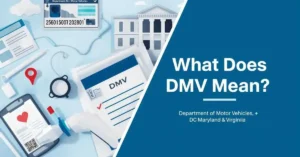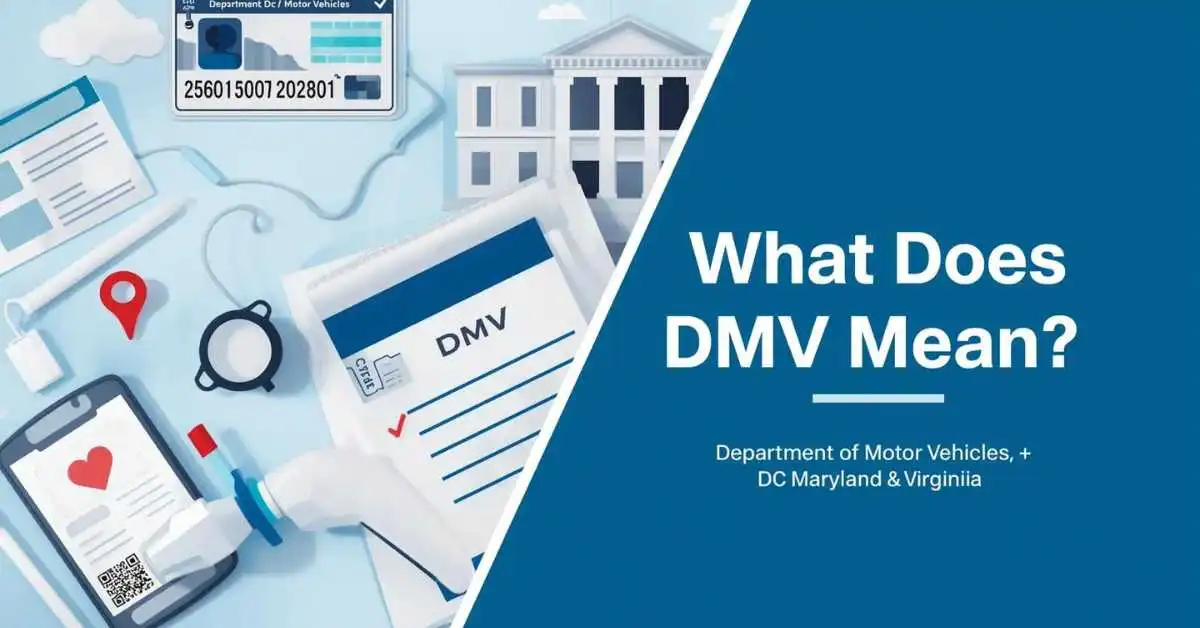
DMV usually stands for Department of Motor Vehicles. It is the state government office that handles driver’s licenses, learner’s permits, vehicle registration, vehicle titles, license plates, REAL ID services, and related records.
In another common use, especially around Washington, D.C., DMV can also mean District of Columbia, Maryland, and Virginia.
Many people search “what does DMV mean” because they see the term on forms, websites, appointment notices, or in everyday conversation. Most of the time, the phrase points to the motor vehicle agency in a U.S. state or territory.
But in local culture near Washington, D.C., the same three letters can describe a whole region. This article explains both meanings, what the DMV does, why the agency name changes by state, and the mistakes people often make when using the term.
What does DMV stand for?
The main DMV meaning
The main answer is simple: DMV stands for Department of Motor Vehicles. Major dictionaries define the abbreviation that way, and official government sites use it for public motor vehicle services.
In everyday English, the DMV is the office people deal with when they need to get a driver’s license, renew an ID card, register a car, transfer a title, replace a lost document, or update their driving record. That is why people often say things like, “I have to go to the DMV,” even if they only need one simple document.
The second meaning of DMV
DMV also has a second well-known meaning in regional speech: District of Columbia, Maryland, and Virginia. Around Washington, D.C., people may say they are “from the DMV” when they mean the greater DC-area region, not the motor vehicle office.
This is why context matters. If the topic is licenses, titles, registration, permits, or appointments, DMV usually means the government agency. If the topic is neighborhoods, culture, food, local events, or where someone lives near Washington, D.C., DMV may mean the regional area instead.
DMV has two common meanings
Here is the fastest way to understand the term:
| DMV Meaning | What It Refers To | Example |
|---|---|---|
| Department of Motor Vehicles | State motor vehicle agency | “I need to renew my license at the DMV.” |
| District of Columbia, Maryland, and Virginia | Washington-area regional nickname | “She grew up in the DMV.” |
The first meaning is the dominant one for searchers asking “what does DMV mean,” while the second meaning is an important secondary intent that many readers also want explained.
What does the DMV do?
Driver’s licenses, permits, and ID cards
One of the DMV’s main jobs is handling driver’s licenses, learner’s permits, and identification cards.
Official DMV service pages show that these agencies manage license applications, renewals, replacements, REAL ID options, provisional licenses, conditional licenses, commercial licenses, and motorcycle endorsements.
So when someone asks, “What does the DMV do?” a big part of the answer is that it manages the legal documents and tests connected to driving. This includes first-time licenses, renewal services, and many record-related tasks.
Vehicle registration, titles, and plates
The DMV also handles vehicle registration, vehicle titles, and often license plates. A vehicle title is the legal document that shows ownership, while registration allows the vehicle to be legally used on public roads. Official government pages treat these as core DMV services.
This is an important part of user intent because many people confuse a title with a registration. They are related, but they are not the same. If you buy, sell, move, or renew, the DMV may be involved in one or both.
Records, renewals, and online services
Modern DMVs do more than in-person counter service. Official sites offer online renewals, duplicate documents, address changes, records, notifications, and appointment tools. That means “the DMV” is not just a building. It is also a digital service system for drivers and vehicle owners.
Is the DMV federal or state?
The DMV is generally a state or territory-level motor vehicle service, not one single federal office.
USA.gov directs people to contact their state DMV for driver’s licenses, REAL ID, car registration, titles, and other motor vehicle services.
That is why DMV rules, names, office procedures, fees, and online systems can vary from one state to another.
The basic purpose is similar across the country, but the exact agency structure depends on where you live.
Why some states do not call it DMV
DMV is a common term, but not the official name everywhere
Many people assume every state uses the exact name “DMV,” but that is not true. Some states use different names for the same type of motor vehicle agency.
Arizona uses MVD for Motor Vehicle Division, Maryland uses MVA for Motor Vehicle Administration, and Indiana uses BMV for Bureau of Motor Vehicles.
Even though the names differ, the services are still closely related: driver’s licenses, registration, titles, records, renewals, and other motor vehicle tasks. That is why people often say “DMV” as a general shortcut, even when their state’s official name is different.
State agency name comparison
| State / Area | Official Agency Name | Meaning |
|---|---|---|
| Washington, D.C. | DMV | Department of Motor Vehicles |
| Arizona | MVD | Motor Vehicle Division |
| Maryland | MVA | Motor Vehicle Administration |
| Indiana | BMV | Bureau of Motor Vehicles |
This comparison helps answer another common search: “What is the difference between DMV and MVA?” Most of the time, the difference is the state’s official naming choice, not a totally different purpose.
Examples of DMV in real life
Example 1: Motor vehicle agency use
If someone says, “I need to go to the DMV to renew my license,” they mean the office that handles license renewal. If they say, “The DMV mailed my registration notice,” they mean the agency that manages vehicle records and registration services.
Example 2: Washington-area regional use
If someone says, “I’m from the DMV,” they may be talking about the Washington-area region made up of DC, Maryland, and Virginia. In that case, the term is cultural and geographic, not administrative.
Example 3: Online search intent
If a user searches “what does DMV stand for in driving,” they want the motor vehicle meaning. If they search “DMV area meaning,” they likely want the DC-Maryland-Virginia meaning. A strong article should make both answers clear without confusing the main definition.
Common mistakes people make about DMV
Mistake 1: Thinking DMV only has one meaning
The biggest mistake is assuming DMV always means the motor vehicle office. That is the main meaning, but not the only one. In Washington-area speech, DMV often means the regional area.
Mistake 2: Assuming every state uses the DMV name
Many people search “DMV near me” even when their state uses MVD, MVA, or BMV. That is normal in conversation, but it can cause confusion when trying to find the official site or book the right appointment.
Mistake 3: Mixing up title, registration, and license
A driver’s license gives a person legal permission to drive. A vehicle title shows ownership. A registration allows the vehicle to be operated legally on the road. The DMV may handle all three, but they are different documents with different purposes.
Mistake 4: Visiting without checking online services first
Many services can be handled online, including renewals and account-based tasks. Skipping the official site may waste time, especially if your state requires an appointment or specific documents.
Practical tips before using DMV services
Check your official state site
Start with your official state motor vehicle website. USA.gov provides a state motor vehicle services path, and state sites explain what documents, forms, and fees apply to your exact task.
Know your task before you go
Are you renewing a driver’s license, replacing an ID card, applying for REAL ID, transferring a title, getting license plates, or registering a new car? The DMV process depends on the task, so naming the right service first can save time.
Use online tools when available
Many agencies now provide online service portals, appointment tools, record access, and renewal systems. Checking those first is often easier than making an in-person trip.
FAQ
What does DMV stand for?
DMV stands for Department of Motor Vehicles. It usually refers to the state motor vehicle agency that handles licenses, IDs, registration, titles, and related services.
What does DMV mean in driving?
In driving, DMV means the office or agency responsible for driver-related and vehicle-related services, such as permits, licenses, registration, and titles.
Is DMV federal or state?
DMV services are generally handled at the state or territory level, not by one single federal DMV office. USA.gov points users to their state DMV for these services.
Does every state have a DMV?
Not every state uses the exact name DMV. Some use names like MVD, MVA, or BMV, even though the functions are similar.
What is the difference between DMV and MVA?
Usually, the difference is the agency name used by a specific state. For example, Maryland uses MVA, while other places use DMV. Both handle motor vehicle services.
What does DMV mean in Washington, D.C.?
It can mean two things. In official government use, DC DMV is the motor vehicle agency. In local regional speech, DMV can also mean District of Columbia, Maryland, and Virginia.
What does the DMV do?
The DMV handles services like driver’s licenses, learner’s permits, REAL ID, ID cards, vehicle titles, registration, and related records. Many states also offer online renewal and account services.
Can I use DMV services online?
In many cases, yes. Official motor vehicle agencies offer online options for renewals, records, duplicate documents, and other services.
Final answer
So, what does DMV mean? In the most common and important sense, DMV means Department of Motor Vehicles, the state agency that handles driver’s licenses, permits, ID cards, vehicle titles, registration, license plates, REAL ID services, and related records.
In another common use, especially near Washington, D.C., DMV can also mean District of Columbia, Maryland, and Virginia. Knowing both meanings helps you understand the term correctly in forms, search results, and everyday conversation.
Read Also About: What Does Description Mean? Definition, Uses, and Examples

Hi, I’m Evan Lexor, the voice behind Meanvia.com. I break down English words, slang, and phrases into clear, simple meanings that actually make sense. From modern internet terms to everyday expressions, my goal is straightforward: help you understand English better, faster, and with confidence, one word at a time.