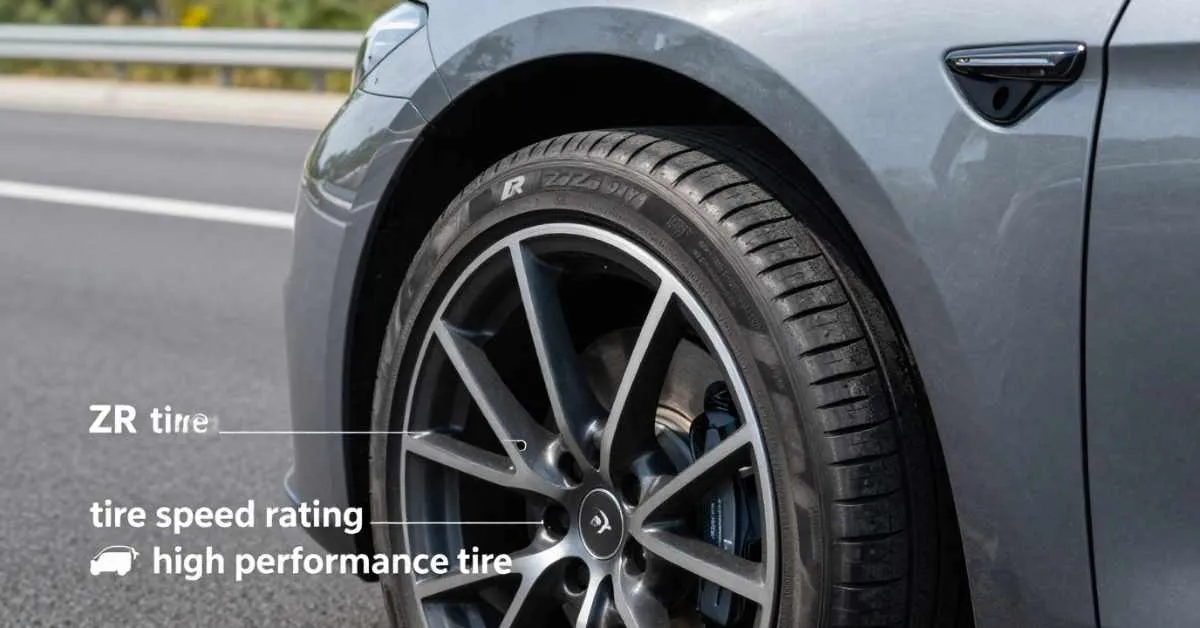
When you look at a tire, you may notice letters and numbers on the tire sidewall markings. One marking that can confuse drivers is ZR tire. So, what does ZR mean on a tire? In simple words, it shows that the tire is made for high-speed driving and is part of high performance tires.
ZR tires are usually found on sports car tires and performance vehicles. They help your car stay stable and safe during highway driving or high-speed driving. ZR tires are made with radial construction and strong materials. They stay cool, hold the road well, and help you drive safely at high speeds.
In this guide, we will explain ZR tires. You will learn how to read the tire speed rating, understand tire size, load index, aspect ratio, and rim diameter. We will also help you decide if ZR tires are right for your car.
We also cover speed rating letters like W speed rating and Y speed rating, so you can know your tire’s maximum tire speed.
What Does ZR Tire Mean?
A ZR tire is a high performance tire made for fast driving. It is suitable for speeds above 240 km/h (149 mph). ZR shows the tire can handle high-speed driving safely.
ZR tires are usually radial tires, meaning the internal structure is built for strength and flexibility. The tire construction helps the tire resist heat, maintain traction, and improve handling at high speeds.
To know the exact maximum tire speed, check the tire speed rating. For example:
- W speed rating: up to 270 km/h (168 mph)
- Y speed rating: up to 300 km/h (186 mph)
ZR alone does not tell the full speed. You must read the performance rating along with the load index for safe driving.
How to Read Tire Sidewall Markings
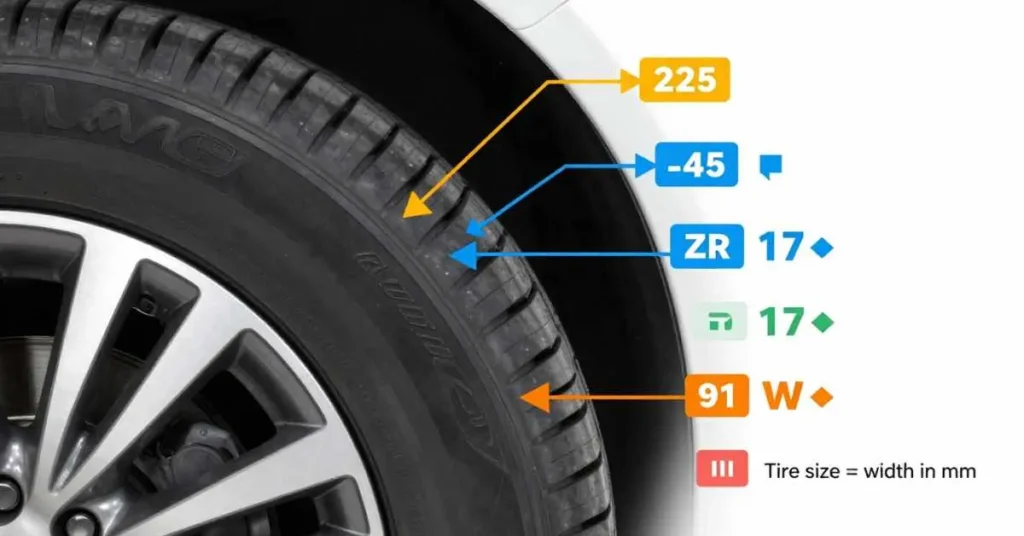
Tire sidewall markings show key information: tire size, aspect ratio, rim diameter, load index, and speed rating. For example: 225/45 ZR17 91W
- 225 = tire size (width in mm)
- 45 = aspect ratio (sidewall height compared to width)
- ZR = high-speed capability
- 17 = rim diameter in inches
- 91 = load index (weight the tire can carry)
- W = tire speed rating
Reading these markings helps you pick the right tire for sports cars, fast cars, or highway driving.
ZR Tires vs Regular Tires
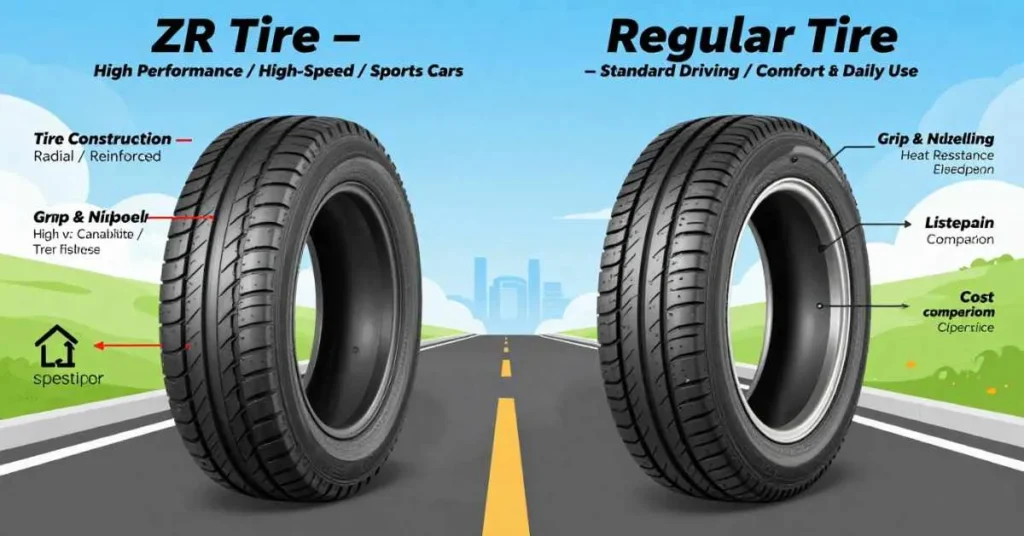
ZR tires are different from regular tires:
Pros:
- Built for high-speed driving
- Better grip and control
- High tire heat resistance
- Improved performance rating for sporty vehicles
Cons:
- Shorter lifespan than regular tires
- More expensive
- Slightly stiffer ride
- Usually summer tires, not ideal for snow
ZR tires are best for sports car tires and vehicles capable of high-speed driving. Regular tires are better for daily city driving.
Who Should Use ZR Tires?
ZR tires are for:
- Sports cars
- Performance vehicles
- Highway driving enthusiasts
- Modified cars with powerful engines
ZR tires are not necessary for regular cars. They are designed for high-speed stability, better grip, and control during fast driving.
Can You Use ZR Tires for Daily Driving?
Yes, ZR tires can be used daily if properly maintained. They provide stability and grip, especially on highways. However, they may feel stiffer on rough roads. Check tire pressure, load index, and tire sidewall markings to ensure safe use.
Load Index and Speed Rating
The load index tells you the weight each tire can carry. For example, 91 means the tire can hold 615 kg. Using a tire with the wrong load index can reduce tire safety.
The tire speed index shows the maximum tire speed. W, Y, and ZR ratings indicate high performance tires designed for sports cars and performance vehicles.
ZR Tires vs Summer, All-Season, and Winter Tires
- ZR Tires: Best for high-speed driving, grip, and control
- Summer Tires: Good for warm weather, may overlap with ZR performance
- All-Season Tires: Balanced for city driving, lower tire speed rating
- Winter Tires: Not for high-speed driving, designed for snow and ice
ZR tires excel in performance, highway driving, and racing tires conditions, but may need seasonal swaps in snow.
Common Myths About ZR Tires
- ZR tires are only for racing – False. Many street cars use ZR tires safely.
- ZR shows exact maximum speed – False. Check W or Y speed rating.
- ZR tires can be used on any car – False. Only for performance vehicles or cars designed for high-speed driving.
- ZR tires are indestructible – False. Proper tire maintenance is essential.
How Long Do ZR Tires Last?
ZR tires typically last 25,000–50,000 km (15,000–30,000 miles). Proper maintenance, rotation, tire pressure, and wheel alignment can extend life. Aggressive driving or rough roads reduce tire life.
Cost of ZR Tires
ZR tires cost more than regular tires. They can be $150 to over $500 for one tire. Big brands like Michelin, Pirelli, and Bridgestone make ZR tires for sports cars and fast cars. The higher price is because these tires stay cool, grip the road well, and can go very fast safely.
How to Maintain ZR Tires
- Check tire pressure regularly
- Rotate tires every 8,000–10,000 km
- Inspect tire sidewall markings for damage
- Maintain wheel alignment and balance
- Swap tires seasonally if driving in snow
Proper care ensures tire safety, performance rating, and longer life.
Legal and Safety Standards
ZR tires must comply with DOT tire code in the U.S. and international tire standards worldwide. Standards include:
- Speed limit compliance
- Tire heat resistance
- Maximum tire speed
- Proper tire construction and load index
Following these standards ensures tire safety and avoids legal issues.
FAQs About ZR Tires
1. What is a ZR tire?
A ZR tire is a high performance tire for high-speed driving.
2. Can ZR tires be used daily?
Yes, if maintained properly with correct tire pressure and load index.
3. What speed can ZR tires handle?
Speeds above 240 km/h; W = 270 km/h, Y = 300 km/h.
4. Are ZR tires better than regular tires?
Yes for high-speed driving and performance vehicles, but regular tires are better for daily driving comfort.
5. Can ZR tires be used in winter?
Not recommended. They are mostly summer tires, best for dry or wet roads in warm conditions.
Final Verdict
ZR tires are perfect for sports cars, performance vehicles, and highway driving. They provide grip, stability, and high-speed safety. Regular tires are sufficient for city driving and normal cars. Always follow tire size, load index, and tire speed rating from your owner’s manual to ensure tire safety.
Read Also About: What Does the Name Kyle Mean: Name Origin, Traits & Fun Facts

Hi, I’m Clara Lexis from Meanvia.com. I break down words and expressions so they’re easy to understand and enjoyable to learn. My mission is simple: make language approachable and fun, one word at a time.