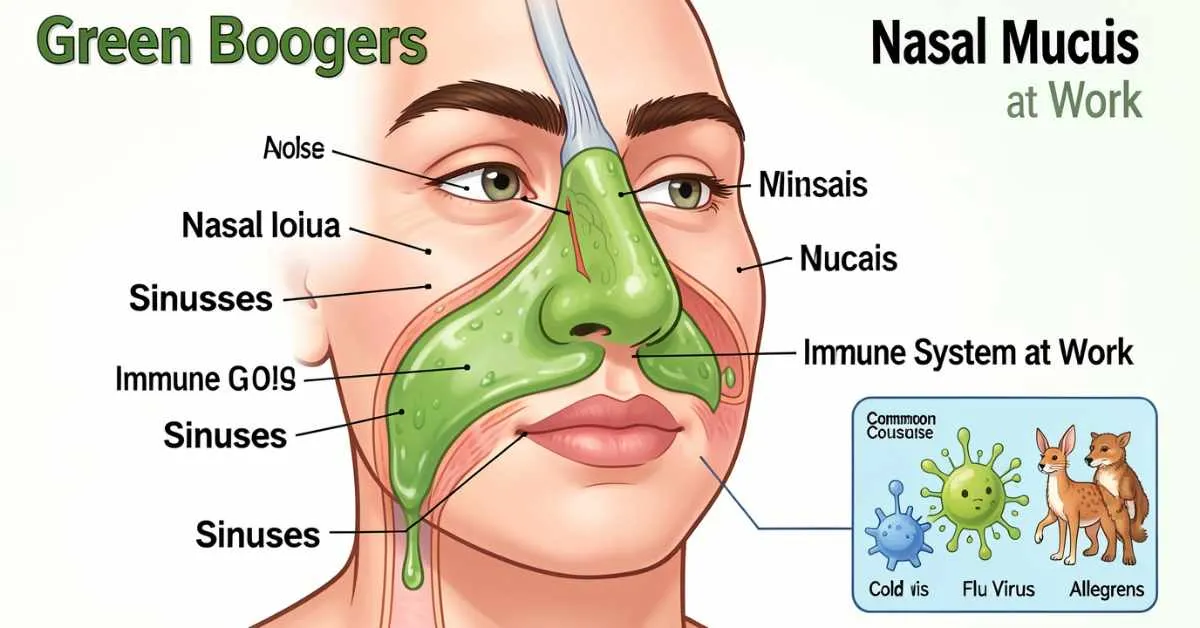
Seeing green boogers can be alarming. Many people worry when they notice their nasal mucus has turned green. But in most cases, it is not a sign of something serious. Green mucus is often a natural response from your body’s immune system fighting off germs in your nasal passages or sinuses.
Understanding the meaning of green boogers helps you know when home care is enough and when it’s time to see a doctor.
This article covers the causes, symptoms, home remedies, medical treatments, prevention, and differences between adults and children, all explained in simple words.
What Does Green Boogers Mean?
Green boogers meaning is simple: your immune system is active. When white blood cells fight germs, they release enzymes. These enzymes mix with your nasal mucus and turn it green.
Green mucus does not always mean a bacterial infection. Thick mucus may result from post-nasal drip, nasal congestion, or dehydration. Even environmental factors like smoke, pollution, or dry air can make mucus green.
Quick facts about green boogers:
- Green boogers indicate your immune system is working.
- Green mucus can appear without illness due to pollution, dry air, or smoke.
- Green mucus usually indicates stronger immune activity compared to yellow mucus.
Causes of Green Boogers
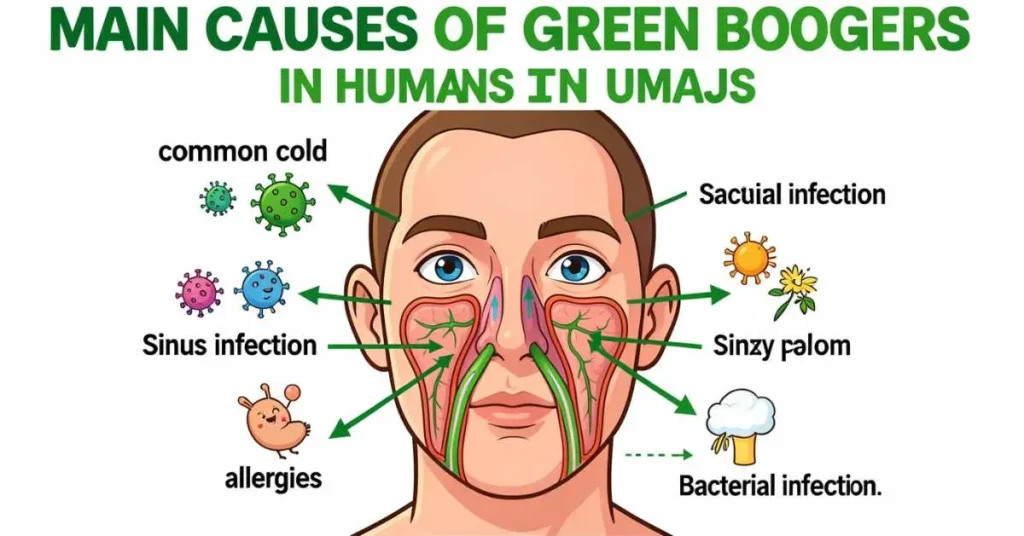
Green boogers can result from several factors. Let’s explore the most common causes.
1. Common Cold (Viral Infection)
The common cold is a viral infection that affects your upper respiratory tract. Symptoms include runny or stuffy nose, sneezing, and mild fever.
During a cold, your white blood cells fight the virus. This causes mucus to thicken and turn green. Green boogers during a cold are normal and usually improve within a few days.
2. Sinus Infection (Sinusitis)
Sinusitis occurs when your sinuses become inflamed or infected. Common symptoms include:
- Thick green mucus
- Facial pressure
- Headache
- Nasal congestion
Bacterial sinus infections may require antibiotics, while viral infections often resolve on their own.
3. Flu (Influenza)
The flu can cause thick green phlegm, fever, body aches, and fatigue. Like the common cold, green mucus indicates your body is fighting the virus.
4. Allergies
Allergic reactions can cause inflammation in nasal passages, sometimes producing green mucus. Secondary infections can also make mucus thick and green.
5. Environmental Factors
Smoke, pollution, dry air, and low humidity can irritate the nose and produce green mucus, even without any illness. People living in urban areas or working in smoky environments may notice green boogers more often.
Symptoms Often Seen With Green Boogers
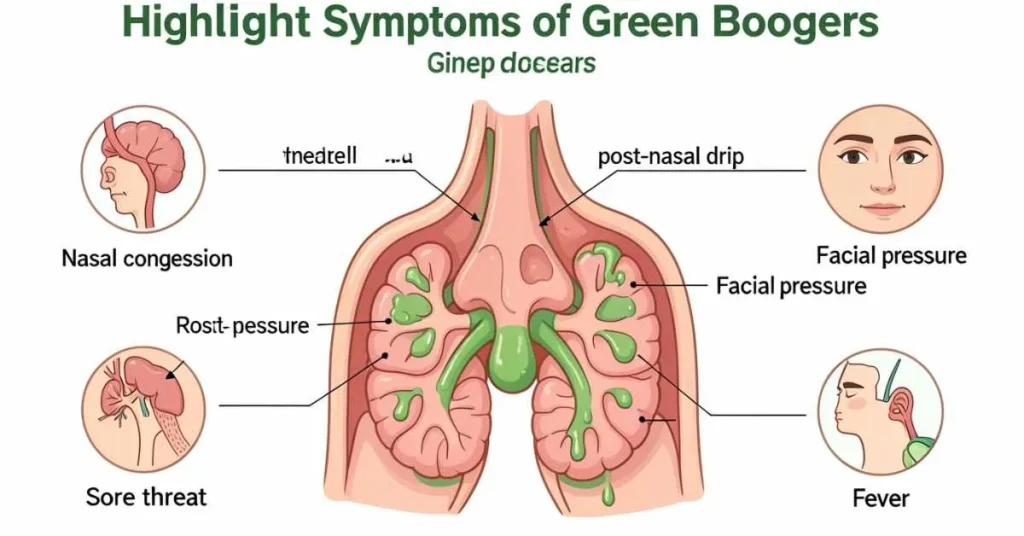
Green mucus may be accompanied by other symptoms. Common signs include:
- Nasal congestion or stuffy nose
- Post-nasal drip
- Facial pressure
- Headache
- Sore throat
- Mild fever
- Fatigue
If these symptoms are mild, home remedies are usually enough. But persistent or severe symptoms may require medical treatment.
When Green Boogers Are Normal
Green boogers are often normal in certain situations:
- Morning mucus: Overnight accumulation is common.
- Recovery from cold or flu: Green mucus may persist even as you feel better.
- After irritation: Allergies, dry air, or environmental irritants can produce thick mucus.
When to Worry About Green Boogers
See a doctor if you notice:
- Green mucus lasting more than 10 days
- Severe facial pressure or headache
- High fever
- Foul-smelling mucus
- Blood in mucus
- Worsening symptoms instead of improvement
These signs may indicate bacterial infection or sinusitis. Prompt treatment is important to prevent complications.
Green Boogers in Children vs Adults
Children
- Children have a developing immune system, so green mucus is more common.
- Monitor fever and facial pressure carefully.
- Most cases resolve with hydration and rest, but persistent symptoms may require medical evaluation.
Adults
- Adults often develop green mucus due to allergies, pollution, or sinus infections.
- Seek medical care if symptoms worsen or persist.
Both children and adults need attention if green mucus is accompanied by severe symptoms.
Home Remedies for Green Boogers
Most cases of green mucus can be managed at home. Simple home remedies help your body clear mucus and feel better faster:
- Hydration: Drink plenty of water to thin mucus.
- Steam inhalation: Steam loosens thick mucus and clears nasal passages.
- Saline nasal spray: Helps wash away mucus and allergens.
- Humidifier: Maintains optimal humidity to prevent dryness.
- Rest: Supports your immune system.
- Avoid irritants: Limit exposure to smoke, pollution, and poor air quality.
These remedies are safe and effective for mild cases.
Medical Treatments for Green Boogers
Sometimes medical treatment is necessary, especially for bacterial infections or severe symptoms:
- Decongestants: Reduce nasal congestion and improve airflow.
- Pain relievers: Help with facial pressure and headaches.
- Antibiotics: Only prescribed if a bacterial infection is confirmed.
- Prescription nasal sprays: Reduce sinus inflammation.
- Diagnostic tests: Used to check for sinusitis or persistent infection.
Always consult a doctor before using antibiotics or prescription medications.
Prevention of Green Boogers
Preventing green mucus is easier than you think. Simple steps can reduce frequency and severity:
- Drink plenty of water to keep mucus thin.
- Improve air quality at home; use humidifiers in dry environments.
- Avoid smoking and polluted areas.
- Practice good hygiene to prevent infections.
- Manage allergies effectively to reduce inflammation.
- Support your immune system with healthy food, sleep, and stress management.
Difference Between Green and Yellow Mucus
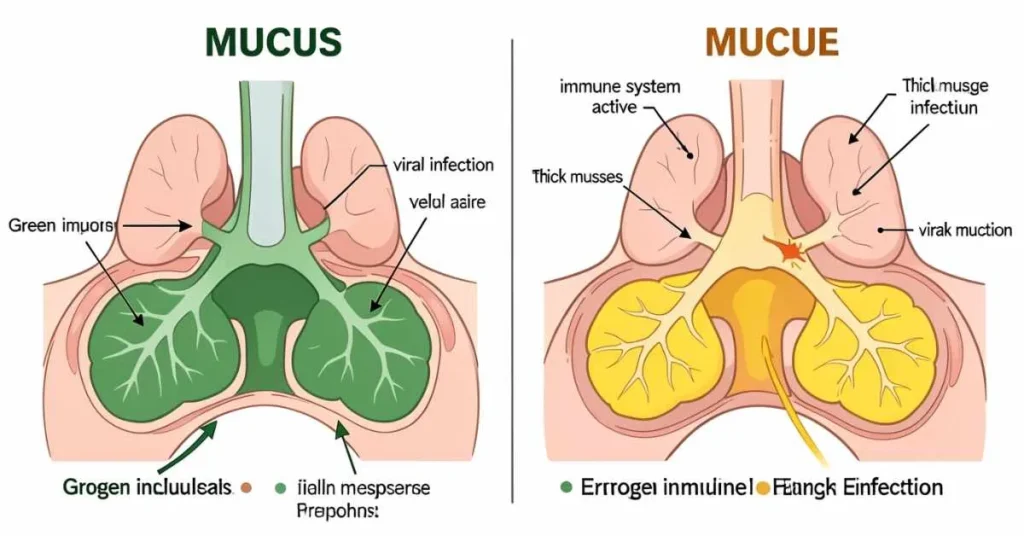
Many people confuse green and yellow mucus. Here’s the difference:
- Yellow mucus: Early sign of infection, often mild.
- Green mucus: Indicates stronger immune activity.
- Brown/black mucus: May indicate smoking, pollution, or irritation.
Understanding mucus color helps decide when to use home remedies or see a doctor.
Quick Facts About Green Boogers
- Green boogers indicate your immune system is fighting germs.
- Green mucus without sickness can appear due to environmental irritants.
- Thick mucus may be caused by dehydration or post-nasal drip.
- Persistent green mucus for over 10 days may signal bacterial infection.
Frequently Asked Questions
1. Is green mucus bad?
No. Most green mucus is a healthy immune response.
2. Can green boogers occur without sickness?
Yes. Pollution, smoke, and dry air can produce green mucus.
3. How long does green mucus last?
Usually a few days. If it lasts more than 10 days, see a doctor.
4. Are green boogers contagious?
The infection may be contagious, but the green mucus itself is not.
5. Do I need antibiotics?
Only if a doctor confirms bacterial infection.
6. Can allergies cause green boogers?
Yes. Allergic reactions can lead to nasal inflammation, which sometimes produces green mucus.
7. How can I prevent green boogers?
Stay hydrated, improve air quality, avoid smoke, and maintain good hygiene.
Conclusion
Green boogers are usually harmless. They indicate your immune system is working to fight infection or irritation in nasal passages and sinuses. Most cases resolve with home remedies, hydration, and proper care.
However, if green mucus persists, worsens, or is accompanied by fever or facial pressure, consult a doctor. Drinking water, keeping the air clean, staying away from smoke, and managing allergies. It can help stop green boogers and keep your nose and lungs healthy.
Click Here To Read About: What Does TBT Mean? Meaning & Social Media Trend

Hi, I’m Evan Lexor, the voice behind Meanvia.com. I break down English words, slang, and phrases into clear, simple meanings that actually make sense. From modern internet terms to everyday expressions, my goal is straightforward: help you understand English better, faster, and with confidence, one word at a time.