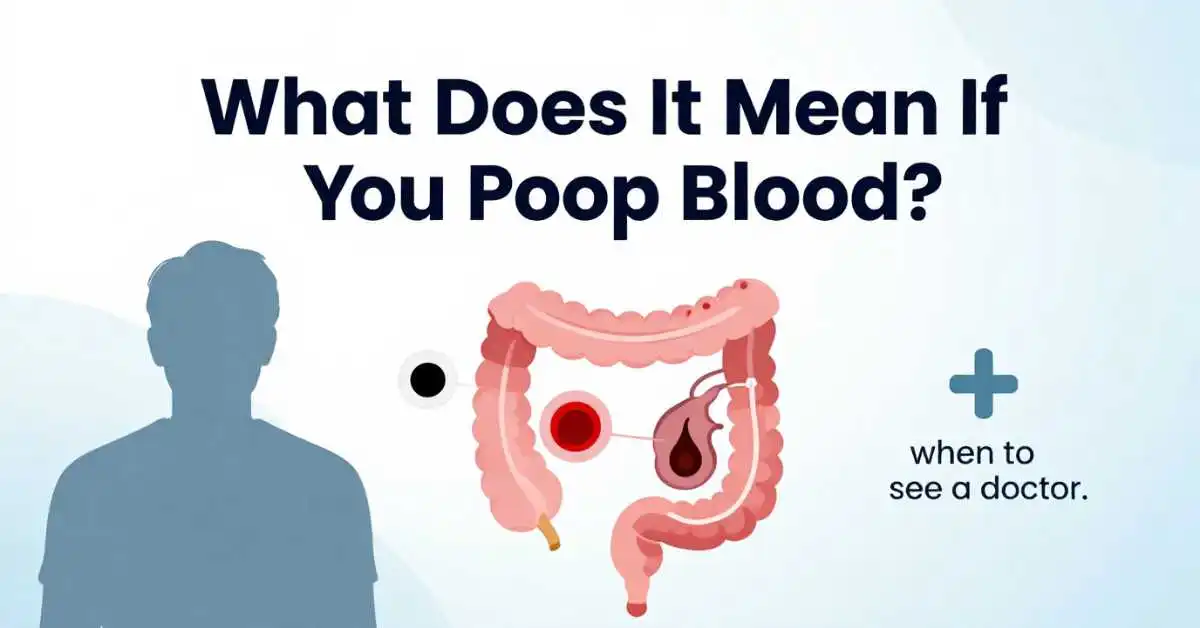
Blood in your poop means there is bleeding somewhere in your digestive system, and while it can come from a small problem like hemorrhoids, it can also point to a condition that needs medical care.
That is why seeing red in the toilet can stop you in your tracks in seconds. It feels shocking, stressful, and hard to ignore. Many people panic right away, but the truth is that the meaning depends on the color of the blood, how much you see, and what other symptoms come with it.
Bright red blood may come from the lower part of the bowel, while dark or black stool can signal bleeding higher up. In this guide, you will learn what blood in stool can mean, the most common causes, warning signs to watch for, and when it is time to see a doctor before the problem gets worse.
Quick answer
Blood in your poop is often called rectal bleeding or blood in stool. Bright red blood usually comes from the anus, rectum, or lower colon.
Dark red blood may come from deeper in the colon. Black, sticky, or tar-like stool can mean bleeding higher up in the digestive tract. Even when the cause seems minor, repeated bleeding should not be ignored.
Get urgent help now if you have these signs
Get medical help right away if you have:
- heavy bleeding
- large blood clots
- black tar-like stool
- severe abdominal pain
- dizziness or fainting
- vomiting blood
- major weakness or shortness of breath
These can be signs of a serious gastrointestinal bleed.
Blood in stool meaning: what it can tell you
Many people search for blood in stool meaning because they want a fast answer. In simple words, it means a blood vessel has broken or a part of the gut is bleeding. That bleeding may come from the anus, rectum, colon, or another part of the bowel. Blood in stool is a symptom, not a disease by itself. Doctors look for the cause before they decide on treatment.
The digestive system includes the stomach, small intestine, large intestine, colon, rectum, and anus. Lower GI bleeding happens in the large intestine or anus. That is why bright red blood often points to a lower source, while black stool may point higher up.
What does blood in stool look like?
Blood in stool can look very different from one person to another. You may see:
- bright red blood on toilet paper
- red water in the toilet bowl
- dark red or maroon blood mixed into the stool
- black stool that looks sticky or tar-like
Doctors use these patterns as clues, but the look alone cannot confirm the cause.
Bright red blood in stool
Bright red blood in stool often means the bleeding is close to the end of the bowel. The most common causes are hemorrhoids and an anal fissure. Hemorrhoids are swollen veins in or around the anus and rectum.
An anal fissure is a small tear in the lining of the anus. Both can happen after straining, hard stools, or constipation.
You may also notice blood when wiping after poop. This often happens when the source is very close to the anus. Blood only on the tissue can still be alarming, but it is commonly linked to hemorrhoids, fissures, or skin irritation.
Dark blood in stool
Dark blood in stool may mean the bleeding is coming from deeper inside the colon or small bowel. Blood mixed into the stool can be harder to spot and should be taken seriously, especially if it keeps happening. Darker blood does not always mean the bleeding has stopped. It can simply mean the blood has traveled farther through the gut.
Black stool
Black stool can happen for harmless reasons, such as iron tablets or bismuth medicine. But black, shiny, sticky, or tar-like stool may mean digested blood. This can happen with bleeding in the stomach or upper small intestine. If black stool comes with weakness, dizziness, or abdominal pain, get checked right away.
Why is there blood in my poop?
If you are asking, why is there blood in my poop, there are several possible answers. Some are mild and common. Others need quick care. The main causes include:
- hemorrhoids
- anal fissure
- constipation
- diarrhea or bowel infection
- inflammatory bowel disease
- diverticulosis or diverticulitis
- colon polyps
- colon cancer or colorectal cancer
The right answer depends on your full symptom picture, not just the blood alone.
Hemorrhoids
Hemorrhoids are one of the most common reasons of rectal bleeding. They are swollen veins in the anus or rectum. They can cause bright red bleeding during or after a bowel movement. Some people also have itching, swelling, mucus, or a lump near the anus. Internal hemorrhoids may bleed with little or no pain.
Anal fissure
An anal fissure is a small tear in the anus. It often causes sharp pain during or after you poop. It can also cause a small amount of bright red blood on the stool or toilet paper. Fissures are often linked to hard stool, constipation, or repeated diarrhea.
Constipation and diarrhea
Constipation can cause blood in stool because hard, dry stool can stretch the anus and cause a fissure or make hemorrhoids bleed. Not drinking enough fluids, not eating enough fiber, and low activity can all make constipation worse.
Diarrhea can also lead to rectal bleeding. Frequent loose stools can frustrate the rectum and anus. Some infections can cause diarrhea with blood. If you have bloody diarrhea, fever, or strong belly pain, you should get medical advice soon.
Inflammatory bowel disease
Inflammatory bowel disease is long-term swelling in the bowel. The two main types are Crohn’s disease and ulcerative colitis. These conditions can cause diarrhea, blood or mucus in stool, abdominal pain, tiredness, and weight loss.
Crohn’s disease can affect different parts of the digestive system. Symptoms may include diarrhea, abdominal pain, pain near the anus, and weight loss.
Ulcerative colitis mainly affects the colon and rectum. Small ulcers can form on the lining and may bleed. People often have repeated diarrhea, urgency, and blood or mucus in the stool.
Diverticulosis and diverticulitis
Diverticulosis means small pouches, called diverticula, are present in the wall of the bowel. They are common as people get older and may cause no symptoms at all.
Diverticulitis happens when those pouches become inflamed or infected. It can cause abdominal pain, fever, and bowel changes. Diverticular disease can also cause bleeding from the bowel.
Colon cancer and colorectal cancer
Blood in stool is sometimes a sign of colon cancer or colorectal cancer. Colorectal cancer includes cancer in the colon or rectum.
Other warning signs may include a change in bowel habits, constipation or diarrhea that is not usual for you, feeling like you still need to poop, abdominal pain, weight loss, or extreme tiredness. Blood in stool does not mean you have cancer, but ongoing bleeding should always be checked.
Blood in stool but no pain
Some people have blood in stool but no pain. This can happen with internal hemorrhoids, colon polyps, diverticular bleeding, or colorectal cancer. Pain can be a clue, but the lack of pain does not mean the cause is harmless. Repeated painless bleeding still needs medical advice.
Blood on paper vs blood mixed in stool
If you only see blood on the paper, the cause is often near the anus. Hemorrhoids and anal fissures are common reasons. If the blood coats the outside of the stool, the source may still be the rectum or anus. If the blood is mixed into the stool, doctors may worry more about bleeding higher in the colon.
Can food or medicine make stool look like blood?
Yes. Some foods can make stool look red. Iron tablets and bismuth medicine can make it look black. That can confuse people and make them think they have bleeding when they do not. But if you are not sure, or the color change keeps happening, speak with a doctor.
When to see a doctor for blood in stool
Many people ask when to see a doctor for blood in stool. The safest rule is simple: if the bleeding is new, repeated, unexplained, heavy, or paired with other symptoms, get checked. Even small amounts of bleeding should not be ignored if they keep coming back.
See a doctor soon if you have:
- blood in stool more than once
- dark blood in stool
- black stool
- bloody diarrhea
- abdominal pain
- weight loss
- a change in bowel habits
- blood in stool but no pain that keeps happening
These signs may point to a deeper bowel problem.
How doctors find the cause
Doctors start with your symptoms, your health history, and often an exam of the anus or rectum. They may ask about constipation, diarrhea, abdominal pain, weight loss, medicines, and family history.
A stool test can check for hidden blood, called occult blood. Blood tests can check for anemia or infection.
A colonoscopy is one of the most useful tests. It lets a doctor look inside the rectum and colon with a thin tube and camera. It can show irritated tissue, ulcers, polyps, and cancer.
A sigmoidoscopy looks at the rectum and lower colon. It can also show swollen tissue, ulcers, polyps, and cancer.
A CT scan may also help in some cases. A CT-based test called virtual colonoscopy uses x-rays and a computer to examine the rectum and colon from outside the body. CT imaging can also help doctors look for problems such as diverticulitis.
Treatment depends on the cause
Treatment is different for each cause. Hemorrhoids and fissures may improve with softer stools, less straining, and better toilet habits. Inflammatory bowel disease, diverticulitis, ulcers, or cancer need medical treatment based on the diagnosis. Some bleeding can be treated during endoscopy. In more serious cases, surgery may be needed.
Prevention tips that may help
You cannot prevent every cause of rectal bleeding, but you can lower the risk of common problems linked to hard stool and straining.
1) Drink enough fluids
Good hydration helps keep stool softer and may lower the risk of constipation.
2) Eat a high fiber diet
A high fiber diet can help digestion and help prevent constipation. Foods such as oats, beans, fruit, vegetables, and whole grains are useful sources of fiber.
3) Use fiber supplements if your doctor suggests them
Fiber supplements can help some people who do not get enough fiber from food. Ispaghula husk is one example used for constipation.
4) Use laxatives carefully
Some people need laxatives for short-term constipation relief, but the right type depends on the cause. It is better to use them the right way and get advice if constipation keeps coming back.
5) Do not strain too hard
Straining can worsen hemorrhoids and fissures. Go when you feel the urge, and try not to sit on the toilet for long periods. Guidance on bowel health and constipation care supports avoiding habits that worsen straining.
Simple symptom guide
Here is a simple way to think about it:
- Bright red blood, pain when pooping: often hemorrhoids or anal fissure.
- Bright red blood, no pain: may still be hemorrhoids, but other causes are possible.
- Dark blood mixed in stool: may point to bleeding deeper in the colon.
- Black stool: may mean bleeding higher in the digestive tract or a medicine side effect.
- Blood with diarrhea and cramps: may point to infection or inflammatory bowel disease.
- Blood with weight loss or bowel changes: needs prompt medical review.
FAQ
Is bright red blood in stool always hemorrhoids?
No. Hemorrhoids are common, but bright red blood can also come from an anal fissure, inflammation, infection, or another lower bowel problem.
Can constipation cause blood in stool?
Yes. Constipation can lead to hard stool, straining, fissures, and hemorrhoid bleeding.
Can diarrhea cause rectal bleeding?
Yes. Frequent loose stools can irritate the anus and rectum, and some bowel infections can cause bloody diarrhea.
Is blood in stool but no pain serious?
It can be. Some causes, like internal hemorrhoids, may not hurt. But bleeding without pain can also happen with colon polyps, diverticular bleeding, or colorectal cancer.
What test is best for blood in stool?
That depends on your symptoms, but doctors often use stool tests, blood tests, colonoscopy, sigmoidoscopy, or imaging such as a CT scan.
Final takeaway
Blood in your poop can come from the anus, rectum, colon, or another part of the digestive system. Common causes include hemorrhoids, anal fissure, constipation, diarrhea, inflammatory bowel disease, diverticulosis, diverticulitis, colon cancer, and colorectal cancer. The blood may look bright red, dark red, or black, and each pattern gives clues.
The best next step is not to guess. Watch the color, amount, and pattern. Notice other symptoms like abdominal pain, black stool, diarrhea, weakness, or weight loss. Then get medical help if the bleeding is repeated, unexplained, or heavy.
Click For Read About This Post: What Does 304 Mean? Full Guide With Explanation

Hi, I’m Clara Lexis from Meanvia.com. I break down words and expressions so they’re easy to understand and enjoyable to learn. My mission is simple: make language approachable and fun, one word at a time.