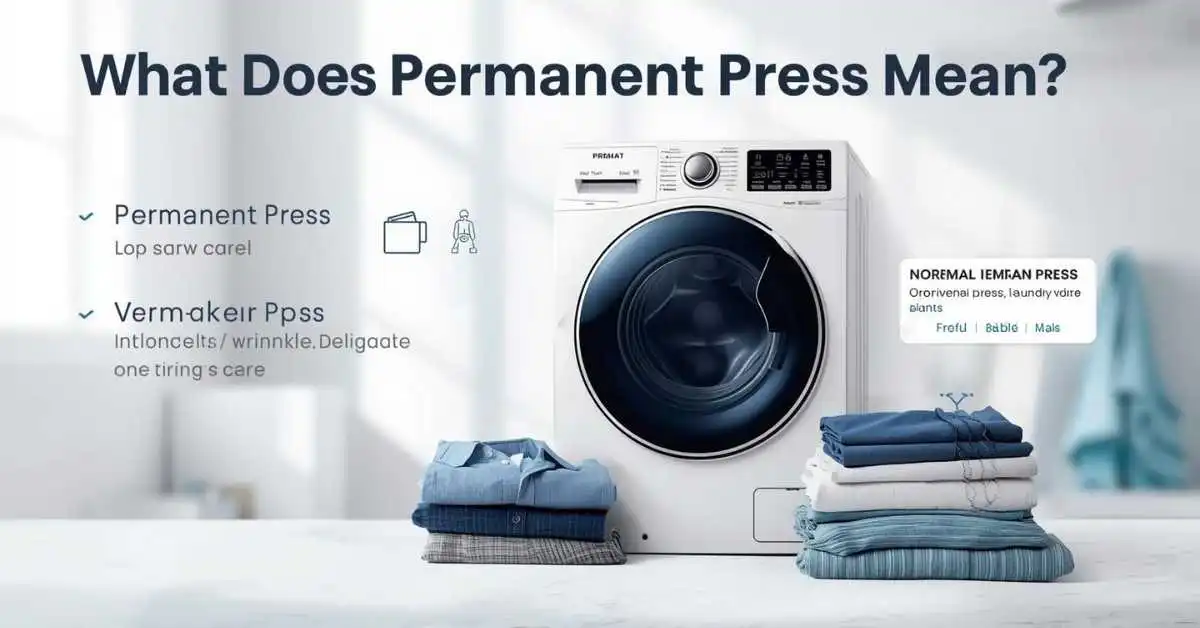
If you have ever looked at a washer dial and asked, what does permanent press mean, you are not alone. Many people see this setting and are not sure when to use it. The term can also show up on clothing labels, which makes it even more confusing.
The good news is that the meaning is simple. Permanent press usually means a setting or fabric finish made to help reduce wrinkles. It is often used for easy-care fabric, wrinkle-resistant clothing, and clothes that should look neat after washing and drying.
In this guide, you will learn what is permanent press on a washing machine, what does permanent press mean on clothes, when to use it, when to skip it, and how it compares with other washer settings and dryer settings.
Quick Answer: What Does Permanent Press Mean?
Permanent press means a laundry setting or fabric finish made to reduce wrinkles. On a washer, it uses gentler movement than a normal cycle.
On a dryer, it often uses medium heat dryer settings and a cool-down period. And on clothes, it can mean the fabric has a durable press finish to help it stay smoother.
At a Glance: When to Use Permanent Press
| Use Permanent Press For | Do Not Use Permanent Press For |
|---|---|
| Dress shirts | Silk |
| Blouses | Lace |
| Slacks | Lingerie |
| Polyester blends | Heavy towels |
| Rayon blends | Thick blankets |
| Nylon tops | Very dirty work clothes |
| Office wear | Items marked delicate only |
What Does Permanent Press Mean on a Washing Machine?
How the cycle works
If you want to know what is permanent press on a washing machine, think of it as a middle setting. It sits between normal and delicate.
It is made for clothes that can wrinkle easily but are not too fragile. The cycle often uses:
- a warm water wash
- a cool rinse
- a low spin cycle or gentler spin
- shorter or softer agitation than a normal cycle
This helps stop deep wrinkles from setting into the fabric.
Why people use it
Many people use this cycle because they want clothes to come out cleaner than on delicate, but smoother than on normal. It is a smart choice for work clothes, school clothes, and many synthetic blends.
This is why people also ask, is permanent press the same as wrinkle control. On many machines, yes, it is very close. Some brands may call it wrinkle control setting or casual cycle instead of permanent press.
Simple example
Let’s say you wash a polyester blouse on the normal cycle. It may come out clean, but it may also come out with more folds and wrinkles. The permanent press cycle can help lower that problem.
What Does Permanent Press Mean on Clothes?
The fabric meaning
People also ask, what does permanent press mean on clothes. On clothing, it usually means the fabric was treated to hold its shape better and wrinkle less.
This finish is often called:
- durable press
- easy-care
- wash-and-wear
- wrinkle-resistant
- no-iron clothes
These terms are close in meaning. They all point to fabric that needs less ironing and keeps a neater look.
Why the finish matters
Some fabrics wrinkle fast. Cotton can wrinkle a lot. Linen wrinkles even more. Blends like polyester, rayon, nylon, and acrylic are often used to make fabric easier to care for.
That is why polyester blend care is often linked with permanent press. These fabrics can look better after washing when you use the right cycle.
Simple example
A dress shirt made from cotton and polyester may have a permanent press finish. That means it should dry with fewer wrinkles than a plain cotton shirt.
How the Permanent Press Dryer Setting Works
Can you dry clothes on permanent press?
Yes, many people ask, can you dry clothes on permanent press, and the answer is often yes. The dryer setting is made for clothes that wrinkle easily.
It usually uses:
- medium heat
- less harsh drying
- a cool-down period at the end
That cool-down period matters. It helps stop hot fabric from sitting in one shape and forming hard wrinkles.
When it helps most
This setting is useful for:
- shirts
- blouses
- slacks
- dresses
- school uniforms
- synthetic fabrics
- wrinkle-prone casual wear
When not to use it
Do not use it for every load. Heavy towels and thick bedding often do better on a stronger setting. Silk and lace may need low heat or air dry instead.
Permanent Press vs Normal
What is the difference?
One of the biggest questions is permanent press vs normal.
A normal cycle is stronger. It is best for sturdy items that can handle more movement and a faster spin.
A permanent press cycle is gentler. It is best for clothes that wrinkle easily and need a smoother finish.
Simple rule
Use normal for:
- towels
- socks
- jeans
- sheets
- plain cotton basics
Use permanent press for:
- blouses
- dress shirts
- slacks
- office wear
- polyester blends
- rayon blends
Quick comparison table
| Setting | Best For | Main Goal |
|---|---|---|
| Normal | Towels, sheets, jeans | Strong cleaning |
| Permanent Press | Workwear, synthetics, wrinkle-prone clothes | Fewer wrinkles |
| Delicate | Silk, lace, lingerie | Gentle care |
Permanent Press vs Delicate
How they are different
Many people also search permanent press vs delicate. These two are not the same.
Delicate is softer and gentler. It is made for fragile items that can stretch, tear, or lose shape.
Permanent press is for everyday clothes that are not fragile but still need wrinkle care.
When to pick delicate
Choose delicate for:
- silk tops
- lace items
- bras
- sheer fabric
- clothes with beads or trim
When to pick permanent press
Choose permanent press for:
- school uniforms
- office shirts
- polyester tops
- rayon dresses
- wrinkle-resistant clothing
If the care label says delicate, follow the label.
What Clothes Should Be Washed on Permanent Press?
Best fabric choices
If you are asking what clothes should be washed on permanent press, start with fabric type.
The cycle is often best for:
- polyester
- polyester-cotton blends
- rayon blends
- nylon
- acrylic blends
- wrinkle-resistant cotton blends
These fabrics often do not need the strong action of the normal cycle.
Best clothing choices
It also works well for:
- button-down shirts
- blouses
- dress pants
- skirts
- work uniforms
- casual dresses
- school clothes
- light jackets
What fabrics use permanent press?
Another common search is what fabrics use permanent press. The answer is simple: fabrics that wrinkle easily but are still machine washable.
That often includes:
- synthetic blends
- cotton blends
- easy-care fabrics
- some treated cotton garments
- wrinkle-control clothing
Simple example
A rayon blouse can wrinkle fast. A permanent press wash may help it come out smoother than a normal wash.
What Clothes Should Not Be Washed on Permanent Press?
Too delicate
Some clothes are too soft or fragile for this cycle. Skip permanent press for:
- silk
- lace
- lingerie
- sheer fabrics
- clothes with fine trim
These need more care.
Too heavy
Some clothes are too heavy for the cycle to be useful. Skip permanent press for:
- bath towels
- heavy blankets
- thick hoodies
- bulky bedding
- muddy work clothes
These often need a stronger wash or a different dry setting.
Very dirty loads
If clothes are very dirty, normal may clean better. Permanent press is more about wrinkle care than heavy cleaning power.
Permanent Press Symbol Meaning
What the symbol looks like
People also search for permanent press symbol meaning. On a care label, the symbol is usually easy to spot.
A wash tub or dryer symbol with one line under it often means permanent press.
Here is the basic idea:
| Symbol Style | Meaning |
|---|---|
| No line under symbol | Normal cycle |
| One line under symbol | Permanent press |
| Two lines under symbol | Delicate or gentle |
Why care label symbols matter
This is part of a good laundry symbol guide. The care label tells you the safest way to wash and dry the item.
If a shirt says permanent press, use that setting if your machine has it.
Simple example
If your blouse has a wash tub with one line under it, that is a sign to use permanent press, not normal.
Does Permanent Press Mean Wrinkle Free?
The short answer
Another common search is does permanent press mean wrinkle free.
No, not fully.
It means fewer wrinkles, not zero wrinkles.
What it really means
Permanent press helps fabric look smoother. It can lower the need for ironing. But clothes can still wrinkle if:
- the washer is too full
- the dryer is too full
- clothes sit too long after the cycle ends
- the fabric wrinkles easily by nature
Better way to think about it
Permanent press means:
- easier care
- less ironing
- smoother fabric
- better shape retention
It does not mean perfect results every time.
Is Permanent Press the Same as Wrinkle Control?
Often yes
Many people ask, is permanent press the same as wrinkle control. On many machines, yes. The names may change by brand.
You may also see:
- wrinkle control
- casual
- casual cycle
- easy-care
These names often mean the same basic thing: less heat or less force to help stop wrinkles.
Check your machine manual
Every brand is a bit different. If your washer or dryer has both options, read the panel or manual. But for most homes, permanent press and wrinkle control are very close.
How to Use Permanent Press the Right Way
Step 1: Sort by fabric
Do not mix towels with dress shirts. Keep similar fabrics together.
Step 2: Check the label
Look at the care label symbols first. That is the best guide.
Step 3: Do not overload
A packed washer or dryer can cause more wrinkles.
Step 4: Dry the right way
Use the permanent press dryer cycle if the label allows it. This is helpful if you are wondering, can you dry clothes on permanent press.
Step 5: Remove clothes fast
Do not leave clothes sitting in the dryer. Take them out soon after the cycle ends. This helps stop folds from setting.
Common Mistakes to Avoid
Using permanent press for everything
This setting is helpful, but it is not the best for every fabric.
Ignoring the label
Always check the care tag. The label matters more than the machine dial.
Leaving clothes in the dryer
Even the best cycle will not save clothes from wrinkles if they stay in a heap for hours.
Mixing heavy and light items
A dress shirt and a towel do not need the same wash or dry setting.
Best Tips for Fewer Wrinkles
Simple tips that work
- Wash smaller loads
- Use hangers right away
- Fold clothes soon after drying
- Use permanent press for workwear
- Use delicate for fragile items
- Use normal for heavy basics
Best real-life use
Permanent press is best when you want a balance between cleaning and wrinkle care.
That is why it works so well for:
- office shirts
- school uniforms
- slacks
- synthetic tops
- easy-care dresses
FAQs
What is permanent press on a washing machine?
It is a cycle made for clothes that wrinkle easily. It uses gentler movement than a normal cycle and often has a lower spin speed.
What does permanent press mean on clothes?
It usually means the fabric has a finish that helps reduce wrinkles and hold shape better after washing.
What clothes should be washed on permanent press?
Dress shirts, blouses, slacks, polyester blends, rayon blends, and other wrinkle-prone but washable clothes do well on this cycle.
Permanent press vs delicate: which is better?
Neither is better for all clothes. Permanent press is better for wrinkle-prone everyday clothes. Delicate is better for fragile fabrics like silk and lace.
Permanent press vs normal: what is the main difference?
Normal is stronger and better for towels, sheets, and jeans. Permanent press is gentler and better for clothes that need fewer wrinkles.
Conclusion
So, what does permanent press mean? It means a fabric finish or laundry setting made to help reduce wrinkles and keep clothes looking neat. On a washer, it gives gentler care than a normal cycle. On a dryer, it often uses medium heat and a cool-down period. And on clothes, it may mean a durable press or easy-care fabric finish.
If you are still unsure, remember this simple rule: use permanent press for wrinkle-resistant clothing, workwear, and many synthetic blends. Use normal for heavy basics. Use delicate for fragile items.
That one step can help your clothes last longer, look smoother, and need less ironing.
Read Also This Post: What Does Causation Mean? Simple Guide

Hi, I’m Evan Lexor, the voice behind Meanvia.com. I break down English words, slang, and phrases into clear, simple meanings that actually make sense. From modern internet terms to everyday expressions, my goal is straightforward: help you understand English better, faster, and with confidence, one word at a time.