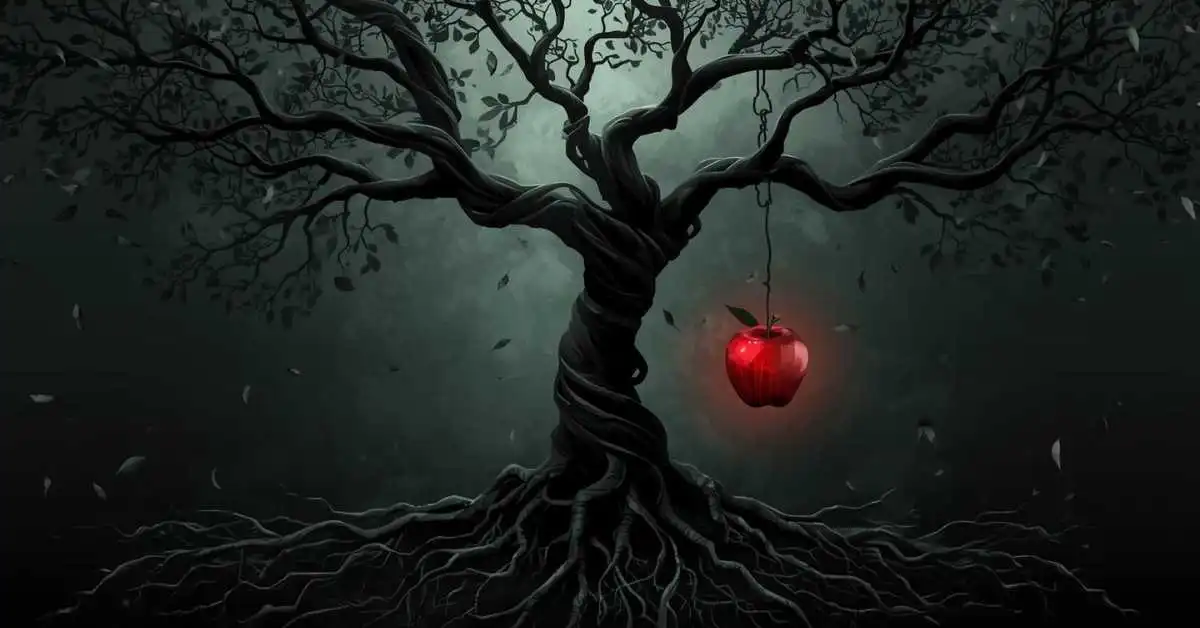
A poison tree tattoo usually symbolizes hidden anger, resentment, betrayal, or emotional pain that grows when it is left unspoken. Most people connect it to William Blake’s poem A Poison Tree, where suppressed wrath becomes a tree that bears a deadly apple.
In modern tattoo culture, though, the design can also mean self-awareness, healing, personal growth, and a warning not to let toxic emotions take root.
A strong poison tree tattoo does more than look dark or artistic. It tells a story. For some people, that story is about revenge, heartbreak, or a toxic relationship.
For others, it is about learning to speak honestly, process anger, and stop old wounds from growing into something destructive. That mix of literary symbolism, emotional depth, and visual power is why this tattoo keeps attracting attention.
The direct meaning of a poison tree tattoo
At its core, a poison tree tattoo means that emotions can grow in dangerous ways when they are hidden instead of expressed. The most common reading is suppressed anger. The second most common reading is resentment that turns into revenge.
In tattoo form, the tree becomes a symbol of what happens when wrath is fed by silence, fear, deception, or emotional repression.
That does not mean the tattoo is always negative. Many people choose it as a warning symbol rather than a celebration of bitterness. In that interpretation, the poison tree stands for emotional honesty, self-control, healing, and the decision to break a toxic cycle before it harms you or anyone else.
Why William Blake matters so much
The tattoo comes from A Poison Tree
This tattoo is closely tied to William Blake’s poem A Poison Tree, published in 1794 in Songs of Experience. The poem opens with a simple contrast: anger shared with a friend ends, but anger hidden from a foe grows. That basic idea is the foundation of the tattoo’s meaning.
What happens in the poem
In Blake’s poem, wrath is treated like something planted and cultivated. The speaker “waters” it with fears and tears, “suns” it with smiles and deceit, and eventually it grows into a tree that bears a bright apple.
The enemy sees the apple, enters the garden, and ends up dead beneath the tree. Critics commonly read the poem as a warning about suppressed anger, duplicity, revenge, and the destructive result of letting resentment grow in secret.
Why the apple and garden matter
The apple is one of the most important entities in this symbol. In literary analysis, it often represents the visible fruit of hidden wrath: temptation, consequence, and the point where private anger becomes outward harm.
Because the poem also uses a garden and a shining apple, many readers see an echo of forbidden fruit and Garden of Eden imagery, which adds themes of temptation, deception, and fall to the tattoo’s meaning.
Core meanings of a poison tree tattoo
Suppressed anger and emotional repression
This is the clearest meaning. The tattoo can represent years of bottled-up feelings, silence after conflict, or the danger of emotional suppression.
Someone who struggles to express pain, disappointment, or rage may choose this design as a reminder that buried emotion does not disappear. It grows.
Resentment, revenge, and betrayal
A poison tree tattoo can also stand for betrayal, distrust, revenge, and the darker side of human relationships.
This reading fits the poem closely because the speaker’s hidden wrath is not resolved; it matures into something fatal.
In modern tattoo symbolism, that makes the design especially appealing to people marking heartbreak, manipulation, friendship betrayal, or the aftermath of being deeply wronged.
Toxic relationships and emotional damage
Many tattoo guides now frame the poison tree as a symbol of toxic dynamics. The tree may represent a relationship that looked beautiful on the outside but harmed you underneath. The bright apple, in this reading, is the attractive surface. The poison is the reality behind it.
Healing, growth, and self-awareness
This is the meaning many modern wearers prefer. They do not get the tattoo to glorify wrath. They get it to show they survived it, understood it, and learned from it.
In that sense, the poison tree tattoo meaning becomes less about revenge and more about personal growth, emotional maturity, and the refusal to let old pain control the future.
Literary identity and gothic symbolism
Some people choose this design because they love William Blake, Romantic poetry, dark art, or literary tattoos with layered symbolism.
For them, the poison tree is not just about anger. It is also about metaphor, imagination, moral conflict, and the beauty of gothic imagery.
Poison tree tattoo meaning by design element
The exact message changes based on the artwork. That is important because many searchers are not only asking what the tattoo means in general. They want to know what their specific version says.
| Design element | Possible meaning |
|---|---|
| Full poison tree | Anger, resentment, emotional growth, consequences |
| Bare or dead tree | Damage, burnout, grief, emotional aftermath |
| Tree with one bright apple | Temptation, revenge, visible consequence |
| Roots exposed | Deep pain, old trauma, buried resentment |
| Falling fruit | Loss of control, collapse of toxic patterns |
| Snake with tree or apple | Deception, temptation, betrayal, Eden imagery |
| Thorns or twisted branches | Defensiveness, suffering, emotional danger |
| Blossoms with dark fruit | Beauty hiding harm |
| Blake quote under the tree | Clear literary reference and deeper symbolic intent |
The tree itself usually represents growth and memory. The poison apple adds temptation and consequence. Roots suggest long-buried pain. A snake can deepen the symbolism by adding deceit, danger, forbidden fruit, and the Garden of Eden connection.
Thorns and broken branches often push the design toward a harsher, more defensive message. These variations help turn a generic dark tattoo into a very personal one.
Meaning by placement
Placement does not completely change the meaning, but it changes the tone.
Forearm or hand
A forearm poison tree tattoo feels public and deliberate. It often reads like a statement tattoo. It suits people who want the symbol to be seen and discussed.
Chest or ribs
On the chest or ribs, the design usually feels more private and emotional. This placement works well when the tattoo is tied to heartbreak, grief, or a personal history with anger.
Back or shoulder
These placements allow larger branch and root work. They often suit a more artistic or literary design, especially one that includes the apple, the garden, or a line from Blake.
Leg or thigh
A thigh or calf piece can feel more reflective than confrontational. It is often chosen by people who want a symbolic design without making it their most visible tattoo.
Examples of what this tattoo may mean in real life
“I used to keep everything inside”
For one person, the poison tree tattoo may mean, “I learned that silence made my anger worse.” This version is about emotional suppression, self-awareness, and healthier communication.
“I survived a toxic relationship”
For another person, the tree may represent a manipulative partner, betrayal, or emotional abuse. The fruit looks beautiful, but the core is poison. Here the tattoo becomes a survival marker.
“I love Blake and dark literary symbols”
A literature lover may get the tattoo because A Poison Tree is one of Blake’s best-known warnings about wrath, deception, and human conflict. In this case, the tattoo is both intellectual and personal.
“I am not proud of my anger, but I understand it now”
This is one of the strongest modern interpretations. The tattoo does not say, “I am revenge.” It says, “I know what unspoken pain can become, and I choose awareness instead.”
Is a poison tree tattoo negative?
Not always. The original literary source is dark, cautionary, and morally heavy. It deals with wrath, revenge, fear, deceit, and death. But tattoos are personal symbols, not fixed exams. In modern use, the design can be negative, reflective, healing, spiritual, psychological, literary, or all of these at once.
A good way to understand it is this: the poem gives the symbol its warning, while the wearer gives the tattoo its final meaning. That is why one poison tree tattoo can feel like a confession, while another feels like closure.
Common mistakes to avoid before getting one
Choosing it only because it looks dark
This tattoo has real symbolic weight. If you pick it only for the aesthetic, you may end up with a design that sends a message you never intended.
Missing the Blake reference
Because the symbol is strongly linked to William Blake and Songs of Experience, many people will read it as a literary tattoo first. That is not a problem, but you should know it before committing.
Making the design too busy
A poison tree tattoo already carries roots, branches, anger, betrayal, and consequence. Adding too many symbols at once can weaken the message. Pick two or three strong elements instead of ten weak ones.
Forgetting your own story
The best symbolic tattoos are specific. Decide whether yours is about wrath, healing, betrayal, revenge, growth, toxic love, emotional control, or literary identity. Then build the design around that meaning.
How to make a poison tree tattoo feel personal
Start with the emotional core. Ask yourself what the tree is growing from. Is it heartbreak, fear, jealousy, silence, grief, manipulation, or recovery? That answer should guide everything else.
Then choose details that support your message:
- an apple for temptation or revenge
- deep roots for old wounds
- a snake for deceit
- dead leaves for emotional loss
- blossoms for growth after pain
- a Blake quote for a clear literary connection
You can also decide whether you want the design to feel gothic, minimalist, illustrative, blackwork, or fine line. The symbol stays the same, but the style shifts the mood from harsh to reflective.
FAQ
What does a poison tree tattoo symbolize emotionally?
It usually symbolizes suppressed anger, resentment, emotional repression, betrayal, and the consequences of unspoken feelings. It can also symbolize healing and emotional honesty.
Is a poison tree tattoo based on William Blake?
Yes. Most people connect it directly to William Blake’s poem A Poison Tree, published in 1794 in Songs of Experience.
What does the apple mean in a poison tree tattoo?
The apple usually represents the visible fruit of hidden anger. It can also suggest temptation, deception, revenge, and consequence.
Can a poison tree tattoo mean healing?
Yes. Many people now use it to show self-awareness, recovery from toxic relationships, and the choice to stop old emotional patterns from growing further.
Is a poison tree tattoo a bad symbol?
Not necessarily. The original source is cautionary, but the modern tattoo meaning depends on the wearer’s intention. It can be dark, reflective, or empowering.
What does a poison tree tattoo with a snake mean?
It often adds themes of deceit, temptation, betrayal, danger, and forbidden fruit. Many people also connect that version to Garden of Eden imagery.
What style works best for a poison tree tattoo?
Blackwork, fine line, illustrative, and gothic styles all work well. The best choice depends on whether you want the tattoo to feel harsh, poetic, minimal, or deeply symbolic.
Who usually gets a poison tree tattoo?
It often appeals to people who love literary tattoos, dark symbolism, William Blake, gothic imagery, or designs about anger, toxic relationships, betrayal, and personal growth.
Final thoughts
So, what does a poison tree tattoo mean? In most cases, it means hidden anger, resentment, betrayal, and the danger of letting pain grow in silence. Because of William Blake’s A Poison Tree, it is one of the clearest literary symbols of wrath, revenge, and emotional consequence. In modern tattoo culture, though, it also speaks to healing, self-awareness, survival, and personal transformation.
That is what makes the design so powerful. It holds both darkness and growth. It can be a warning, a memory, a confession, a lesson, or a sign of recovery. The strongest poison tree tattoo is the one that tells your story clearly.
Read Also About: What Does a Blue Porch Light Mean on a House?

Hi, I’m Clara Lexis from Meanvia.com. I break down words and expressions so they’re easy to understand and enjoyable to learn. My mission is simple: make language approachable and fun, one word at a time.