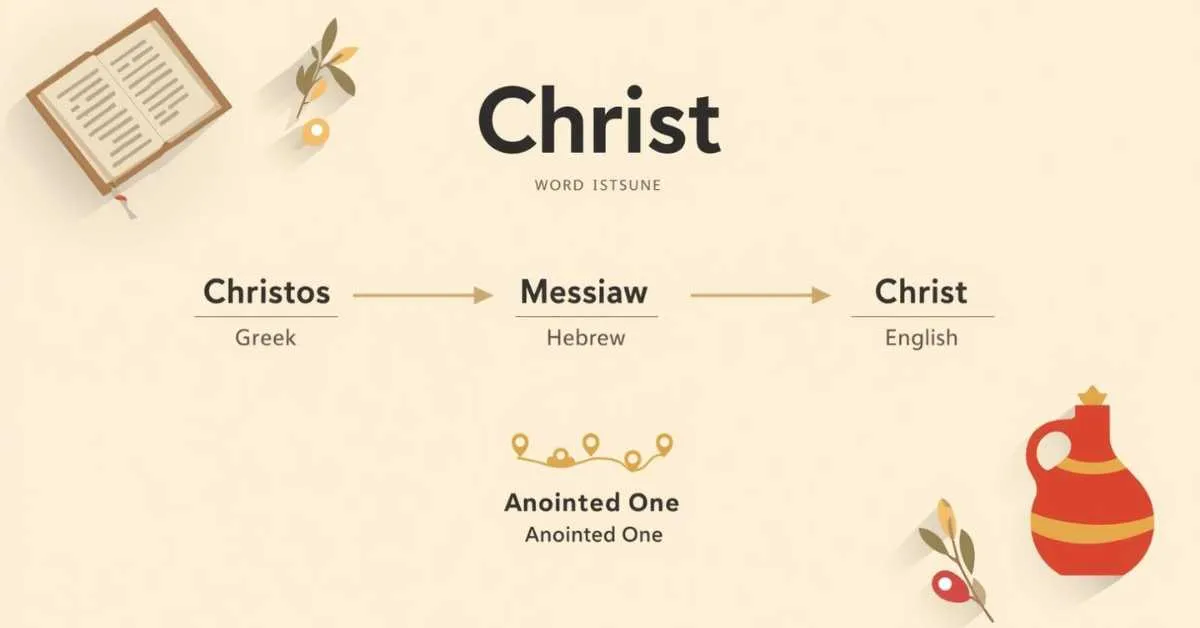
“Christ” means “Anointed One.” It comes from the Greek word Christos. It matches the Hebrew idea of Messiah. So Jesus Christ means Jesus the Anointed One, a title, not a last name.
Quick Definition and Introduction Of What Does the Word Christ Mean?
People often think Christ is Jesus’s last name. It’s not. It is a title, like “King” or “Leader.” Long ago, this title meant “Anointed One.”
It comes from an old Greek word, and it connects to a Hebrew word you may know: Messiah. So when you read Jesus Christ in the Bible, you are reading a big idea, not a family name.
In this article, I’ll explain the meaning in simple words, show where it comes from. And why it mattered in the Old Testament, the New Testament, and still matters today.
Christ
Christ is a title used for Jesus Christ, the central figure of Christianity. The word comes from an ancient Greek term meaning “anointed one.” In Christian belief, Jesus is the promised Messiah and Savior. You may see Christ in religious writing, prayers, Bible passages, church names, and everyday expressions. Some people also use it in phrases such as “followers of Christ” or “Christ-like,” meaning someone who tries to follow Jesus’ teachings. The meaning can be religious, historical, or cultural, depending on the sentence and context.
Context and how people use it:
People mainly use Christ in Christian, Bible, church, and religious contexts.
It can also appear in common phrases that describe Jesus, Christian beliefs, or behavior inspired by his teachings.
Examples:
- “Many Christians follow the teachings of Christ.”
- “The church teaches about the life and message of Christ.”
Common confusion: Is “Christ” a last name?
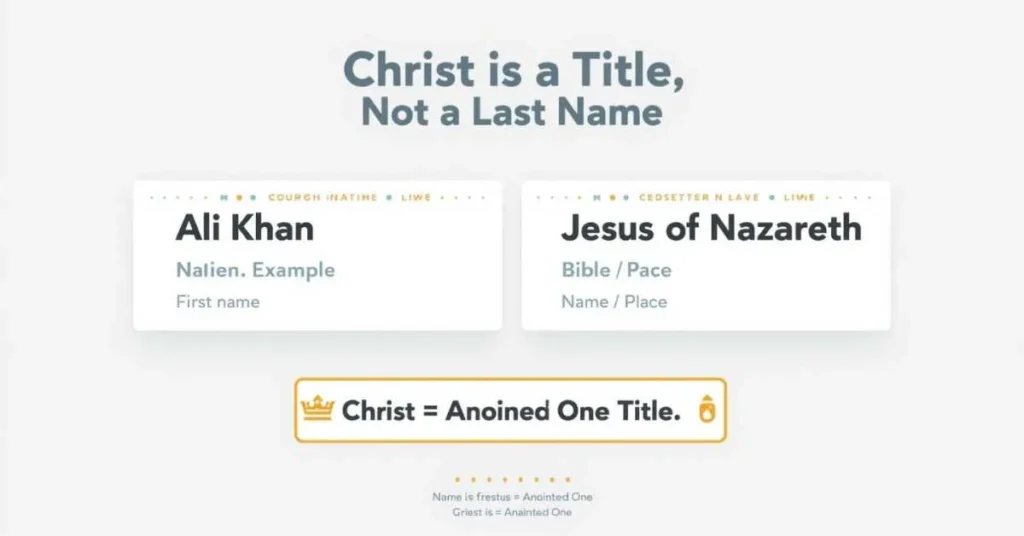
No. “Christ” is not a family name. It is a title.
In the ancient world, people did not use last names the way many people do today. They were often known by:
- their town (like Nazareth), or
- their family line, or
- a role or title.
That is why “Jesus of Nazareth” makes sense as a name style.
So when you see Jesus Christ, it does not mean “Jesus from the Christ family.”
It means Jesus the Anointed One.
The simple meaning of “Christ”
Here is the basic meaning:
Christ = Anointed One
That is it. Simple.
But the idea behind “anointed” is big. It is tied to leadership, hope, and God’s plan in the Bible.
Christos, Messiah, and the Septuagint

The word “Christ” came into English through older church use. The root word is Greek:
- Greek: Christos = “Anointed One”
- Hebrew idea: Messiah = “Anointed One”
So the Greek and Hebrew ideas point to the same core meaning.
A quick language chart
| Language | Word | Simple meaning |
|---|---|---|
| Hebrew (Old Testament idea) | Messiah (Mashiach) | Anointed One |
| Greek (New Testament word) | Christos | Anointed One |
| English | Christ | Anointed One |
Why the Septuagint matters
The Septuagint is a Greek translation of the Hebrew Scriptures. It helped Greek-speaking readers understand ideas from the Old Testament.
Because of the Septuagint, the Greek word Christos was already a useful word for “anointed.”
So later, when the New Testament writers called Jesus “the Christ,” they used a word people already knew.
What “anointed” meant in Bible times
Today, “anointed” can sound like a church word. But long ago it was also a public action.
To anoint someone meant to put oil on them. This was a sign that the person was:
- chosen,
- set apart,
- and given a job to do.
It often pointed to leadership and service, not fame.
In simple words: anointing showed a calling.
The Old Testament background (King David)
The Old Testament uses anointing in key moments. One famous example is King David.
David is linked to the hope of a future ruler. Many people expected a leader from David’s line. This is sometimes called a “Davidic” hope.
That is why “Messiah” became more than just “someone with oil on their head.”
It became a word tied to:
- right leadership,
- justice,
- peace,
- and renewal.
So when early Christians said Jesus is the Christ, they were making a strong claim. They were saying: this is the promised Anointed One.
The New Testament use “Christ” (Apostle Paul and others)
In the New Testament, “Christ” appears in two main ways:
A) As a clear title
Sometimes it reads like: “the Christ”
This makes the title idea plain.
B) As a close identity label
Other times it is used so often with Jesus that it feels almost like a fixed name: “Jesus Christ.”
This is very clear in the letters of the Apostle Paul. Paul uses “Christ” again and again because it is central to his message.
A simple way to think about it:
- At first: “Christ” is a title people explain.
- Over time: it becomes a key part of how believers speak about Jesus.
What Is Christ?
Christ is a title used for Jesus, rather than His personal surname. The word comes from the Greek Christos, meaning “anointed one,” and corresponds to the Hebrew term Messiah. In Christianity, Christ refers to Jesus as the promised Savior and King described in the Bible. Christians believe Jesus is the Christ because His life, teachings, death, and resurrection fulfill important biblical promises. The title also expresses His special role in God’s plan for humanity. Understanding “Christ” helps explain why Jesus is central to Christian faith and why the title appears throughout the New Testament.
Context and how people use it:
People use “Christ” when discussing Jesus’ identity and His role in Christianity.
It commonly appears in Bible studies, prayers, sermons, Christian teachings, and everyday conversations.
Example 1: “Christ is the center of Christian faith.”
Example 2: “The disciples believed that Jesus was the Christ.”
Christos
Christos is the original Greek form of the word later translated as Christ. It comes from the verb meaning “to anoint” and was used to describe someone marked with sacred oil for a special calling. In the ancient world, kings, priests, and prophets were often anointed, so Christos carried the idea of divine appointment. Early followers of Jesus adopted this title to show that he fulfilled the long-awaited promise of the anointed one. Today the word still echoes in theology, art, and language across cultures.
Examples:
- Greek-speaking Christians in the first century called Jesus “Christos” to declare him the promised anointed leader.
- Modern scholars still study the term Christos when exploring how early believers understood Jesus’ identity.
[Context and how people use it]
Christos is mainly used in academic, historical, or Greek-language discussions about the origins of the title.
People encounter it in Bible commentaries, seminary classes, and interfaith conversations about ancient terms.
Christos Meaning
The meaning of Christos centers on the idea of being anointed or set apart by God for a holy mission. In Greek culture it described a person chosen and empowered through sacred oil. When applied to Jesus, it revealed him as the long-expected figure who would bring hope and restoration. The term carries both royal and priestly overtones, showing authority mixed with service. Grasping this meaning opens a clearer window into why early Christians used the word with such reverence and joy.
Examples:
- A Bible teacher might explain that Christos meaning “anointed one” helps students see Jesus as both king and servant.
- In a conversation about faith, someone may say the Christos meaning reminds them that Jesus was specially chosen for humanity’s good.
[Context and how people use it]
People look up Christos meaning when they want the original Greek sense behind the English word Christ.
It is commonly searched by students, new believers, and anyone curious about biblical language.
What Does the Word Christ Mean
The word Christ means “the anointed one.” It points to a person selected and empowered by God for a unique purpose. Far from being a last name, it is a title of honor and mission. In Christian teaching it identifies Jesus as the one who fulfills ancient promises of rescue and renewal. Knowing what the word Christ means helps readers of Scripture understand why this title appears so often and why it still moves hearts today.
Examples:
- A parent explaining faith to a child might say the word Christ means Jesus was chosen by God to bring us close again.
- In a sermon the speaker may pause to remind everyone that Christ means “anointed,” not merely a familiar name.
[Context and how people use it]
People ask what the word Christ means when they first encounter it in the Bible or church and want a clear explanation.
It is a common question in Sunday school, online searches, and conversations with new Christians.
What Does Christ Mean
Christ means the one who has been anointed—set apart and empowered for a divine task. This simple yet profound definition reveals Jesus as the central figure of Christian hope. The title stresses purpose rather than personal identity alone. When believers use the word, they affirm that Jesus carries a special calling to heal, forgive, and lead. Understanding what Christ means deepens appreciation for both the history and the living message of the Christian faith.
Examples:
- Someone reading the New Testament for the first time may ask a friend, “What does Christ mean?” and receive a warm explanation of the anointed Savior.
- In a small group study a member might share that learning what Christ means changed how they pray and worship.
[Context and how people use it]
This question arises whenever people want a straightforward, everyday answer about the title given to Jesus.
It is frequently typed into search engines by curious readers, students, and those exploring Christianity.
Christ Meaning
Christ meaning centers on the concept of anointing—being chosen and marked for a sacred role. The English word preserves the sense of the original Greek title that early believers gave to Jesus. It speaks of authority, service, and divine selection all at once. Exploring Christ meaning helps modern readers connect with the ancient expectation of a deliverer who would restore relationship between God and people. The term remains rich with hope and purpose for millions around the world.
Examples:
- A blog post titled “Christ Meaning” may walk readers through the idea of anointing and how it applies to Jesus.
- During a quiet moment of reflection someone may ponder the Christ meaning and feel renewed confidence in their faith.
[Context and how people use it]
People search for Christ meaning when they want a concise yet meaningful definition they can remember and share.
It appears in personal study notes, social media discussions, and introductory faith resources.
Christ Definition
The definition of Christ is “the anointed one.” This concise phrase captures the heart of a title that has shaped history and personal belief for two thousand years. It is not a family name but a declaration of purpose and identity. In Christian understanding, Jesus receives this title because he fulfills the role of the long-promised figure who brings salvation. A clear Christ definition removes confusion and invites deeper exploration of why the title still matters today.
Examples:
- A dictionary or Bible glossary may list the Christ definition as “anointed one” and then briefly explain its significance.
- A youth leader might give the Christ definition in simple words so teenagers can grasp its importance quickly.
[Context and how people use it]
People look for a Christ definition when they need a short, reliable explanation for study, teaching, or personal clarity.
It is useful in classrooms, church handouts, and online articles aimed at beginners.
Where Does the Word Christ Come From
The word Christ comes from the Greek term Christos, which itself translates the Hebrew idea of the Messiah, or “anointed one.” Ancient cultures used anointing with oil to mark kings, priests, and prophets for special service. Early Greek-speaking followers of Jesus adopted Christos to express that he was the fulfillment of those ancient hopes. Over time the Greek word entered Latin and then English as Christ. Tracing where the word Christ comes from reveals a beautiful bridge between Jewish expectation and Christian proclamation.
Examples:
- A history-of-language lesson may show students that the word Christ comes from Greek and ultimately from Hebrew roots.
- In a Bible study someone might share that learning where the word Christ comes from helped them see the connection between the Old and New Testaments.
[Context and how people use it]
This question is asked by people interested in the linguistic and cultural background of Christian terms.
It appears in academic papers, podcasts, and conversations that explore the origins of faith language.
Meaning of Christ
The meaning of Christ is “anointed one,” a title that highlights divine choice and empowerment. It describes Jesus as the person specially appointed to carry out God’s plan of rescue and renewal. The phrase is simple yet filled with depth, inviting both intellectual understanding and personal response. Discovering the meaning of Christ often becomes a turning point for those exploring Christian belief, because it shifts the focus from a name to a purposeful calling that still speaks today.
Examples:
- A new believer may write in a journal, “Today I learned the meaning of Christ and it feels more real than ever.”
- A pastor might open a message by unpacking the meaning of Christ so the congregation can worship with greater insight.
[Context and how people use it]
People seek the meaning of Christ when they want both a clear definition and a sense of its spiritual weight.
It is a frequent search for anyone reading Scripture or beginning a journey of faith.
The Christ
The Christ is a title of profound significance that points to the anointed one sent to fulfill ancient promises. When people say “the Christ,” they are referring to Jesus as the unique figure chosen to bring healing, forgiveness, and lasting hope. The definite article emphasizes that he is the one long expected rather than one among many. Speaking of the Christ keeps the focus on his special role and invites listeners to consider what that role means for their own lives.
Examples:
- In the Gospels people often ask whether Jesus is the Christ, showing the high expectation attached to the title.
- A modern worship song may declare “Jesus is the Christ” as a joyful affirmation of faith and identity.
[Context and how people use it]
The phrase “the Christ” is used in Scripture, liturgy, and everyday Christian speech to highlight Jesus’ unique anointed role.
People encounter it in Bible reading, sermons, and personal declarations of belief.
Definition of Christ
The definition of Christ is “anointed one” or “Messiah.” It is a title given to Jesus in Christian belief and identifies Him as the promised Savior. The term comes from the Greek word Christos, which means someone who has been anointed for a special purpose. In the Bible, the title points to Jesus’ unique mission and authority. While many people use “Jesus Christ” as a complete name, “Christ” is actually a meaningful title. Knowing this distinction makes biblical references to Jesus easier to understand and gives greater meaning to the Christian expression “Jesus Christ.”
Context and how people use it:
“Christ” is mainly used in religious and biblical contexts when referring to Jesus as the Messiah.
It can describe His role, identity, authority, and purpose within Christian teaching.
Example 1: “Christ means the anointed one.”
Example 2: “The Bible presents Jesus as Christ, the promised Messiah.”
Christ Meaning
The meaning of Christ is “anointed one,” “Messiah,” or one chosen and appointed for a special purpose. The word has Greek origins and is closely connected with the Hebrew concept of the Messiah. For Christians, Christ is a title that identifies Jesus as the promised Savior and explains His central place in Christian belief. It is not simply another part of Jesus’ name. The title points to who Christians believe Jesus is and what He came to accomplish. When people say “Jesus Christ,” they are referring to Jesus as the Messiah and God’s appointed Savior.
Context and how people use it:
People use “Christ” when talking about Jesus from a biblical, religious, or Christian perspective.
The word is especially common in Scripture, worship, theology, prayers, and discussions about Christian faith.
Example 1: “Christ means the Messiah or anointed one.”
Example 2: “Many Christians believe Jesus is the Christ promised in Scripture.”
People and places in the story “Christ”

The title “Christ” is not just about words. It is tied to real people and places.
Key people
- Mary, mother of Jesus: She is part of the birth story and early life of Jesus.
- Pontius Pilate: A Roman leader tied to the trial and death of Jesus in Christian tradition.
- Apostle Paul: A major early Christian writer who helped spread the message to many places.
Key places
- Bethlehem: Often linked to messianic hope and the birth story.
- Nazareth: The town most connected to Jesus’s early life.
- Jerusalem: A major center in the Bible story, and a key place in the final events of Jesus’s life.
These names help readers see that the New Testament story is set in a real world, not a myth space.
What Christians mean by the title “Christ”
In Christian belief, “Christ” is not just a label. It points to a mission.
Many Christians describe that mission with three simple roles:
- Prophet: speaks truth and guides people
- Priest: brings healing and peace with God
- King: leads with justice and care
You do not have to agree with Christian belief to understand the word. But you do need to know this:
For Christians, “Christ” is a key title that explains who Jesus is and why he matters.
How the word “Christ” is used today
The word appears in many places today:
In faith
Many people say Jesus Christ as a worship name and a faith statement.
In culture
Words like “Christian” come from “Christ.” The word also shows up in art, history, and holidays.
In everyday speech
Some people use “Jesus Christ!” as a strong emotion phrase.
Others find that disrespectful because the title is sacred to them.
So the word still has weight. It still shapes language and life.
Sources and further reading
If you want to boost trust (and rankings), add a short “Further reading” list like this on your page:
- A major English dictionary entry for “Christ”
- A Bible dictionary or encyclopedia entry on “Christ” / “Messiah”
- A Greek lexicon entry for Christos
- A short reference on the Septuagint
- A simple intro book on the world of the Old Testament and New Testament
Tip: Keep this section short and clean. Do not overload it.
FAQs
Q: Spiritual meaning of Christ
A: Christ spiritually represents the anointed Savior, Messiah, and central figure of Christian faith.
Q: What does Christ mean in Greek
A: In Greek, Christ comes from Christos, meaning “anointed one.”
Q: What does the word Christ mean in the Bible
A: In the Bible, Christ means “the Anointed One” and refers to Jesus as the promised Messiah.
Q: Does Christ mean Messiah
A: Yes, Christ and Messiah both mean “Anointed One,” with Christ coming from Greek and Messiah from Hebrew.
Q: Does Christ mean God
A: Christ does not literally mean God, but Christianity teaches that Jesus Christ is divine and the Son of God.
Q: What does Christ mean in Latin
A: In Latin, Christ is Christus, a form derived from the Greek Christos, meaning “Anointed One.”
Q: When did Jesus become Christ
A: Jesus did not become Christ at a later point; Christians believe He was the Messiah and Christ throughout His earthly ministry.
Q: Does Christ mean King
A: Christ does not directly mean King, but the title is closely connected with Jesus’ role as the promised King and Messiah.
Conclusion
Christ is not a last name. It is a title. It means Anointed One, the Greek Christos, linked to the Hebrew Messiah and carried through the Septuagint into the Bible’s story.
From Bethlehem to Nazareth to Jerusalem, and from Mary, mother of Jesus to Pontius Pilate to the Apostle Paul, this title shaped how people understood Jesus. Now you know what it means, and why it still matters.
Read Also This Post: What Does Tuition Mean: Fees, Bills, and Tuition Classes

Hi, I’m Clara Lexis from Meanvia.com. I break down words and expressions so they’re easy to understand and enjoyable to learn. My mission is simple: make language approachable and fun, one word at a time.