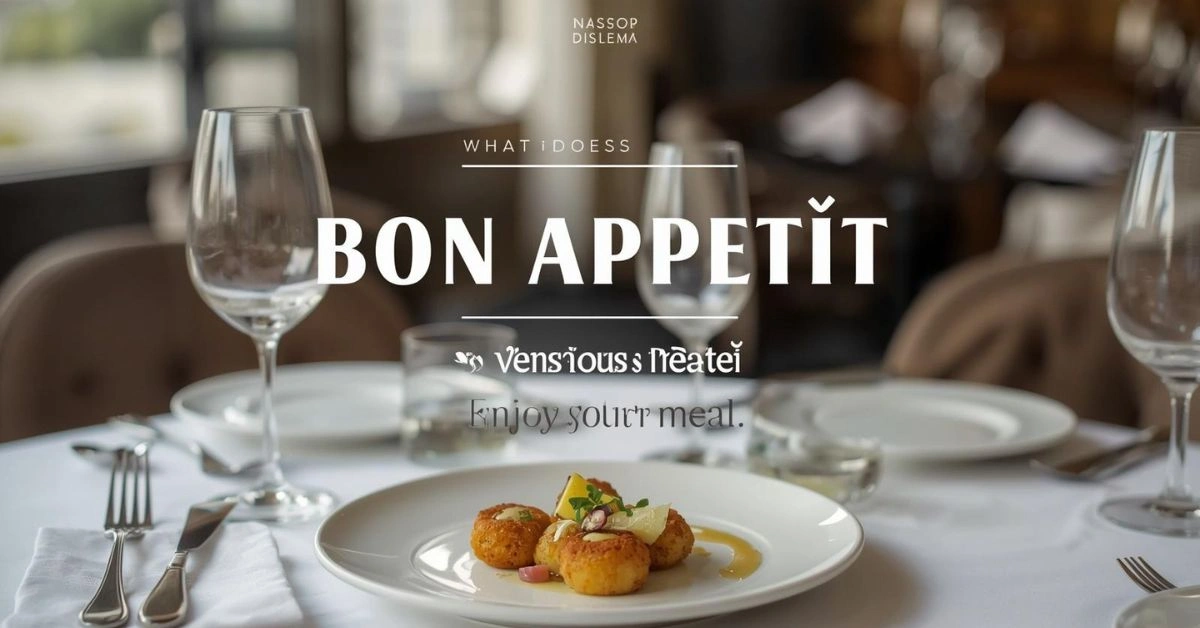
Bon appétit is a French phrase that literally means “good appetite,” but in normal English use it means “enjoy your meal.” People usually say it just before eating as a polite, friendly way to wish someone a pleasant meal.
Dictionaries such as Merriam-Webster and Cambridge define it that way, and Cambridge notes that it is said to someone who is about to eat.
If you want the simplest possible answer, this is it: bon appétit means “enjoy your meal.” The literal wording matters less than the way people actually use it.
Bon Appétit Meaning in English
In everyday English, bon appétit means “enjoy your meal.” That is the clearest answer for most readers.
A literal translation gives you “good appetite,” but that is not how most English speakers naturally explain it.
In real conversation, the phrase works more like a pre-meal wish or dining expression. Merriam-Webster defines it as “good appetite : enjoy your meal,” while Cambridge explains that it is said to someone about to eat and means “I hope you enjoy your food.”
Quick Facts
| Item | Answer |
|---|---|
| Language | French |
| Literal meaning | Good appetite |
| Everyday English meaning | Enjoy your meal |
| Used when | Just before eating |
| Type | Exclamation / interjection |
| Common spelling variant | bon appetit |
Cambridge labels bon appétit as an exclamation, while Dictionary.com and Britannica treat it as an interjection used to tell someone to enjoy a meal. Cambridge also recognizes the spelling variant bon appetit without the accent.
How to Pronounce Bon Appétit
In English dictionaries, Cambridge gives the pronunciation as UK /ˌbɒn.æp.əˈti/ and US /ˌbɑːn.æp.əˈtit/.
A simple reader-friendly way to say it is:
bon ah-puh-TEE
or
bon ap-uh-TEET
You do not need perfect French pronunciation for the phrase to be understood in English conversation. Most people will understand it from context, especially at the table.
When Do You Say Bon Appétit?
People usually say bon appétit right before a meal starts or as food is being served. That timing is part of the phrase’s meaning.
It is not just a vocabulary term; it is something people say at the moment eating begins. Cambridge specifically defines it as a phrase said to someone who is about to eat. Britannica likewise defines it as something used to tell someone to enjoy a meal.
Common situations include:
- a server placing food on the table
- a host inviting guests to begin eating
- family dinner at home
- a dinner party or holiday meal
- a casual message sent with a food photo
In all of these cases, the purpose is the same: to wish someone enjoyment of the meal in front of them.
Literal Meaning vs Everyday Meaning
This is the part many short articles do not explain clearly enough.
Literal meaning: good appetite
Everyday meaning: enjoy your meal
Both are connected, but they are not the same kind of answer.
If someone asks, “What does bon appétit mean?” they usually do not want a stiff word-for-word translation only. They want to know what the phrase actually means when people say it.
The best practical answer is: it is a polite French expression used before eating to mean “enjoy your meal.” Merriam-Webster, Cambridge, and Collins all frame the meaning this way, even while noting the literal French sense behind it.
Is Bon Appétit French?
Yes. The phrase comes from French, and major English dictionaries identify it as French in origin. Merriam-Webster labels it a French phrase, Dictionary.com marks it as French, and Britannica notes that the phrase comes from French.
That is why it can sound a little more elegant or restaurant-like than simply saying “enjoy.” But it is still widely understood in English, even by people who do not speak French.
Do You Need the Accent in Bon Appétit?
The accented form, bon appétit, is the standard form in dictionaries and polished writing. But bon appetit without the accent is also common in English and is listed by Cambridge as an alternative spelling.
That means:
- bon appétit looks more polished and linguistically accurate
- bon appetit is still widely recognized and often used in casual typing, URLs, search boxes, and everyday text
For a published article, menu description, or educational page, bon appétit is usually the better-looking choice.
Bon Appétit in a Sentence
Here are a few natural examples:
- The waiter smiled, set down the plates, and said, “Bon appétit.”
- My grandmother always says “Bon appétit” before we start dinner.
- In English, people often use bon appétit the same way they use “enjoy your meal.”
These examples reflect the standard dictionary meaning: a phrase used just before eating to wish enjoyment of food.
Common Mistakes and Misunderstandings
Thinking it only means “good appetite”
That is the literal translation, but it is not the best everyday explanation. In real use, “enjoy your meal” is the clearer answer. Merriam-Webster explicitly gives both senses together.
Assuming it is too formal for normal conversation
It can sound slightly polished, but it is still common and easy to understand in English dining situations. Cambridge presents it as a normal phrase used before eating.
Confusing the phrase with the Bon Appétit brand
Sometimes people search this phrase because they have seen Bon Appétit capitalized. In that form, it may refer to the food publication and media brand rather than the expression said before a meal. Bon Appétit’s official site identifies itself as a food media brand.
Overthinking the spelling
Both bon appétit and bon appetit are understood. The first is the cleaner standard form; the second is a common unaccented version. Cambridge lists both.
Why People Use It Instead of Just Saying “Enjoy”
Bon appétit carries a slightly more distinctive dining tone than plain “enjoy.” It signals the start of the meal and feels warm, polite, and food-specific.
That does not mean it has a totally different meaning. In most real situations, bon appétit, enjoy your meal, and sometimes just enjoy are doing almost the same job. The difference is mostly tone, style, and cultural flavor.
What Most Articles Miss About This Topic
Most pages either stop at the literal translation or turn the phrase into a dry dictionary entry. The more useful explanation is the one that separates literal meaning from real conversational meaning.
What many articles miss is this:
- The phrase is not only about vocabulary; it is also about timing and social use. People say it just before eating. Cambridge and Britannica both define it through that meal context.
- The best answer is not only “good appetite.” The most helpful answer is “enjoy your meal.” Merriam-Webster and Collins both support that everyday meaning directly.
- Readers often want pronunciation help because this is a borrowed French phrase, and many thin articles skip that. Cambridge provides UK and US pronunciations, which makes pronunciation worth covering on-page.
- The accent question matters in search and publishing. People often type bon appetit without the accent, so a useful page should acknowledge both forms clearly. Cambridge does.
That extra clarity is what makes a meaning page feel complete instead of generic.
FAQ
Does bon appétit mean “enjoy your meal”?
Yes. That is the clearest everyday English meaning. Merriam-Webster defines it as “good appetite : enjoy your meal,” and Cambridge explains that it means “I hope you enjoy your food.”
What does bon appétit literally mean?
Literally, it means “good appetite.”
How do you pronounce bon appétit?
Cambridge lists UK /ˌbɒn.æp.əˈti/ and US /ˌbɑːn.æp.əˈtit/ pronunciations. A simple English-friendly version is bon ah-puh-TEE.
Is bon appétit French?
Yes. Major dictionaries identify it as a French phrase or a phrase of French origin.
Do you need the accent in bon appétit?
Not always. Bon appétit is the standard form, but bon appetit is a recognized spelling variant in English.
Is Bon Appétit a phrase or a brand?
It can be both. Lowercase bon appétit usually refers to the phrase said before eating. Capitalized Bon Appétit can refer to the food publication and media brand.
Final Takeaway
If you want the cleanest answer possible, here it is: bon appétit means “enjoy your meal.” It is a French phrase, often used in English, and people usually say it right before eating. The literal wording is “good appetite,” but the practical meaning is much more natural and simple.
Click Below To Read About These Psots:
What Does Equilateral Mean in Math? Complete Guide With Examples
What Does Maintenance Required Mean? Dashboard Light Explained
What Does Ay Caramba Mean in English?

Hi, I’m Clara Lexis from Meanvia.com. I break down words and expressions so they’re easy to understand and enjoyable to learn. My mission is simple: make language approachable and fun, one word at a time.