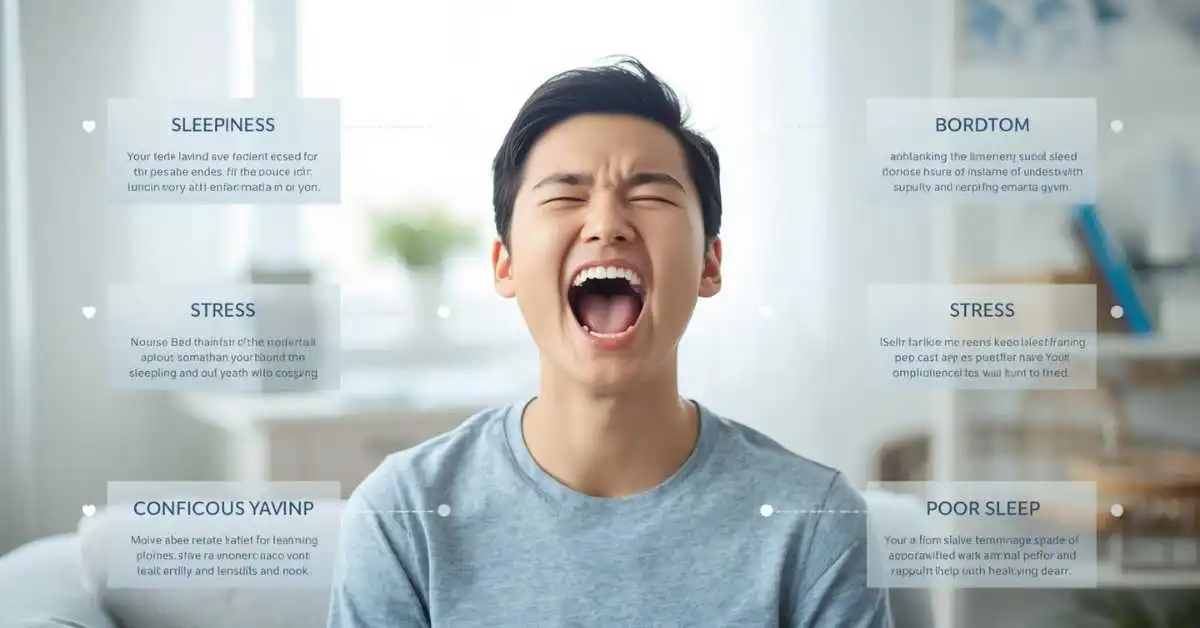
Yawning is normal. Most of the time, it means you are sleepy, bored, waking up, stressed, or reacting to another yawn.
A yawn is a deep breath with a wide mouth opening. It often happens without you trying. Scientists still do not know the full reason for yawning, but they do know the common triggers.
They also know that too much yawning can sometimes point to poor sleep, a sleep disorder, a medicine side effect, or another health problem.
Quick answer
In most cases, what does it mean when you yawn has a simple answer: your body is moving between rest and alertness. You may need sleep. You may be bored. You may feel stress. Or you may have caught a yawn from someone else.
If you yawn a lot every day, or if you also have chest pain, fainting, very strong sleepiness, or stroke signs, get medical help.
Why people yawn
When you are sleepy
The most common trigger is tiredness. People often yawn when they need sleep, when they wake up, or when they are getting ready for bed. That is why a late night, poor sleep, or a long day often leads to more yawns.
Example: You stayed up late. The next day, you yawn in class or at work.
When you are bored
Yawning also happens when your brain is not very active. A slow class, a quiet meeting, or a long car ride can bring on yawns. Experts think yawning may help the brain stay alert in these low-action moments.
Example: You slept well, but you still yawn during a long talk.
When you feel stress
Stress can trigger yawning too. Cleveland Clinic notes that people may yawn during stressful events, even before sports or other big moments. That means a yawn is not always a sign of being lazy or rude. Sometimes it is your body under pressure.
Example: You keep yawning before a test or job interview.
When someone else yawns
Yawning can be contagious. You may yawn after seeing, hearing, or even reading about a yawn. Researchers think this may be linked to social mirroring and empathy, but they are not fully sure.
Example: Your friend yawns. A few seconds later, you yawn too.
Quick table: what a yawn often means
| Situation | What it often means | Easy example |
|---|---|---|
| You just woke up | Your body is moving to alert mode | Morning stretch and yawn |
| You feel sleepy | You may need rest | Yawning after a short night |
| You feel bored | Your brain has low stimulation | Long lecture |
| You feel stress | Your body is tense | Before a game or exam |
| Someone else yawns | Social trigger | Family member yawns first |
This table matches the common triggers listed by Cleveland Clinic and MedlinePlus.
What a yawn may do in your body
It is a body reflex
A yawn is an involuntary act. MedlinePlus describes it as opening the mouth and taking a long, deep breath. Cleveland Clinic explains that yawning uses muscles in the chest, throat, face, and jaw.
Example: You may yawn without planning to, even when you try not to.
It may help you wake up
One main idea is the arousal theory. This means a yawn may help the brain shift from a sleepy state to a more alert state. That fits with the fact that yawning often happens during boredom, tiredness, and waking up.
Example: You yawn while driving on a quiet road and then feel a bit more awake.
It may help cool the brain
Another idea is the brain-cooling theory. Cleveland Clinic says some researchers think yawning may lower brain temperature by taking in air and changing blood flow in the face. This is still a theory, not a proven final answer.
Example: You may yawn more when you feel hot and tired.
It can help your ears pop
Yawning can open the eustachian tubes, which help balance pressure in your ears. That is why yawning can help during a plane landing or when your ears feel blocked.
Example: Your ears hurt on a plane. You yawn, and the pressure feels better.
One old idea was dropped
Years ago, many people thought yawning meant your brain needed more oxygen. Cleveland Clinic and Sleep Foundation both note that this older idea has been largely dropped because studies did not support it.
When yawning a lot may mean a problem
Poor sleep is the top reason
If you yawn a lot, the first thing to think about is sleep. MedlinePlus says excessive yawning often goes with drowsiness or weariness. Sleep Foundation also says the most common causes of too much sleepiness are sleep loss and sleep problems like sleep apnea and insomnia.
Example: You sleep five hours a night for a week, then yawn all day.
A sleep disorder may be behind it
Some people sleep all night but still feel very sleepy in the day. That may point to a sleep disorder. Sleep Foundation notes that disorders like sleep apnea, narcolepsy, and idiopathic hypersomnia can lead to strong daytime sleepiness.
Example: You snore, wake up tired, and yawn at your desk every day.
Medicine can be a reason
Some medicines can make yawning happen more often. MedlinePlus lists yawning as a side effect for fluoxetine, and some opioid medicine pages list yawning as part of withdrawal symptoms.
Example: You start a new medicine, and a week later you notice more yawns than usual.
Stress and breathing pattern problems can matter
Hospital guidance from Cambridge University Hospitals says frequent yawning and sighing can happen with hyperventilation or breathing pattern disorders. These may also come with breathlessness, light-headedness, chest tightness, or a feeling that you cannot get a full breath.
Example: You feel anxious, keep sighing, and yawn even though you are not sleepy.
Rarely, it can point to a bigger health problem
MedlinePlus says rare causes of excessive yawning can include vasovagal reactions, certain brain problems, some medicines, and body temperature control problems. It also lists rare links with stroke, epilepsy, multiple sclerosis, brain tumors, heart attack, and aortic dissection. These are not the usual causes, but they are why context matters.
Table: normal yawning vs yawning that needs a check
| Sign | Usually normal | Worth checking |
|---|---|---|
| Timing | On waking, at bedtime, in boring moments | All day, most days |
| Main feeling | Mild sleepiness or boredom | Strong daytime sleepiness |
| Other clues | No other symptoms | Snoring, gasping, dizziness, breathlessness, fainting |
| Common cause | Tiredness, stress, contagion | Poor sleep, sleep disorder, medicine effect, breathing problem |
| Best next step | Rest, move, get fresh air | Talk to a doctor |
This comparison reflects guidance from MedlinePlus, Sleep Foundation, and Cleveland Clinic.
When to get help now
Chest pain or fainting
If yawning comes with chest pain, chest pressure, fainting, or severe shortness of breath, seek emergency help. Mayo Clinic says chest pain can be life-threatening and should be checked right away. MedlinePlus also lists rare links between excessive yawning and heart emergencies.
Example: You keep yawning and also feel chest pressure and nausea. Do not wait.
Stroke warning signs
Get emergency help if yawning comes with sudden face droop, arm weakness, slurred speech, sudden confusion, vision trouble, or loss of balance. NIH and MedlinePlus both say these are stroke warning signs and need fast action.
Example: You yawn a lot, then your speech sounds strange and one arm feels weak.
Big trouble breathing
If you yawn and also feel that breathing is very hard, especially with blue lips, chest pain, or collapse, get urgent help. Breathing trouble can be a heart or lung emergency.
Table: red flags and what to do
| Red flag | Why it matters | What to do |
|---|---|---|
| Chest pain or pressure | Could be a heart emergency | Get emergency help now |
| Sudden face droop or slurred speech | Could be a stroke | Get emergency help now |
| Fainting | Could be a blood flow or heart problem | Get emergency help now |
| Severe shortness of breath | Could be a heart or lung problem | Get emergency help now |
| Very strong sleepiness every day | Could be a sleep disorder | Book a medical visit |
These actions match guidance from Mayo Clinic, NIH, and MedlinePlus.
How to stop yawning so much
Fix your sleep first
Go to bed at the same time each night. Get enough sleep. Keep your room dark and quiet. Cut late screen time. If lack of sleep is the reason, yawning often gets better when sleep gets better.
Example: You sleep seven to nine hours for a few nights and your daytime yawning drops.
Move your body
Stand up. Walk for a few minutes. Open a window. Drink water. Change tasks. These simple steps may help if boredom or low alertness is the trigger.
Example: You leave your desk for five minutes and feel more awake.
Watch your breathing
If your yawns come with sighing, chest tightness, or a feeling of not getting enough air, slow down and talk with a clinician. Breathing pattern problems can often be treated, but you need the right advice.
Example: You yawn a lot during stress and also feel air hunger.
Review your medicines
If yawning started after a new medicine, ask your doctor or pharmacist about it. Do not stop a prescribed medicine on your own.
Example: You begin an antidepressant and then notice more yawning.
Get checked if it keeps happening
If you yawn a lot for days or weeks, or you feel sleepy every day, book a visit. A doctor may ask about sleep, stress, snoring, medicines, and breathing.
FAQ
What does it mean when you yawn a lot?
It often means you are sleepy, not getting enough sleep, or feeling low alertness. It can also happen with sleep disorders, some medicines, or breathing pattern problems. Rarely, it can point to a bigger health issue.
Is yawning a sign of low oxygen?
Not usually. The old oxygen theory has mostly been dropped. Researchers now focus more on alertness, brain cooling, and state changes.
Why do I yawn when I am not tired?
You may be bored, stressed, warming up to a task, or reacting to someone else’s yawn. Not all yawns mean you need sleep.
Can anxiety make you yawn?
It can. Stress can trigger yawning, and breathing pattern problems linked with anxiety can include frequent yawning and sighing.
When should I worry about yawning?
Worry less about one yawn. Worry more if yawning is new, constant, or comes with chest pain, fainting, strong daytime sleepiness, or stroke signs.
Conclusion
So, what does it mean when you yawn? Most of the time, it means something simple. You are tired. You are bored. You are waking up. You feel stress. Or you caught a yawn from someone else.
But if you yawn much more than usual, the bigger meaning may be poor sleep, a sleep disorder, a medicine effect, or a breathing problem. Pay attention to the full picture, not just the yawn. And if warning signs show up, get medical help fast.
Click For Read About: What Does Mitzvah Mean? Clear Jewish Definition

Hi, I’m Evan Lexor, the voice behind Meanvia.com. I break down English words, slang, and phrases into clear, simple meanings that actually make sense. From modern internet terms to everyday expressions, my goal is straightforward: help you understand English better, faster, and with confidence, one word at a time.