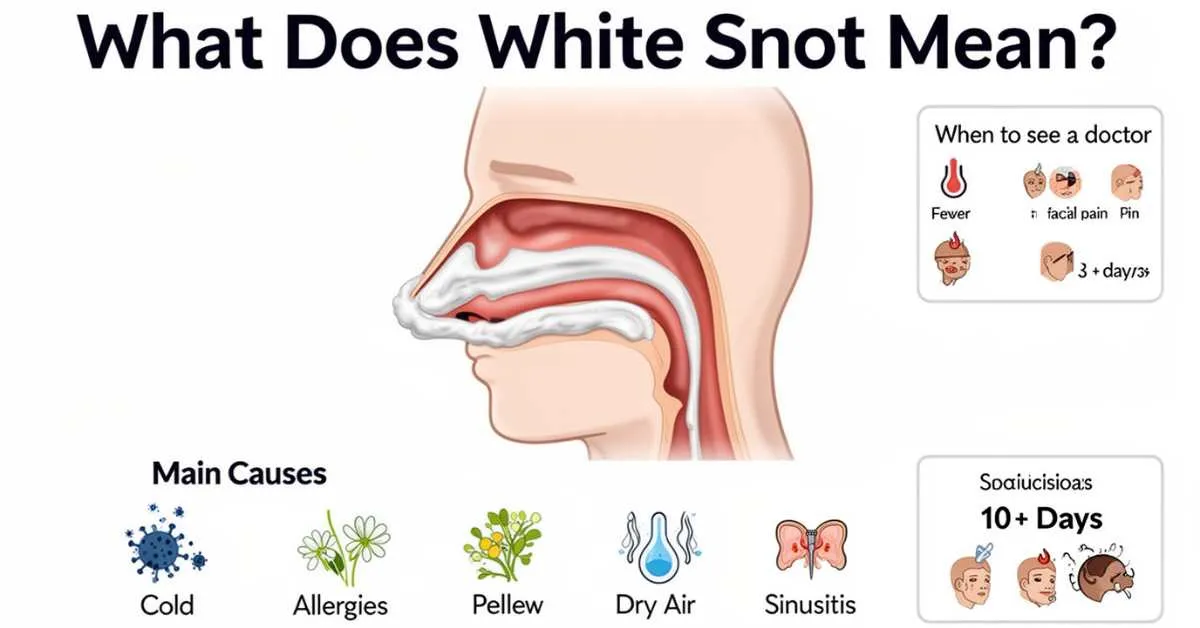
What does white snot mean? It usually means your nose is congested. When the inside of your nose swells (nasal inflammation), mucus drains slowly and loses water. That makes it look thick, cloudy, and white. Cleveland Clinic notes that white mucus can mean you’re congested and that color alone doesn’t tell the full story.
White snot is common, and it often goes away with simple care like drinking water, using steam, or saline spray. Watch how you feel over time, not just the color. If your symptoms get worse, last more than 7–10 days, or you have strong face pain or trouble breathing, it’s best to talk to a doctor.
This article explains the white nasal mucus meaning in plain language. You’ll learn the most common causes, how to feel better at home, and when it’s time to get medical care. This is our general information, not personal medical advice.
Quick answer:
White snot meaning: most often stuffy nose + thicker mucus. It often happens with a cold, allergies, dry air, or a sinus infection.
Mayo Clinic explains that mucus can change during illness due to the immune response, and it often clears or dries as you recover.
1) Why mucus turns white
If you’re wondering what does white snot mean, start with this: mucus is mostly water, plus proteins and immune cells. Its job is to trap dust and germs.
White mucus usually shows up when you have nasal inflammation:
- Your nasal tissues swell (that’s congestion).
- Mucus gets “stuck” and moves slowly.
- It loses moisture while it sits there.
- Thicker mucus looks cloudy or white.
Cleveland Clinic says that thick, white or creamy mucus often shows up when you have a cold or another virus. It can also happen when your body is fighting germs.
Visual SEO idea (add near this section):
- Image: “Why mucus turns white” simple diagram (swollen nasal lining + slow drainage).
- Alt text: “Diagram showing swollen nasal passages causing thick white mucus.”
2) Common causes of white snot
The white snot meaning depends on context. Below are the most common causes, written in a simple way.
A) Common cold (viral upper respiratory infection)
A cold often begins with a runny nose and later becomes stuffy. The CDC says the common cold has no cure. But should improve on its own. And antibiotics don’t work against viruses.
Mayo Clinic also notes that mucus during a cold can start clear and then become thicker and more opaque as your immune response ramps up.
Clues it’s a cold: sore throat, sneezing, mild cough, tiredness.
B) Allergic rhinitis (allergies) or non-allergic rhinitis
If you’re searching white nasal mucus meaning, allergies are a common reason. Allergic rhinitis can cause a runny nose, sneezing, itchy eyes, and congestion.
Mayo Clinic says hay fever (allergic rhinitis) can feel like a cold. It can cause a runny nose, itchy eyes, sneezing, and a stuffy nose. It is not caused by a virus.
Allergies often cause clear mucus, but congestion can make it thicker and cloudy.
Clues it’s allergies: itchy eyes, lots of sneezing, symptoms that come and go with triggers (pollen, dust, pets).
C) Dry air or mild dehydration
Dry rooms, heaters, air conditioning, and not drinking enough water can dry mucus out. Less water = thicker mucus that may look white.
Clues: worse in the morning, dry throat, dry room air.
D) Irritants (smoke, dust, fumes)
Smoke and pollution can irritate the nose and cause nasal inflammation, leading to thicker mucus.
E) Sinusitis (sinus inflammation)
If you keep asking what does white snot mean and you also feel facial pressure, sinusitis may be involved.
NIH MedlinePlus says sinusitis in adults can start after a cold. If the cold does not get better, or gets worse after 7 to 10 days, sinusitis may happen. Signs can include a stuffy nose, a runny nose, face pressure or pain, and mucus dripping down the throat.
NHS inform also notes that mild sinusitis often improves on its own, but worsening or persistent symptoms may need care.
Visual SEO idea (add near sinusitis):
- Image: simple sinus diagram (frontal/maxillary sinuses).
- Alt text: “Sinus diagram showing areas that can swell and trap mucus in sinusitis.”
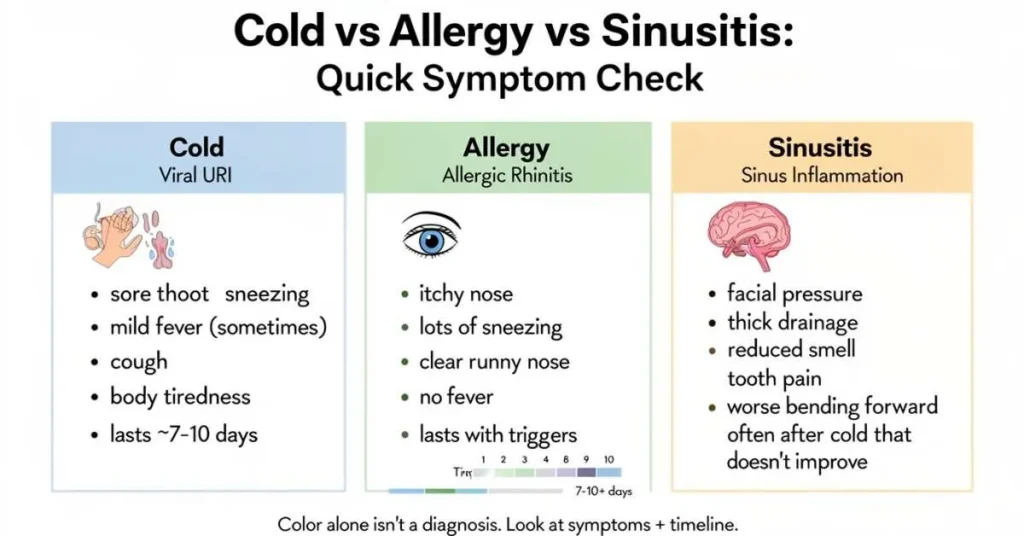
3) Cold vs allergy vs sinusitis: fast comparison
People often search white boogers meaning because they want to know: “Is this just allergies, or am I sick?” This quick table helps.
| Symptom pattern | More like a cold (URI) | More like allergies (allergic rhinitis) | More like sinusitis |
|---|---|---|---|
| Itchy eyes/nose | Uncommon | Common | Sometimes |
| Sneezing fits | Common | Common | Sometimes |
| Fever | Sometimes mild | No | Can happen |
| Facial pressure/tooth pain | Sometimes mild | Sometimes | More common |
| Timeline | Often improves in days | Lasts with triggers | Often follows a cold that isn’t improving after ~7–10 days |
4) Does white snot mean infection?
Now the big question: thick white mucus in the nose; does it mean infection? Not always.
Mayo Clinic says mucus can change color when you’re sick. This can happen because your body is fighting germs. The color alone does not mean you have a bacterial infection.
When infection becomes more likely
Instead of focusing only on color, look at the pattern:
- Symptoms that haven’t started to improve after about 7–10 days, or are severe/worsening (NHS inform).
- Sinus symptoms after a cold that doesn’t improve or worsens after 7–10 days (NIH MedlinePlus).
- Symptoms that last longer than about 10 days may need medical care (Cleveland Clinic’s sinusitis guidance).
Why antibiotics “just in case” can backfire
The CDC states that antibiotics do not treat viral infections, including colds and runny noses; even when mucus is thick or colored.
The World Health Organization warns that germ resistance is rising. This can make infections harder to treat. Antibiotics do not kill viruses, like colds or flu. But many people still take them for these illnesses.
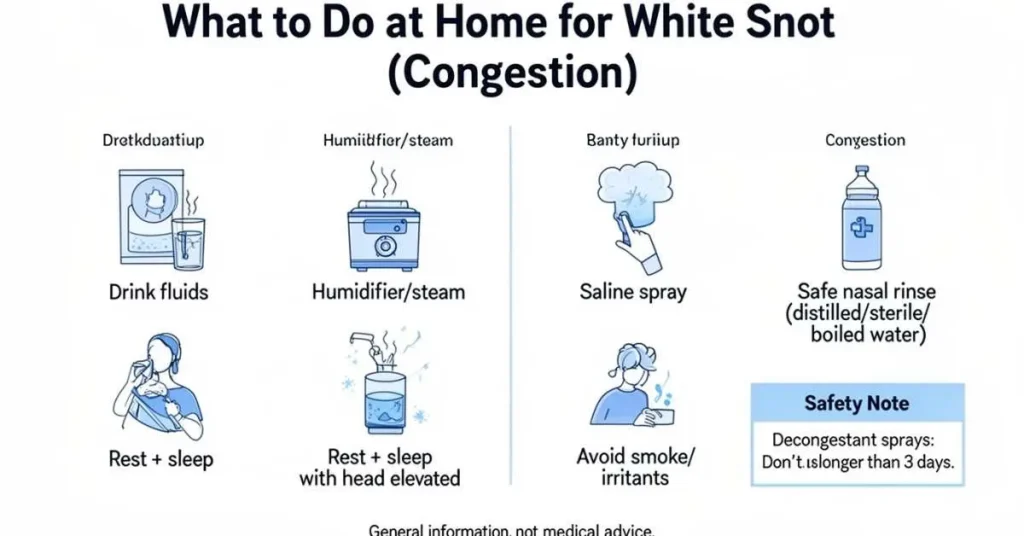
5) What to do at home (simple plan)
If your symptoms are mild, this section on white snot meaning gives practical steps.
Step 1: Thin and loosen the mucus
- Drink fluids.
- Rest when you can.
- Use a humidifier or warm shower steam.
- Use saline spray.
The CDC recommends supportive care for colds and notes they should improve on their own.
Step 2: Try a nasal rinse safely (neti pot or squeeze bottle)
Nasal rinsing can help flush thick mucus and irritants, but water safety matters.
- The FDA says rinse only with distilled, sterile, or previously boiled and cooled water. Tap water isn’t safe for nasal rinsing.
- The CDC gives the same guidance for safe sinus rinsing.
- Mayo Clinic also advises safe water and air-drying the device after use.
Step 3: Use medicated sprays carefully
Decongestant sprays (like oxymetazoline) can help short-term, but Cleveland Clinic warns that using them longer than three days may cause rebound congestion.
6) When to see a doctor
If you’re still asking what does white snot mean because symptoms feel intense, use these rules.
Get urgent help right away if you have:
Johns Hopkins Medicine lists red flags that need prompt care, such as:
- vision changes
- severe facial pain/pressure
- high fever
- neck stiffness
- shortness of breath
- swelling or redness around the eyes
- trouble thinking
Book a visit soon if:
- Symptoms are severe or getting worse, or not improving after around 7–10 days (NHS inform).
- Your symptoms match sinusitis after a cold that doesn’t improve or worsens after 7–10 days (NIH MedlinePlus).
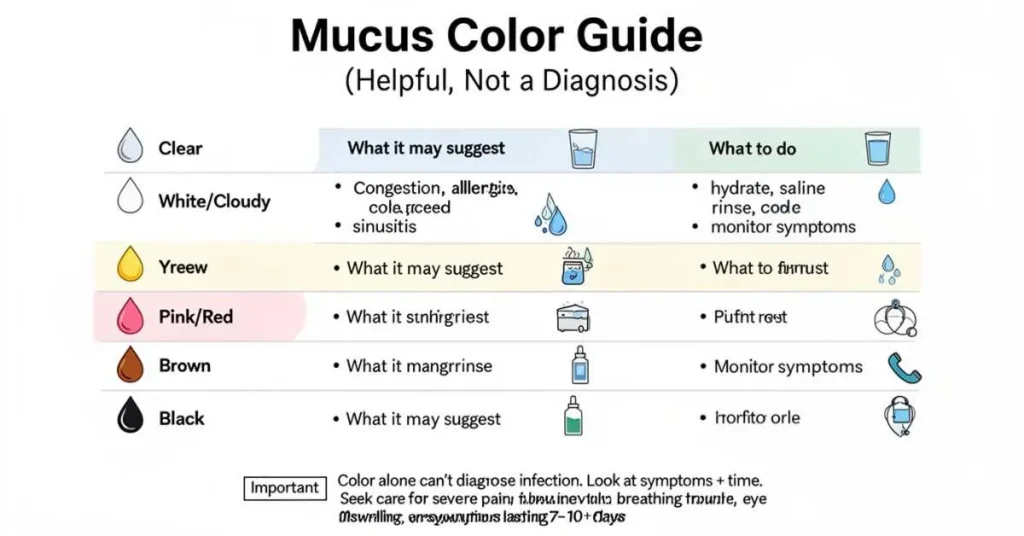
7) Mucus color guide (helpful, not a diagnosis)
People search white boogers meaning and also compare colors. Cleveland Clinic notes that mucus color can give clues, but how you feel overall matters too.
- Clear: often normal; common with allergies or early colds.
- White/cloudy: often congestion (thicker mucus).
- Yellow/green: can happen during illness; color alone isn’t proof of bacteria.
- Pink/red: small blood from dryness or irritation.
- Brown: dust/smoke or old blood.
- Black: uncommon; if you feel very unwell, get medical advice.
8) FAQs
Is white snot contagious?
White mucus itself isn’t contagious. If it’s caused by a cold virus, the virus can spread. The CDC notes colds are viral and antibiotics don’t help.
Can allergies cause thick, cloudy mucus?
Yes. Allergic rhinitis can cause congestion, which can make mucus thicker. Mayo Clinic describes allergic rhinitis symptoms like congestion and sneezing.
Why is my mucus thicker in the morning?
Overnight, you drink less, room air can be dry, and mucus can pool while you lie down. That makes it thicker.
How long should thick white mucus in the nose last?
Many colds improve on their own. If symptoms are not improving after around 7–10 days, NHS inform advises checking in with a clinician.
Do I need antibiotics for white nasal mucus?
Not based on color alone. The CDC says antibiotics don’t treat viral infections like colds and runny noses, even if mucus is thick or colored.
WHO explains that antimicrobial resistance makes infections harder to treat. So using antibiotics only when needed matters.
Conclusion
So, what does white snot mean most of the time? It usually points to nasal congestion; your nasal passages are swollen, and the mucus has become thicker and cloudy as it sits and dries.
The white snot meaning can be simple (dry air, mild dehydration) or related to a common cold, allergic rhinitis, or sinusitis, so it’s best to look at the full symptom picture, not color alone. Start with basics that help most people: fluids, humid air, saline, and safe rinsing if you use it.
Read Also This Post: What Does Salty Mean? Slang, Text, Gaming + Literal Meaning

Hi, I’m Clara Lexis from Meanvia.com. I break down words and expressions so they’re easy to understand and enjoyable to learn. My mission is simple: make language approachable and fun, one word at a time.