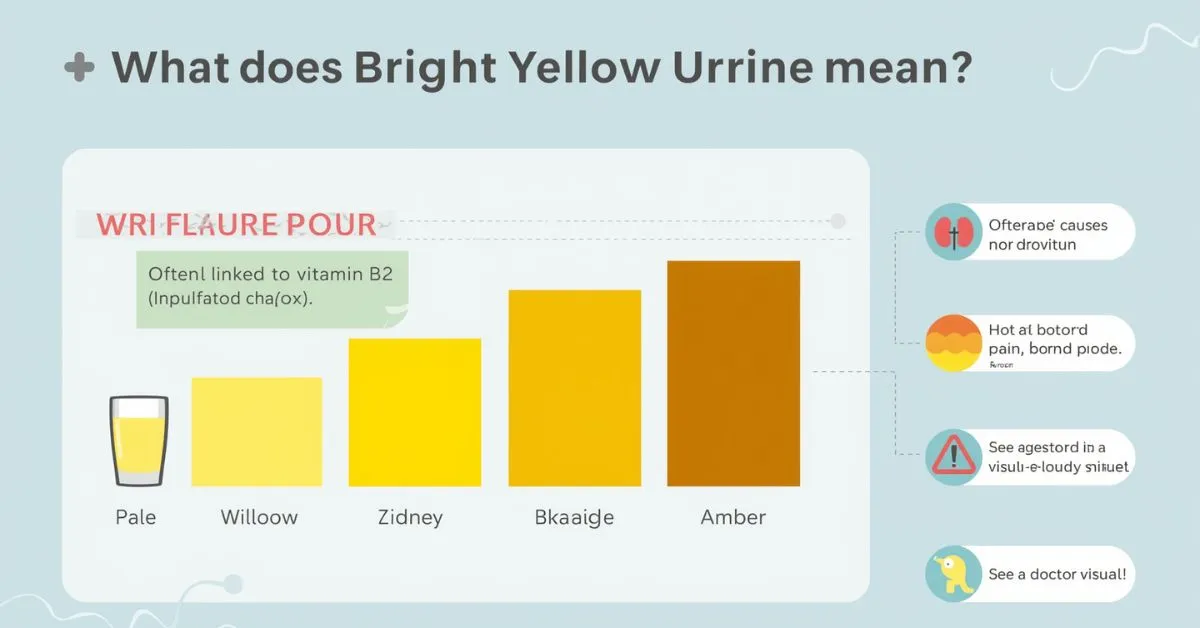
Bright yellow urine usually means your body is flushing out extra riboflavin (vitamin B2) from a multivitamin, B-complex, or another supplement.
It can also happen when urine is more concentrated, but dehydration more often makes urine dark yellow or amber, not neon yellow.
The color matters less than the full pattern. If bright yellow urine comes with burning, fever, blood, cloudy urine, strong odor, back pain, nausea, or vomiting, it may point to a urinary tract infection, bladder infection, kidney infection, or another problem that needs medical care.
Quick answer: Is bright yellow urine bad?
Most of the time, bright yellow urine is not dangerous. A very common reason is that the kidneys filter out extra water-soluble vitamins, especially riboflavin, and that waste leaves the body in urine.
Mayo Clinic notes that riboflavin can make urine more yellow than normal, especially in larger doses, and that this is expected and not a cause for alarm.
Still, bright yellow urine should not be judged by color alone. If you also have pain when peeing, frequent urges to urinate, pressure in the lower abdomen, cloudy urine, bad-smelling urine, blood in the urine, or fever, the color change may be happening alongside a UTI or another urinary tract problem.
What healthy urine color should look like
The usual color of urine is straw-yellow. MedlinePlus explains that abnormally colored urine may be cloudy, dark, or blood-colored, while NIDDK says urine should generally be pale yellow if you are drinking enough liquids.
Urine is yellow because of a pigment called urobilin. MedlinePlus Magazine notes that scientists have long known urobilin is the chemical responsible for urine’s yellow color. So some yellow is normal. What changes the meaning is how bright it is, how long it lasts, and what other symptoms appear with it.
It also helps to understand how the urinary tract works. Kidneys filter wastes and extra water to make urine. Urine then moves through the ureters to the bladder, where it is stored until it leaves the body through the urethra. Problems anywhere along that system can change urine appearance, smell, frequency, or comfort.
The most common causes of bright yellow urine
1) Riboflavin, vitamin B2, and B-complex supplements
This is the most common harmless cause. Riboflavin, also called vitamin B2, is found in many multivitamins, B-complex supplements, energy blends, and some prescription vitamin products.
Because riboflavin is water-soluble, the body gets rid of extra amounts in the urine, which can make it look bright yellow or even neon yellow.
If your urine turned bright yellow soon after starting a supplement, the timing strongly supports this explanation. It is especially common after a morning multivitamin. In that case, the color change is usually temporary and harmless.
2) Concentrated urine and dehydration
Hydration also affects urine color, but the shade matters. Dehydration usually causes urine to become darker yellow or amber, not fluorescent yellow.
MedlinePlus lists dark-colored urine and very dark yellow or amber urine among dehydration signs, and NHS urine color guides also describe darker yellow shades as a sign that you may need fluids.
That means many people mix up two different patterns. Bright yellow often points to vitamins. Dark yellow more often points to not drinking enough fluids. Of course, both can happen on the same day.
You can take a supplement and also be a little dehydrated, which can make the color look even stronger.
3) Medicines and other substances
MedlinePlus notes that abnormal urine color may be caused by infection, disease, medicines, or food. Its urinalysis guidance also lists several medicines and supplements that can change urine color, including riboflavin, iron supplements, nitrofurantoin, and phenazopyridine.
So if you are asking, “Why is my pee bright yellow?” the first things to review are simple:
- Did you take a multivitamin or B-complex today?
- Did you take any new medicine?
- Have you had less water than usual?
Bright yellow urine female
Bright yellow urine in females is often linked to hydration, diet, or vitamins rather than a serious problem. A common reason is taking supplements that contain vitamin B2 (riboflavin), which can make urine look very bright or almost fluorescent yellow. Concentrated urine from not drinking enough fluids can also appear darker yellow. Pregnancy itself does not usually make urine bright yellow, although changes in hydration, diet, and supplements during pregnancy can affect its color. If the color comes with burning, pain, fever, a strong unusual odor, or blood, it is worth speaking with a healthcare professional.
Context and how people use it:
People commonly search this phrase when they notice unusually bright urine and want to understand possible causes.
The female-specific wording often reflects questions about vitamins, pregnancy, hydration, or urinary symptoms.
Example 1: “Why is my urine bright yellow even though I feel fine?”
Example 2: “My urine turned bright yellow after I started taking vitamins.”
Is yellow urine dangerous
Yellow urine is usually not dangerous by itself. Normal urine can range from very pale yellow to a deeper yellow depending on how concentrated it is. Darker yellow urine can happen when you have not had enough fluids, while very bright yellow urine may occur after taking certain vitamins, especially those containing riboflavin. However, urine color should be considered along with other symptoms. Pain when urinating, fever, blood in the urine, severe abdominal or back pain, or a major persistent change may need medical attention. If you are concerned, a healthcare professional can help determine the cause.
Context and how people use it:
People use this question when they notice yellow urine and are unsure whether the color signals a health problem.
The shade, duration, hydration level, medications, supplements, and other symptoms can all provide useful context.
Example 1: “Is yellow urine dangerous if I have no other symptoms?”
Example 2: “My urine is darker than usual, so I wondered if yellow urine is dangerous.”
Bright yellow urine pregnancy
Bright yellow urine during pregnancy is not necessarily a sign that something is wrong. Urine naturally changes in concentration throughout the day, and pregnancy can bring changes in fluid intake, diet, and supplement use. Prenatal vitamins are an especially common reason for unusually bright yellow urine because they may contain riboflavin and other B vitamins. However, urine color alone cannot confirm pregnancy or diagnose a pregnancy-related condition. If bright urine is accompanied by burning, fever, pain, blood, or other concerning symptoms, it is best to contact a healthcare professional rather than relying on color alone.
Context and how people use it:
People search this phrase when they notice bright urine while pregnant or wondering whether they may be pregnant.
The term is often connected with questions about prenatal vitamins, hydration, and normal pregnancy changes.
Example 1: “Why is my urine bright yellow during pregnancy?”
Example 2: “My prenatal vitamins seem to make my urine bright yellow.”
Yellow urine symptoms
Yellow urine is normally not considered a symptom of illness on its own because healthy urine commonly has a yellow color. The shade can become darker when urine is more concentrated, such as after drinking less fluid. Very bright yellow urine can also appear after certain vitamins or supplements. What matters more is whether the color change happens with other symptoms. Burning during urination, frequent urges, fever, blood, unusual cloudiness, or significant pain can suggest a problem that deserves medical evaluation. A persistent unexplained change should also be discussed with a healthcare professional.
Context and how people use it:
People use this search term when they want to know whether yellow urine has symptoms that should concern them.
The phrase usually points to questions about urine color alongside possible urinary or general health changes.
Example 1: “Are there any yellow urine symptoms I should watch for?”
Example 2: “My urine is yellow, but I do not have any other symptoms.”
Bright yellow urine liver
Bright yellow urine alone does not usually indicate a liver problem. Urine color can be influenced by hydration, foods, medications, and vitamins, with B vitamins being a common reason for a vivid yellow appearance. Liver and bile-related problems are more often associated with unusually dark brown or tea-colored urine, particularly when other symptoms are present. These may include yellowing of the skin or eyes, pale stools, itching, nausea, or abdominal discomfort. Because urine color has many possible causes, it should not be used by itself to diagnose a liver condition.
Context and how people use it:
People search this phrase when they wonder whether a noticeable urine-color change could be connected to liver health.
The broader context matters because liver-related concerns usually involve urine changes plus other signs or symptoms.
Example 1: “Can bright yellow urine be related to a liver problem?”
Example 2: “I noticed a change in urine color and wanted to learn about liver-related causes.”
Medications that cause bright yellow urine
Some medicines and supplements can change urine color, although bright yellow urine is especially commonly associated with vitamin supplements containing riboflavin (vitamin B2). Riboflavin is naturally yellow and is water-soluble, so excess amounts can leave the body through urine and create a vivid yellow appearance. Some medications can also alter urine color in different ways, so it is important to check the specific medicine rather than assuming every bright-yellow color has the same cause. Do not stop a prescribed medicine simply because your urine changes color. Ask a pharmacist or healthcare professional if you are unsure.
Context and how people use it:
People use this phrase when they notice a urine-color change after starting a medicine, multivitamin, or supplement.
Checking the exact product and its ingredients can help identify whether it may explain the color.
Example 1: “Which medications or vitamins can cause bright yellow urine?”
Example 2: “My urine became bright yellow after I started a B-complex supplement.”
Which colour of urine is dangerous
There is no single urine color that automatically means danger, because color can change for many harmless reasons. Pale to medium yellow is generally common, while very dark urine can occur with dehydration. Red or pink urine may indicate blood, although foods and medicines can sometimes change urine color too. Brown or tea-colored urine can have several causes and may warrant medical evaluation, especially when it persists or occurs with other symptoms. Cloudy urine can also be associated with different conditions. The safest approach is to consider the color together with symptoms and how long the change lasts.
Context and how people use it:
People ask this question when they want to know which unusual urine colors may need medical attention.
The context includes the exact shade, possible foods or medicines, hydration, and symptoms such as pain or fever.
Example 1: “Which colour of urine is dangerous and needs medical attention?”
Example 2: “My urine looks brown today; which colour changes should I take seriously?”
What foods cause bright yellow urine
Foods do not commonly cause fluorescent bright yellow urine as strongly as some vitamins do. However, foods and drinks containing strong natural or artificial colors may sometimes influence urine appearance. More importantly, what you eat can affect hydration and urine concentration, which may make urine look darker or more noticeable. Supplements containing vitamin B2 are a much more common explanation for vivid yellow urine than ordinary foods. If you notice a persistent color change, think about recent changes in your diet, drinks, supplements, and medicines. If other symptoms appear, seek professional medical advice.
Context and how people use it:
People search this phrase when they notice bright urine and want to know whether something they ate caused the change.
The useful context includes recent foods, colored drinks, vitamins, supplements, fluid intake, and any new symptoms.
Example 1: “What foods cause bright yellow urine after eating?”
Example 2: “Could something in my diet explain why my urine looks unusually yellow?”
Bright yellow urine vs other urine colors
The exact shade can tell a different story. Here is a quick comparison:
| Urine color or pattern | Most likely meaning | Common clues | What to do |
|---|---|---|---|
| Pale yellow | Normal hydration | No symptoms | Usually normal |
| Bright yellow or neon yellow | Extra riboflavin or B vitamins | Took vitamins, no pain | Usually monitor |
| Dark yellow or amber | Dehydration or concentrated urine | Thirst, dry mouth, less urination | Drink fluids and recheck |
| Cloudy or strong-smelling | Possible UTI or bladder infection | Burning, urgency, lower belly pain | Contact a clinician |
| Pink, red, or brown | Possible blood in urine (hematuria) or another abnormal change | May have pain or no pain | Seek medical advice |
| Very dark, ongoing abnormal color | May need testing | Persistent change, other symptoms | Get evaluated |
This comparison is consistent with MedlinePlus, NIDDK, and NHS guidance on urine color, dehydration, UTIs, and hematuria.
When bright yellow urine is usually harmless
Bright yellow urine is usually harmless when all of these are true:
- it started after vitamins or a supplement
- you have no pain
- there is no fever
- there is no blood
- the urine is not cloudy
- you do not have strong odor, back pain, nausea, or vomiting
A common example is this: you take a multivitamin at breakfast, notice bright yellow urine by midday, and feel completely normal.
That fits the classic riboflavin pattern. Another harmless scenario is bright yellow urine that settles after your next few bathroom trips and does not keep happening once the supplement effect passes.
When bright yellow urine may mean more than vitamins
Bright yellow urine with burning or urgency
If the color change comes with pain or burning when you urinate, frequent urination, strong urges to pee, or lower abdominal pressure, the bigger issue may be a bladder infection or UTI. NIDDK and MedlinePlus both list these as common UTI symptoms.
Bright yellow urine with cloudy urine or bad smell
Cloudy or milky urine can be a sign of a urinary tract infection, and foul-smelling urine may also happen with bacteria.
MedlinePlus says cloudy urine can signal a UTI, and both MedlinePlus and NHS note that smelly urine becomes more concerning when it happens with pain, cloudiness, or urinary frequency.
Bright yellow urine with fever, back pain, nausea, or vomiting
That pattern is more serious. NIDDK says kidney infection symptoms may include fever and chills, cloudy, dark, bloody, or foul-smelling urine, frequent or painful urination, back, side, or groin pain, and nausea or vomiting. If these symptoms are present, do not focus only on the color. Get medical care promptly.
Bright yellow urine with blood
Blood in urine is called hematuria. NIDDK explains that gross hematuria can make urine look pink, red, or brown, and MedlinePlus advises getting checked for blood in the urine or unexplained color changes.
Bright yellow urine itself is usually not blood-related, but blood mixed with any abnormal urine pattern should never be ignored.
Bright yellow urine in common real-life situations
After a multivitamin
This is the classic case. The body uses what it needs and excretes the rest. Excess vitamin B2 then makes the urine look bright yellow. This is one of the most common reasons people notice a sudden change without any other symptoms.
In the morning
Morning urine often looks stronger in color because you have not had fluids overnight. If the urine looks bright or darker than usual first thing in the morning but becomes lighter after normal drinking, concentration is likely part of the picture.
NIDDK says the amount of urine you produce depends on how much liquid and food you consume and how much fluid you lose through sweating and breathing.
In children
Children can also have urine changes from vitamins or hydration, but red flags matter more.
NIDDK says bladder infection symptoms in children can include pain or burning, cloudy, bloody, or strong-smelling urine, fever, frequent urges to urinate, and lower abdominal discomfort. If a child has those symptoms, do not assume vitamins are the cause.
How doctors check the cause
If bright yellow urine is unexplained, keeps happening, or comes with symptoms, a urinalysis is often the first test. MedlinePlus says a urinalysis can check the urine’s color, appearance, odor, pH, and whether it contains blood, protein, glucose, ketones, bilirubin, bacteria, cells, crystals, or casts.
That matters because one simple urine sample can help separate harmless vitamin-related color changes from problems involving the urinary tract, kidneys, bladder, or even the liver.
MedlinePlus also notes that bilirubin in urine may be an early sign of a liver condition, while tests for blood in urine can help assess the urinary tract, kidneys, and liver.
Common mistakes people make
Mistake 1: Thinking all yellow urine means dehydration
It does not. Bright yellow often points to riboflavin. Dark yellow or amber is the more classic dehydration pattern. Mixing those up can lead to the wrong self-diagnosis.
Mistake 2: Ignoring the symptoms around the color
The most important clues are usually burning, urgency, cloudiness, odor, blood, fever, or back pain. Those symptoms point more strongly toward infection or another medical issue than the yellow shade alone.
Mistake 3: Stopping an important supplement without checking the label
If a vitamin is causing bright yellow urine, the color itself is often harmless. Check the label for riboflavin, vitamin B2, or a B-complex before assuming something is wrong. If a clinician prescribed the supplement, ask before stopping it.
What to do if your urine is bright yellow
Start with a simple checklist:
- Think about whether you took a multivitamin, B-complex, or another supplement today.
- Drink fluids normally and see whether the color becomes lighter later.
- Check for red-flag symptoms: burning, cloudy urine, strong odor, blood, fever, back pain, nausea, or vomiting.
- If the color is unexplained, lasts more than a short time, or comes with symptoms, contact a healthcare professional.
When to see a doctor right away
Get medical advice promptly if you have:
- blood in urine
- fever or chills
- back, side, or groin pain
- nausea or vomiting
- cloudy or foul-smelling urine
- painful urination
- a color change that does not go away or cannot be explained by vitamins or medicine
FAQs
Is bright yellow urine normal?
Yes, often it is. It is commonly caused by extra vitamin B2 (riboflavin) leaving the body in urine after a supplement or multivitamin.
Can dehydration cause bright yellow urine?
Dehydration can affect urine color, but it more often causes dark yellow or amber urine rather than neon yellow.
Can a UTI cause bright yellow urine?
A UTI is more likely to cause symptoms such as burning, frequent urination, cloudy urine, strong smell, lower abdominal pressure, or fever. The bright yellow shade itself is less specific than those symptoms.
Does bright yellow urine mean kidney disease?
Not usually. Bright yellow urine alone is more often linked to vitamins. Kidney-related problems are more concerning when urine changes happen with back pain, fever, bloody urine, cloudy urine, or vomiting.
Can medicines change urine color?
Yes. MedlinePlus notes that medicines and supplements can change urine color, and urinalysis guidance lists examples such as riboflavin, iron, nitrofurantoin, and phenazopyridine.
What test checks abnormal urine color?
A urinalysis is the most common first test. It can check color, clarity, odor, pH, blood, bilirubin, bacteria, protein, glucose, ketones, crystals, and other findings.
Final answer
So, what does bright yellow urine mean? In most cases, it means your body is getting rid of extra riboflavin, especially from a multivitamin or B-complex supplement. Sometimes hydration also affects the shade, but dehydration usually causes darker yellow or amber urine, not neon yellow.
The color becomes more concerning when it appears with pain, burning, urgency, cloudiness, smell, fever, back pain, nausea, vomiting, or blood. In that case, the issue may involve the bladder, kidneys, or the rest of the urinary tract, and a urinalysis may be needed.
Click Here To Read About: What Does Volatility Mean in Slots?

Hi, I’m Clara Lexis from Meanvia.com. I break down words and expressions so they’re easy to understand and enjoyable to learn. My mission is simple: make language approachable and fun, one word at a time.