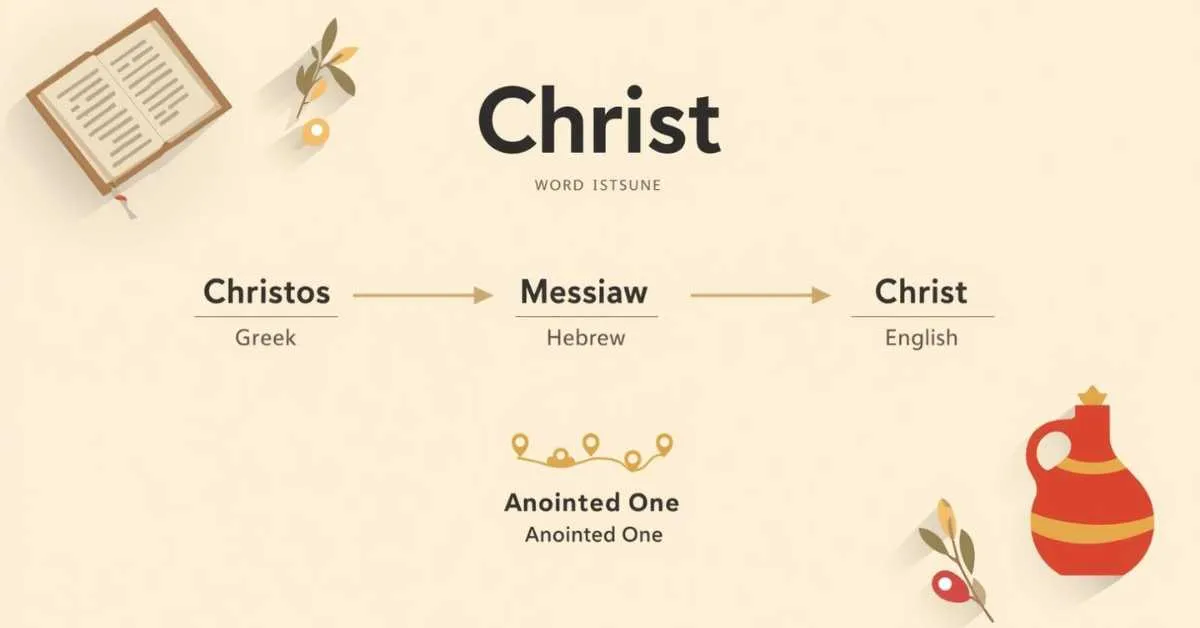
“Christ” means “Anointed One.” It comes from the Greek word Christos. It matches the Hebrew idea of Messiah. So Jesus Christ means Jesus the Anointed One, a title, not a last name.
Quick Definition and Introduction Of What Does the Word Christ Mean?
People often think Christ is Jesus’s last name. It’s not. It is a title, like “King” or “Leader.” Long ago, this title meant “Anointed One.”
It comes from an old Greek word, and it connects to a Hebrew word you may know: Messiah. So when you read Jesus Christ in the Bible, you are reading a big idea, not a family name.
In this article, I’ll explain the meaning in simple words, show where it comes from. And why it mattered in the Old Testament, the New Testament, and still matters today.
1) Common confusion: Is “Christ” a last name?
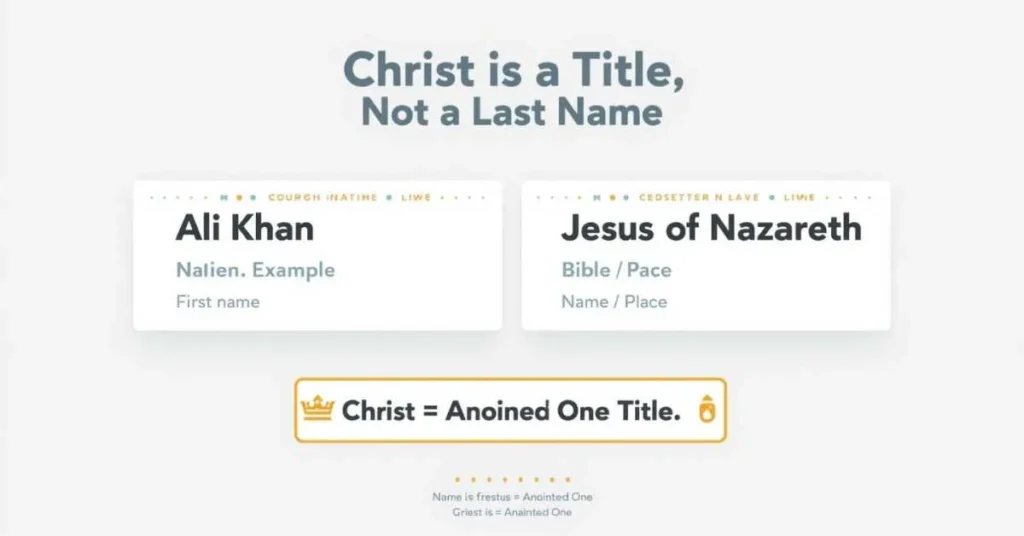
No. “Christ” is not a family name. It is a title.
In the ancient world, people did not use last names the way many people do today. They were often known by:
- their town (like Nazareth), or
- their family line, or
- a role or title.
That is why “Jesus of Nazareth” makes sense as a name style.
So when you see Jesus Christ, it does not mean “Jesus from the Christ family.”
It means Jesus the Anointed One.
2) The simple meaning of “Christ”
Here is the basic meaning:
Christ = Anointed One
That is it. Simple.
But the idea behind “anointed” is big. It is tied to leadership, hope, and God’s plan in the Bible.
3) Christos, Messiah, and the Septuagint

The word “Christ” came into English through older church use. The root word is Greek:
- Greek: Christos = “Anointed One”
- Hebrew idea: Messiah = “Anointed One”
So the Greek and Hebrew ideas point to the same core meaning.
A quick language chart
| Language | Word | Simple meaning |
|---|---|---|
| Hebrew (Old Testament idea) | Messiah (Mashiach) | Anointed One |
| Greek (New Testament word) | Christos | Anointed One |
| English | Christ | Anointed One |
Why the Septuagint matters
The Septuagint is a Greek translation of the Hebrew Scriptures. It helped Greek-speaking readers understand ideas from the Old Testament.
Because of the Septuagint, the Greek word Christos was already a useful word for “anointed.”
So later, when the New Testament writers called Jesus “the Christ,” they used a word people already knew.
4) What “anointed” meant in Bible times
Today, “anointed” can sound like a church word. But long ago it was also a public action.
To anoint someone meant to put oil on them. This was a sign that the person was:
- chosen,
- set apart,
- and given a job to do.
It often pointed to leadership and service, not fame.
In simple words: anointing showed a calling.
5) The Old Testament background (King David)
The Old Testament uses anointing in key moments. One famous example is King David.
David is linked to the hope of a future ruler. Many people expected a leader from David’s line. This is sometimes called a “Davidic” hope.
That is why “Messiah” became more than just “someone with oil on their head.”
It became a word tied to:
- right leadership,
- justice,
- peace,
- and renewal.
So when early Christians said Jesus is the Christ, they were making a strong claim. They were saying: this is the promised Anointed One.
6) The New Testament use “Christ” (Apostle Paul and others)
In the New Testament, “Christ” appears in two main ways:
A) As a clear title
Sometimes it reads like: “the Christ”
This makes the title idea plain.
B) As a close identity label
Other times it is used so often with Jesus that it feels almost like a fixed name: “Jesus Christ.”
This is very clear in the letters of the Apostle Paul. Paul uses “Christ” again and again because it is central to his message.
A simple way to think about it:
- At first: “Christ” is a title people explain.
- Over time: it becomes a key part of how believers speak about Jesus.
7) People and places in the story “Christ”
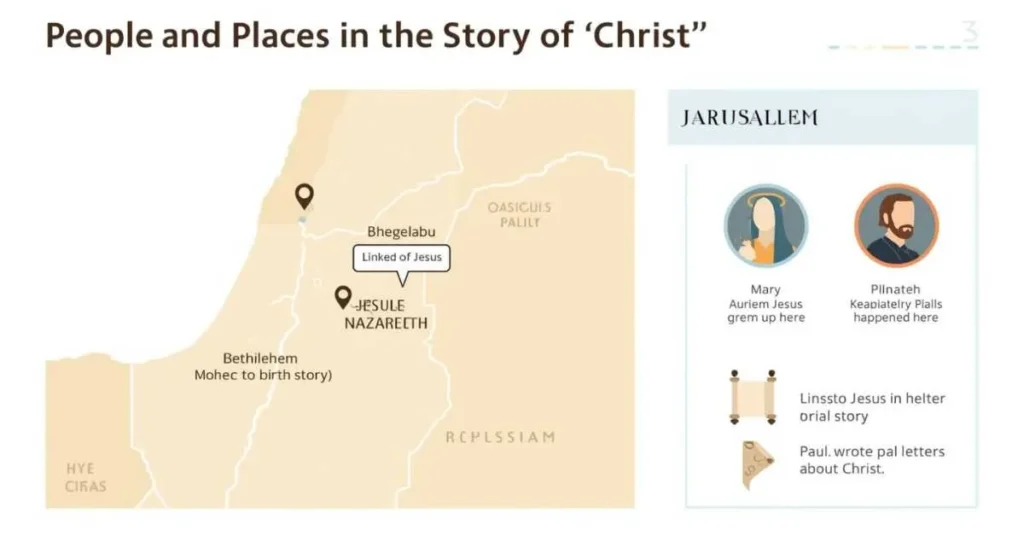
The title “Christ” is not just about words. It is tied to real people and places.
Key people
- Mary, mother of Jesus: She is part of the birth story and early life of Jesus.
- Pontius Pilate: A Roman leader tied to the trial and death of Jesus in Christian tradition.
- Apostle Paul: A major early Christian writer who helped spread the message to many places.
Key places
- Bethlehem: Often linked to messianic hope and the birth story.
- Nazareth: The town most connected to Jesus’s early life.
- Jerusalem: A major center in the Bible story, and a key place in the final events of Jesus’s life.
These names help readers see that the New Testament story is set in a real world, not a myth space.
8) What Christians mean by the title “Christ”
In Christian belief, “Christ” is not just a label. It points to a mission.
Many Christians describe that mission with three simple roles:
- Prophet: speaks truth and guides people
- Priest: brings healing and peace with God
- King: leads with justice and care
You do not have to agree with Christian belief to understand the word. But you do need to know this:
For Christians, “Christ” is a key title that explains who Jesus is and why he matters.
9) How the word “Christ” is used today
The word appears in many places today:
In faith
Many people say Jesus Christ as a worship name and a faith statement.
In culture
Words like “Christian” come from “Christ.” The word also shows up in art, history, and holidays.
In everyday speech
Some people use “Jesus Christ!” as a strong emotion phrase.
Others find that disrespectful because the title is sacred to them.
So the word still has weight. It still shapes language and life.
10) FAQ
What does the word Christ mean in one sentence?
It means Anointed One.
Is “Christ” Jesus’s last name?
No. It is a title.
What is the link between Christ and Messiah?
They point to the same idea. “Messiah” is Hebrew. “Christ” is Greek.
Why do some texts say “the Christ”?
“The” helps show it is a title: “the Anointed One.”
Why does “Jesus Christ” sound like one name?
Because people used the title so often that it became fixed in speech.
Why are Bethlehem, Nazareth, and Jerusalem mentioned so much?
They are key places in the Bible story connected to Jesus’s life and public work.
Who was Pontius Pilate?
He was a Roman leader named in the New Testament story of Jesus’s trial.
Why is Apostle Paul important here?
Paul’s letters use “Christ” often, shaping how early Christians spoke and wrote.
Sources and further reading
If you want to boost trust (and rankings), add a short “Further reading” list like this on your page:
- A major English dictionary entry for “Christ”
- A Bible dictionary or encyclopedia entry on “Christ” / “Messiah”
- A Greek lexicon entry for Christos
- A short reference on the Septuagint
- A simple intro book on the world of the Old Testament and New Testament
Tip: Keep this section short and clean. Do not overload it.
Final Thoughts:
Christ is not a last name. It is a title. It means Anointed One, the Greek Christos, linked to the Hebrew Messiah and carried through the Septuagint into the Bible’s story.
From Bethlehem to Nazareth to Jerusalem, and from Mary, mother of Jesus to Pontius Pilate to the Apostle Paul, this title shaped how people understood Jesus. Now you know what it means, and why it still matters.
Read Also This Post: What Does Tuition Mean: Fees, Bills, and Tuition Classes

Hi, I’m Clara Lexis from Meanvia.com. I break down words and expressions so they’re easy to understand and enjoyable to learn. My mission is simple: make language approachable and fun, one word at a time.