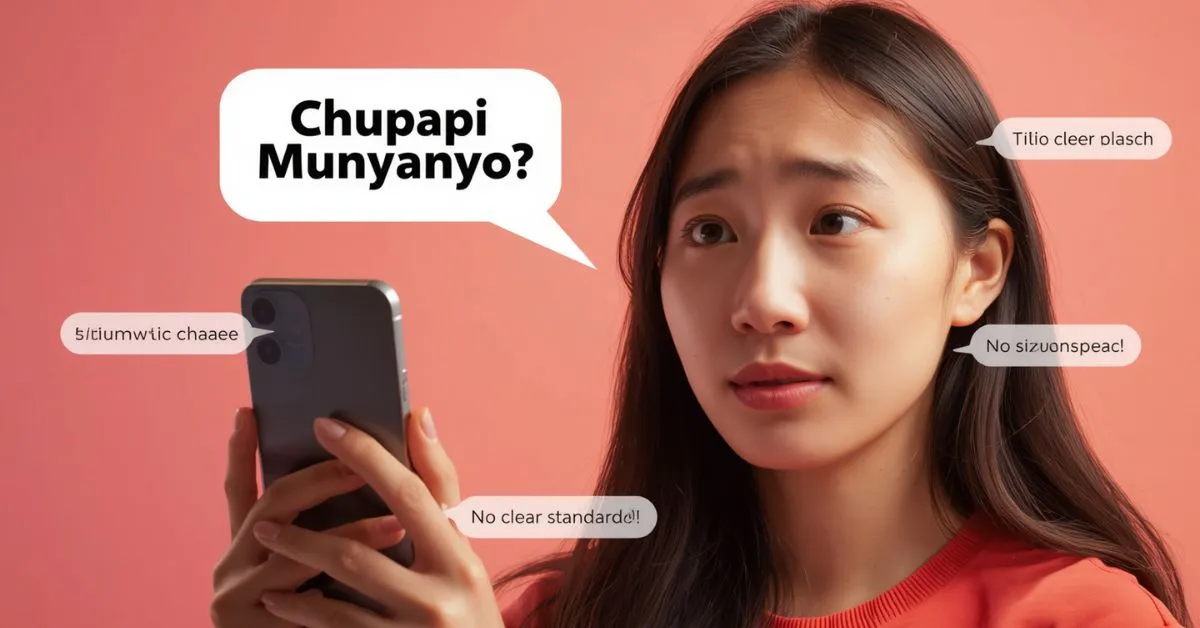
Chupapi munyanyo usually refers to the viral TikTok phrase more commonly seen as chupapi munyayo or chupapi muñañyo.
In most online use, it is treated as a made-up prank catchphrase, not a standard Spanish phrase with a reliable English translation.
Editorial note: This guide compares common user-generated definitions with better-known meme and explainer sources so readers get the safest, clearest interpretation instead of a random internet guess.
If you searched this after hearing it in a prank clip, meme video, or comment thread, the confusion makes sense. The phrase spread online with multiple spellings, conflicting translations, and a lot of low-quality explanations.
The clearest answer is not a neat dictionary-style translation. It is that the phrase became popular as a viral joke designed to sound meaningful while confusing people.
Chupapi munyanyo Meme
Chupapi munyanyo is a viral internet phrase best known from prank videos and memes. It became popular because creators used the phrase suddenly to confuse or surprise people, making their reactions part of the joke. Although it sounds like Spanish, the phrase is not a standard Spanish expression with a clear dictionary meaning. Online spellings also vary, including “chupapi muñañyo” and similar versions. Today, people usually recognize it as a meme phrase rather than a normal word or useful everyday expression. Its meaning often depends on the video, joke, or conversation where it appears.
Context and how people use it:
People mainly use it online as a prank, joke, reaction, or random meme phrase.
It is usually meant to sound funny or confusing rather than communicate a serious message.
Examples:
- “He shouted ‘chupapi munyanyo’ and everyone started laughing.”
- “That Chupapi munyanyo meme keeps showing up on my feed.”
Chupapi Muñaño meaning in tagalog
Chupapi Muñaño does not have a recognized standard meaning in Tagalog. This is important because people sometimes assume that the phrase comes from Filipino language simply because they see searches connecting it with Tagalog. In reality, the phrase became famous mainly through internet prank culture and viral videos. The spelling can also change from one post to another, which adds to the confusion. If someone asks for the “Tagalog meaning,” the safest explanation is that it is not a normal Tagalog word or established Tagalog phrase. Its online use is mainly humorous and meme-based.
Context and how people use it:
Filipino users may repeat the phrase because they saw it in memes or viral videos.
Its meaning usually comes from the joke or situation, not from a standard Tagalog translation.
Examples:
- “I saw ‘Chupapi Muñaño’ in a Filipino meme, but it was being used as a joke.”
- “What does Chupapi Muñaño mean in Tagalog? It is not a standard Tagalog expression.”
Chupapi munyanyo girlfriend
The search phrase “Chupapi munyanyo girlfriend” is usually connected to online interest in the creator and viral prank content associated with the phrase. It is worth separating the meme phrase from the person behind the videos because internet posts often mix the two. The phrase itself does not mean “girlfriend,” nor is “girlfriend” part of its standard meaning. People may search this combination when looking for information about a creator’s relationship, personal life, or videos. Because social-media claims can change and many posts are speculative, relationship information should be checked against reliable, recent sources.
Context and how people use it:
People often add “girlfriend” when searching for a creator’s personal or relationship information.
It is a search query about the person or meme culture, not a meaning of the phrase itself.
Examples:
- “I searched Chupapi munyanyo girlfriend because I wanted to know more about the creator.”
- “The video was about a prank, not about the meaning of Chupapi munyanyo.”
Can i get a chupapi munyanyo
“Can I get a Chupapi munyanyo?” is generally used as a playful internet-style phrase rather than a request for a real object or service. The wording copies the structure of a normal request, which makes it funny when combined with the unusual meme phrase. Depending on the situation, someone may say it as a joke, reference a viral video, or intentionally confuse another person. There is no standard dictionary item called a “Chupapi munyanyo,” so the phrase should not normally be understood literally. Its humor comes from the meme reference and the unexpected wording.
Context and how people use it:
People use the phrase jokingly when referencing viral prank or meme culture.
The exact meaning depends on the conversation, but it is normally playful rather than serious.
Examples:
- “Can I get a Chupapi munyanyo?” he joked while making everyone laugh.
- “Someone posted, ‘Can I get a Chupapi munyanyo?’ as a random meme comment.”
Chupapi Munyanyo at a Glance
- What it is: a viral meme phrase or catchphrase
- Where it became popular: TikTok prank videos
- Does it have a clear English translation? Not reliably
- Is it standard Spanish? No, not as a normal phrase
- Why people keep searching it: because different sites give different meanings and spellings
What does chupapi munyanyo mean in simple words?
In simple terms, chupapi munyanyo is mostly an internet catchphrase used for humor, confusion, and prank-style reactions. People usually say it to sound weird, random, or instantly recognizable to anyone who knows the meme.
That is why so many articles fail to satisfy the search. Readers expect a fixed translation, but the phrase does not really work like a normal phrase people use in everyday conversation. Its online role matters more than any word-for-word breakdown.
Is “chupapi munyanyo” the correct spelling?
Not necessarily. One of the biggest reasons this query is confusing is that people search several versions of the phrase, including:
- chupapi munyanyo
- chupapi munyayo
- chupapi muñañyo
- muyayo or munyayo on their own
Know Your Meme identifies “chupapi munyayo” and “chupapi muñañyo” as the main viral versions, and it notes that creator-linked content later pushed Muñañyo as the preferred spelling.
So if your keyword is what does chupapi munyanyo mean, you are still targeting the right topic. You are just using one of the many spellings people type after hearing it out loud.
Is chupapi munyanyo a real Spanish phrase?
The safest answer is no.
The strongest explainer coverage currently available describes the full viral phrase as nonsense, gibberish, or a made-up expression rather than a normal Spanish phrase with a stable meaning.
Know Your Meme says the definition is debated but “generally agreed to be nonsense,” especially the Munyayo / Muñañyo part. Capital FM reaches the same practical conclusion, saying the phrase “doesn’t mean anything” and is basically made up.
This is the part many weak articles get wrong. They notice that pieces of the phrase sound Spanish, then jump too quickly to a confident translation. But sounding Spanish-like is not the same as being a standard phrase native speakers actually use.
Why are there so many different meanings online?
Because the internet is mixing user-generated definitions, meme explanations, guesses, and joke answers.
Urban Dictionary alone shows how messy this topic is. The same phrase has entries that give completely different meanings, including one that treats it like a Tagalog-style slang phrase, another that uses a rude interpretation, and another that openly says the user has no idea what it means. That inconsistency is exactly why this keyword keeps getting searched.
A better way to think about it is this:
- Some users tried to force a literal translation
- Meme-reference sources treated it as mostly nonsense
- The prank-video context supports the “confusing catchphrase” explanation most strongly
Conflicting meanings online: what is the safest interpretation?
The comparison below reflects the current pattern across the most visible explainer sources and user-generated definitions.
| Online claim | How trustworthy it is | Best takeaway |
|---|---|---|
| It has a clean English translation | Low | There is no reliable standard translation accepted across strong sources |
| It is a normal Spanish phrase | Low | The full phrase is not treated as standard Spanish |
| It is a rude phrase broken into Spanish-sounding parts | Low to medium | Some sites push this, but the full phrase remains disputed and unstable |
| It is mostly a made-up TikTok prank catchphrase | High | This is the safest and clearest overall explanation |
Where did chupapi munyanyo come from?
The phrase is widely tied to TikTok prank culture and especially to TikToker @jaykindafunny8. Know Your Meme traces one of the earliest known uses to July 27, 2020, when Jay used a variation of the phrase in a video.
It also documents later prank clips where he repeated “munyayo” and then the fuller phrase to confuse strangers. Capital FM reports the same creator link and frames the phrase as part of prank videos that spread widely on TikTok.
That creator and prank context matters because it explains why the phrase took off. It was not designed to communicate a clear message. It was designed to create a confused reaction.
Why the phrase went viral
A phrase like this spreads for three reasons:
1) It sounds like it should mean something
That makes people stop, replay it, and search for it.
2) It works well in prank videos
When someone says a strange phrase with confidence, the target often reacts immediately. That reaction is part of the entertainment. Know Your Meme explicitly describes the trend as prank videos where someone says the phrase unexpectedly to confuse people.
3) The spelling confusion helps it spread
People hear one thing, type another, then land on different explanations. That keeps the search interest alive even longer. Know Your Meme notes that many users first thought the term was spelled munyayo, while later creator-linked content pushed Muñañyo as the corrected spelling.
Why Does Chupapi Munyanyo Sound Spanish?
Chupapi Munyanyo sounds Spanish because some parts of the phrase resemble Spanish words and names. The pronunciation also gives it a Spanish-like feel. However, sounding Spanish does not make it a real or standard Spanish expression. Online creators mainly use the phrase as a funny, confusing catchphrase rather than a sentence with a fixed translation. This is why trying to translate every part can lead to misleading answers. The phrase became popular through prank and reaction videos, where its unusual sound helped create surprise and humor.
Where people use it:
People mostly use it on TikTok, memes, comments, and casual chats with friends.
Examples:
- “He said chupapi munyanyo and everyone started laughing.”
- “That video used chupapi munyanyo as a surprise joke.”
What Does Chupapi Munyanyo Translate in English?
“Chupapi munyanyo” is a viral internet phrase that became popular through prank videos and social media. It is often presented as if it has a direct meaning in another language, but the phrase is generally treated as nonsense or invented slang, rather than a standard expression with a reliable English translation. Some people use it simply to surprise or confuse others. Because of this, there is no single official English translation. Its meaning depends heavily on the video, joke, or context where it appears.
Example 1: “He shouted ‘chupapi munyanyo’ as a prank.”
Example 2: “I heard the phrase online, but it does not have a clear standard translation.”
Why Do People Say Chupapi Munyanyo in Pranks?
People say Chupapi Munyanyo in pranks because the phrase sounds strange, unexpected, and confusing. In prank videos, the goal is often to make someone stop, react, or wonder what they just heard. The unusual pronunciation makes it useful as a surprise catchphrase. Some online definitions also describe it as something used to startle people or create a jumpscare-style reaction. Its meaning is less important than the reaction it creates. Today, people may repeat it simply because they recognize it as a viral internet phrase.
Where people use it:
It is mainly used in TikTok pranks, reaction clips, memes, comments, and funny conversations.
Examples:
- “He shouted chupapi munyanyo during the prank and scared his friend.”
- “The creator used the phrase to get a funny reaction on camera.”
Chupapi Munyayo
“Chupapi munyayo” is another spelling of the viral phrase commonly written as “chupapi munyanyo.” The spelling can vary because people usually hear the expression in videos rather than read it from a formal source. It is mainly associated with online jokes, prank content, and meme culture. It should not automatically be treated as a genuine foreign-language sentence. The phrase is often used for comedic effect, especially when someone wants to create a surprising or ridiculous moment.
Example 1: “The prankster suddenly said ‘chupapi munyayo’ and everyone laughed.”
Example 2: “You may see ‘munyayo’ used as a spelling variation online.”
Chupapi Munyanyo
“Chupapi munyanyo” is a well-known internet phrase used mostly as a joke or prank expression. Despite its foreign-sounding appearance, it does not have a confirmed standard translation into English. Online users have created different explanations for it, but many of those explanations are humorous, exaggerated, or based on guesses. The safest way to understand the phrase is as viral nonsense slang used for entertainment. Its popularity comes largely from social media videos rather than from a traditional language or dictionary definition.
Example 1: “He used ‘chupapi munyanyo’ to make the prank sound mysterious.”
Example 2: “The phrase appeared in a funny social media clip.”
Chupapi Munyanyo Meaning
The meaning of “chupapi munyanyo” is commonly discussed online because the phrase sounds like it should have a foreign-language translation. However, it is generally considered an invented or nonsensical internet phrase, not a normal expression with one established meaning. People often use it in prank videos because its unusual sound gets a reaction. Some websites or social media posts may claim specific translations, but these claims should be treated carefully unless they have reliable linguistic evidence.
Example 1: “What does ‘chupapi munyanyo’ mean? I keep seeing it in memes.”
Example 2: “The creator used the phrase as part of a prank rather than a serious statement.”
Munanyo Meaning
“Munanyo” is commonly seen as part of the viral phrase “chupapi munyanyo.” On its own, it does not have a universally accepted English meaning in this internet context. The word gained attention because of videos and memes where it was paired with the rest of the phrase. Since the expression is associated with playful or invented internet language, users should be cautious about treating “munanyo” as a normal dictionary word from a specific language.
Example 1: “Someone asked what ‘munanyo’ means after hearing the viral phrase.”
Example 2: “The meme used ‘munanyo’ as a funny-sounding word.”
What Does Chupapi Translate in English?
“Chupapi” does not have a reliable standalone English translation when it is used as part of the viral phrase “chupapi munyanyo.” The expression is mainly connected with internet prank culture and humorous videos. Its spelling and pronunciation have also changed across social media, which makes literal translation even less reliable. If someone claims that “chupapi” has one definite English meaning, it is worth checking the source and context rather than accepting the claim automatically.
Example 1: “What does ‘chupapi’ translate to in English?”
Example 2: “The video used ‘chupapi’ as part of a joke.”
Chupapi Munyayo Meaning
“Chupapi munyayo” is generally used as a spelling variation of “chupapi munyanyo.” It became popular through online prank and meme culture and is often used because it sounds unusual or mysterious. There is no universally accepted literal English meaning for the phrase. Different online communities may give it different explanations, but those explanations are not necessarily genuine translations. In most casual internet use, the phrase functions more like a humorous catchphrase than a meaningful sentence.
Example 1: “She searched for the meaning of ‘chupapi munyayo’ after seeing it online.”
Example 2: “The creator said ‘chupapi munyayo’ during a joke.”
Chupapi Munyanyo Bedeutung
“Bedeutung” is the German word for “meaning.” Therefore, “chupapi munyanyo bedeutung” simply means “chupapi munyanyo meaning.” When German-speaking users search this phrase, they are usually looking for an explanation of the viral expression. The phrase itself is not generally recognized as a standard German expression. It is better understood as internet slang or an invented phrase associated with prank and meme culture. Its exact interpretation can depend on how the speaker uses it.
Example 1: “Was bedeutet ‘chupapi munyanyo’?” means “What does ‘chupapi munyanyo’ mean?”
Example 2: “Ich suche die Bedeutung von ‘chupapi munyanyo’.” means “I am looking for the meaning of ‘chupapi munyanyo.’”
Chupapi Munyayo Real Meaning
The “real meaning” of “chupapi munyayo” is difficult to establish as a literal translation because the phrase is widely associated with viral internet prank culture rather than a standard dictionary definition. Many explanations online present a specific translation as fact, but such claims can be misleading. The phrase is best described as invented or nonsensical slang used for humor. Its appeal comes from the unexpected sound and the reactions it creates in videos, rather than from a precise traditional meaning.
Example 1: “Is ‘chupapi munyayo’ a real foreign phrase?”
Example 2: “He used the phrase because it sounded funny, not because he was speaking another language.”
What Does Chupapi Munyanyo Mean?
“What does chupapi munyanyo mean?” is essentially asking for the definition or translation of a popular internet catchphrase. There is no universally verified English translation that can be confidently given as its official meaning. The phrase is mostly recognized from prank videos, memes, and social media content. People sometimes attach different meanings to it, but these can be jokes or internet-created explanations. In ordinary online use, it is best understood as a viral humorous phrase rather than a standard expression.
Example 1: “What does chupapi munyanyo mean in this video?”
Example 2: “Nobody in the comments could agree on a literal translation.”
Chupapy Munyanyo
“Chupapy munyanyo” is a less common spelling variation of the viral phrase “chupapi munyanyo.” Because the phrase spread mainly through spoken videos and social media, users often spell it differently based on how they hear it. “Chupapy” does not create a separate established meaning. It generally refers to the same internet meme phrase. Like the other spellings, it should not automatically be treated as a genuine foreign-language sentence with a precise English translation.
Example 1: “I searched ‘chupapy munyanyo’ because that was the spelling I saw online.”
Example 2: “Chupapy munyanyo and chupapi munyanyo usually refer to the same viral phrase.”
How people actually use it online
Most people do not use chupapi munyanyo as a serious phrase. They use it more like a meme reference.
Common uses include:
- quoting an old TikTok joke
- joking with friends who know the meme
- reacting to something weird or random
- imitating prank-video language
- posting it in comment sections as nonsense humor
Example:
“He walked by, whispered ‘chupapi munyanyo,’ and everyone started laughing because they knew the meme.”
In that sentence, the phrase is not carrying a real translation. It is carrying internet recognition.
Should you use this phrase?
Usually, only in a very casual meme context.
It may work:
- with close friends
- in joke conversations
- when discussing TikTok slang
- when quoting the meme itself
It usually does not work:
- in school or work writing
- in serious conversations
- with strangers
- in translation discussions
- in cross-cultural settings where it may sound rude, confusing, or childish
That matters because even when a phrase is “just a joke,” it can still sound awkward or offensive to people who hear it differently. Since some internet definitions treat parts of it as vulgar, it is safer not to use it casually around people who may not know the meme context.
Common mistakes people make with this phrase
Thinking it has one official meaning
It does not. The most reliable answer is that the phrase is largely a viral nonsense catchphrase.
Treating user-submitted definitions like final proof
Urban Dictionary entries can show what people claim a phrase means, but they do not settle the question by themselves. This topic is a perfect example.
Ignoring the TikTok prank context
If you remove the prank context, the phrase becomes harder to understand. Its main function online is to confuse, amuse, or get a reaction.
Assuming “Spanish-sounding” means “real Spanish”
This is one of the biggest misunderstandings around the phrase. A meme can sound like a language without being a normal expression in that language.
What Most Articles Miss About This Topic
Most articles make one of two mistakes: they either force a translation, or they give a very shallow answer like “it means nothing” and stop there.
What actually helps readers is understanding why the phrase became confusing in the first place:
- it spread through TikTok prank videos
- it has multiple spellings
- it sounds like it should have a real translation
- user-generated definitions clash with meme-reference explanations
- its function online matters more than its literal wording
That fuller explanation is what reduces pogo-sticking and repeat searching. Readers do not just want a definition. They want the phrase decoded in a way that makes the internet confusion finally make sense.
FAQs
Q: What does chupapi munyanyo mean on tiktok in english
A: It is a viral TikTok phrase used mainly as a humorous or prank expression, with no clear literal English meaning.
Q: What does chupapi translate in English
A: “Chupapi” does not have a confirmed direct English translation and is generally treated as a made-up internet phrase.
Q: What does chupapi munyayo mean tiktok
A: On TikTok, “Chupapi Munyayo” is commonly used as a silly phrase intended to surprise or confuse people.
Q: What does chupapi munyanyo mean on tiktok funny
A: The phrase is considered funny because it sounds like a foreign expression while being used mainly as internet humor.
Q: What does chupapi mean
A: “Chupapi” is an internet slang term with an unclear or intentionally nonsensical meaning.
Q: What does munyanyo mean
A: “Munyanyo” has no established literal meaning and is mainly associated with the viral phrase “Chupapi Munyanyo.”
Q: Chupapi munyanyo meaning origin
A: “Chupapi Munyanyo” became popular through online prank and meme culture, especially on TikTok and other social platforms.
Q: Is Chupapi Munyanyo a bad word
A: It is not a standard English swear word, but its use can be inappropriate depending on the context and audience.
Conclusion
If you want the clearest version in one sentence, here it is:
Chupapi munyanyo is best understood as a viral TikTok prank phrase usually spelled as chupapi munyayo or chupapi muñañyo and not as a normal phrase with a dependable English translation.
That is the interpretation most likely to satisfy both users and search engines because it reflects how the phrase is actually used online, why the spellings vary, and why the translations are so inconsistent.
Click Below To Read About These Posts:
What Does Pre-Tax Mean on a Paycheck? Simple Definition + Examples
What Does “Bye Felicia” Mean? Complete Explanation
What Does Rushing Mean in College?

Hi, I’m Evan Lexor, the voice behind Meanvia.com. I break down English words, slang, and phrases into clear, simple meanings that actually make sense. From modern internet terms to everyday expressions, my goal is straightforward: help you understand English better, faster, and with confidence, one word at a time.